ADVERTISEMENT

WEST TOKAMAK Inside and Out

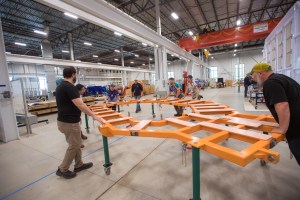
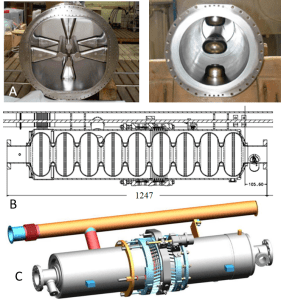
Someone waking up inside of WEST, the French tokamak located barely one kilometer away from ITER, would think they had been transported into an alien spaceship—and more specifically, into the stranded star-faring vessel in the movie Alien (1979), with its strange ribcage-like walls and dull metal vertebrae. Last week, a...

US Wildlife Agency Explores Cryogenics as a Hedge Against Extinction

The world’s wildlife are facing a barrage of threats caused by climate change, from the loss of suitable habitat to dwindling food supplies. As a result, endangered species across the US are edging closer to extinction at alarming rates—and if they disappear, critical genetic information could vanish with them. In a new initiative announced on...

ATLAS Measures Strength of the Strong Force with Record Precision

Binding together quarks into protons, neutrons and atomic nuclei is a force so strong, it’s in the name. The strong force, which is carried by gluon particles, is the strongest of all fundamental forces of nature – the others being electromagnetism, the weak force and gravity. Yet, it’s the least...

Powering the Quantum Revolution: Quantum Engines on the Horizon

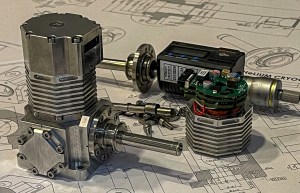
At the Okinawa Institute of Science and Technology (OIST), researchers at the Quantum Systems Unit have collaborated with scientists from the University of Kaiserslautern-Landau and the University of Stuttgart to design and build an engine that is based on the special rules that particles obey at very small scales. They...

High-Resolution Cryo-EM Starts Focusing on Accessibility

Structure-based designs are integral to advancing drug discovery, and in this regard, cryogenic electron microscopy (cryo-EM) has emerged as a pivotal tool for achieving high-resolution structures of proteins and protein complexes. Particularly noteworthy is its utility in elucidating the structures of protein classes that have historically resisted crystallization. Cryo-EM’s pivotal...

ADVERTISEMENT

Helium-3

Helium-3 (3He) is one of the two stable isotopes of helium. The other is the much more common Helium-4 (4He). Neither of these isotopes should be confused with He II, which is the second liquid phase of 4He. He II was discussed in this column in the Spring 2010 edition...

Cryopumping

Cryopumping refers to the use of cryogenic temperatures to produce vacuum in enclosed spaces. More broadly, it can also refer to the removal of gases via cryogenic temperatures from a flow stream or enclosure without necessarily resulting in vacuum pressures. This is an important application of cryogenics and is used...

Thermal Acoustic Oscillations

Thermal Acoustic Oscillations (TAO) are a common event in cryogenic systems that can have significant adverse effects on the performance of the system. TAOs are sustained pressure oscillations that can occur in tubes containing gas, closed at one end (the warm end) that have a very large temperature gradient along...

Wind Tunnels

Dr. Robert Kilgore The development of the cryogenic wind tunnel is one of many significant breakthroughs in both cryogenics and wind-tunnel technology made during the past millennium. Interest in the development of high-speed commercial and military aircraft resulted in a review of problems of flow simulation in transonic wind tunnels...

History of Cryogenics

From the Fall 1999 issue of Cold Facts magazine Millennium Breakthroughs A variety of CSA members give different perspectives on the past millennium: What were the most significant breakthroughs in cryogenics during the past millennium? Prof. R.G. Scurlock, Kryos Technology, scurlock@soton.ac.uk (“Breakthrough” = way through obstacles — Oxford English Dictionary)...

Cryobiology

Andreas Sputtek Past President Society for Cryobiology sputtek@uke.uni-hamburg.de or http://www.sputtek.de/. The word cryobiology (from the Greek words “cryo” = cold, “bios” = life, and “logos” = science) literally signifies the science of life at low temperatures. In practice, this field comprises the study of any biological material or system (e.g.,...

Cryogenic Insulation

James E. Fesmire Cryogenics Test Laboratory NASA Kennedy Space Center james.e.fesmire@nasa.gov Introduction In today’s world, the use of cryogenics and low-temperature refrigeration is taking a more and more significant role. From the food industry, transportation, energy, and medical applications to the Space Shuttle, cryogenic liquids must be stored, handled, and...

An Issue of Pressure and Flow Rate in a Supply Tank

Please help solve this problem: A supply tank requires a vaporizer to generate sufficient pressure to pump stored fluid up into a vehicle or tank. The available head is limited as the tank level falls and it is important to minimize the system pressure drop to maintain the desired flow...

Using MLI on VJ Line Joints or Cryo Storage Tanks

When installing Multi Layer Insulation (MLI) blankets on VJ line joints or cryo storage tanks should they be wrapped and tied down tight or loose? These are usually pre-cut to size. Also should they have an access hole at the point of where the molecular sieve is installed to help...