Elie K. Track
Hypres, Inc.
elie@hypres.com
http://www.hypres.com/
Primary standards involve the exact definition and realization of units of measurement for various quantities, time, length, mass, voltage, resistance, current, etc. International agreements based on the latest scientific knowledge define those units, and their realizations vary depending on the unit itself. For example, the standard unit of mass, the kilogram (Symbol Kg, about 2.2 pounds) is realized as an actual “weight” kept in Paris.
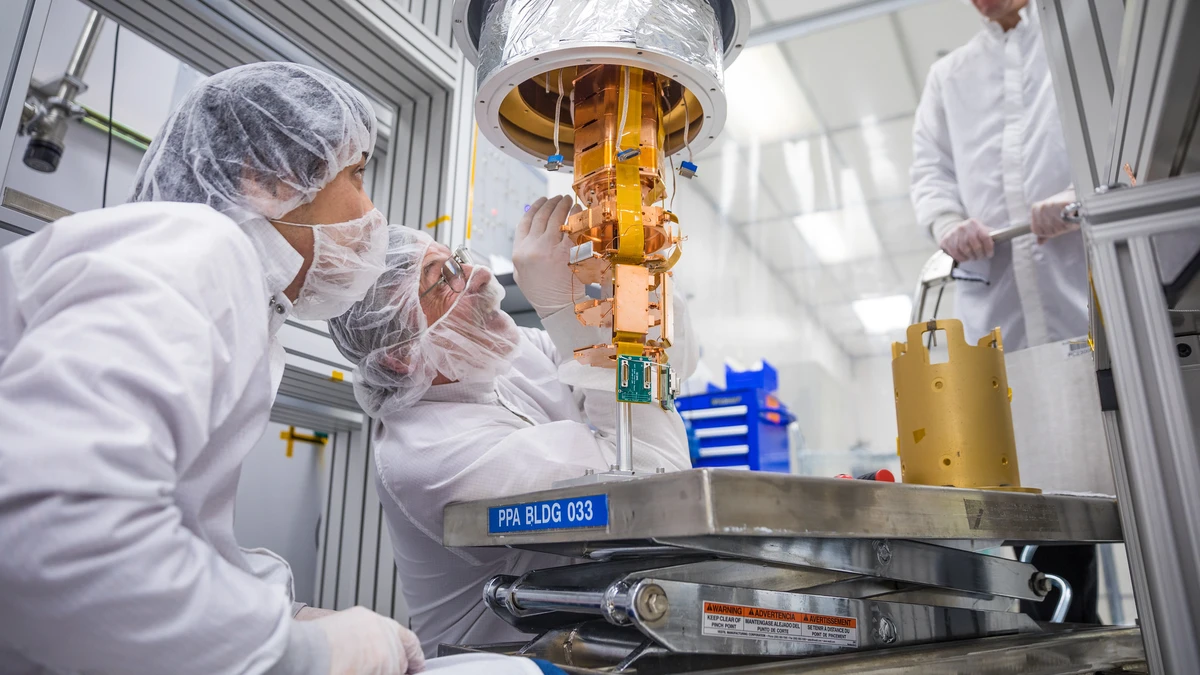
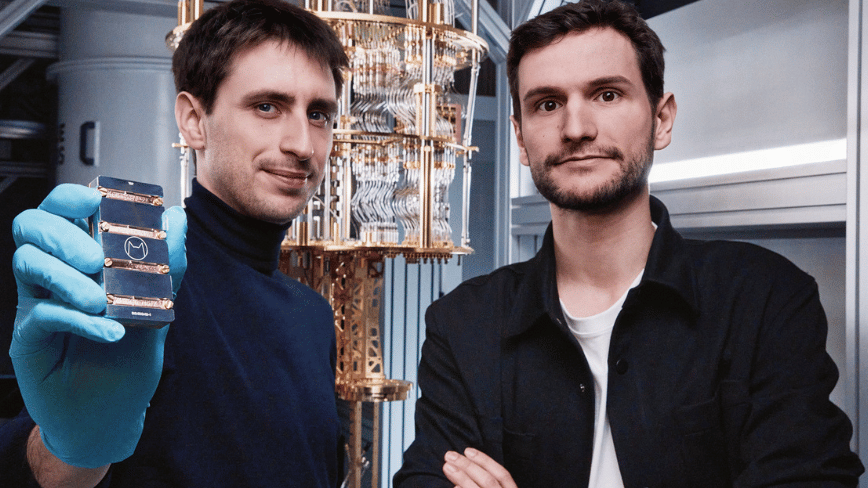
For the electrical voltage unit, the Volt, the definition involves using a superconducting circuit consisting of a _inch x 1-inch chip with many thousands of devices – just like a computer chip – except that the devices here are called Josephson junctions, a kind of two-legged transistor (a transistor has three-legs.) This chip is cooled to cryogenic temperatures, around 4 degrees above absolute zero or 4 Kelvin. The cooling is done by immersing the chip in liquid helium. Alternatively, in some systems, the chip is cooled using a cryocooler, i.e. a cryogenic refrigerator that reaches 4 degrees Kelvin.
Once the chip is cooled, a high-frequency signal of known frequency is sent to the chip and is then translated into a voltage by the chip, with a fundamental accuracy exceeding 10 digits. This is then used as a standard for the voltage. These systems are kept at National Standard Laboratories. For example, in the U.S., the main standards laboratory is operated by the National Institute of Standards and Technology (NIST) and is located in Gaithersburg, MD. In France, the laboratory is in Paris, and in many other countries a central laboratory handles those fundamental standards.
Essentially, the primary voltage standard “defines” the Volt with the highest possible accuracy. From the primary standard are derived secondary standards which are then sent to the field — to companies and institutions — and these are used to calibrate voltmeters and a myriad of other instruments. Keeping such instruments calibrated ensures their accuracy — for example, in determining an electrical reading of blood pressure or in determining the performance of a cell phone.
In the U.S., a company called Hypres, Inc. has transferred the designs of the primary voltage standards from NIST and provided both chips and systems commercially. Other sources internationally are limited and include the German fundamental research laboratory, PTB, as well as the Japanese fundamental research laboratory.
The next time you look at any electrical measurement, remember that its accuracy is traced back to a device that is enabled by cryogenics. Without cryogenics, all accuracy would suffer.