ADVERTISEMENT

Cryogenics: A Short History and the Implications It Has on the QC Industry

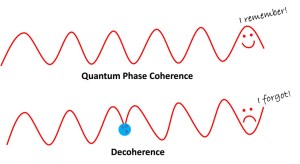
In the rapidly evolving landscape of quantum technology, cryogenics is an indispensable and fascinating domain that pushes the boundaries of low-temperature physics. Harnessing the power of extreme cold, this groundbreaking field plays a pivotal role in unlocking the true potential of quantum phenomena. This field of research has its origins in...

Cryotherapy for Kidney Cancer: A Chilling Innovation in Cancer Treatment

When it comes to battling cancer, innovation and evolution in medical technology play a vital role in improving treatment outcomes and patients’ quality of life. One such innovation that has been making strides in recent years is cryotherapy for kidney cancer. Cryotherapy, also known as freezing therapy, cryosurgery, or cryoablation,...

World’s First Crewed LH2 Flight Takes Off

At a somewhat small and unassuming airport in Maribor, Slovenia, German hydrogen propulsion startup H2FLY has quietly been building up to a major milestone in zero-emission aviation over the summer. And all the hard work has come to fruition, with the successful completion of the world’s first crewed liquid hydrogen-powered...

IRLabs Pioneers Solutions for High Altitude Scientific Exploration

In the pursuit of scientific knowledge, the German Aerospace Center (DLR) embarked on a mission to explore the enigmatic properties of atomic oxygen in Earth’s upper atmosphere. Understanding the impact of this element on satellite corrosion, deceleration in low-Earth orbits and its role as an indicator of climate change held...

NIF Journeys to Ignition

December 5, 2022, marked a historic breakthrough in the field of fusion research as scientists achieved ignition, a momentous achievement that has been a scientific grand challenge spanning over 50 years. The National Ignition Facility (NIF) within the Lawrence Livermore National Laboratory (LLNL) achieved an igniting fusion reaction where the...

Partnership Revolutionizes Healthcare with the MAGNETOM Terra 7 Tesla MRI Scanner

The University of Illinois Urbana-Champaign (UIUC) and Carle Health, a vertically integrated healthcare system with hospitals, physician practices and a medical school, have formed a unique partnership to co-own and operate a Siemens Healthineers MAGNETOM Terra 7 Tesla MRI scanner. This collaboration has significant implications for both research and clinical...

ADVERTISEMENT

Dewar

A dewar is a type of cryostat named after Sir James Dewar, the researcher who first developed the concept of a vacuum insulated container with silvered walls to reflect thermal radiation. Dewar was the first to liquefy hydrogen, and he created the device to store his discovery. The thermos bottle...

Stirling and Gifford-McMahon Cryocoolers

Stirling and Gifford-McMahon (GM) cryocoolers are two of the most commonly used cryocoolers in cryogenics. Both devices have a significant industrial base and operate at a wide range of temperatures and capacities. The thermodynamic cycles for both of these cryocoolers are quite similar. The Stirling cycle consists of a compressor,...

Liquefied Natural Gas (LNG)

A significant commercial application of cryogenics is the liquefaction, transport and storage of natural gas. Liquefied Natural Gas (LNG) is generally 95 percent methane with a few percent ethane and much lower concentrations of propane and butane. LNG liquefies at 111.6 K. Unlike many applications of cryogenics, the motivation for...

Magnetic Levitation

From http://www.superconductors.org. Magnetic-levitation is an application where superconductors perform extremely well. Transport vehicles such as trains can be made to “float” on strong superconducting magnets, virtually eliminating friction between the train and its tracks. Not only would conventional electromagnets waste much of the electrical energy as heat, they would have...

Superconductivity

From Superpower website. History of Superconductivity Superconductivity was discovered in 1911 by the Dutch physicist, Heike Kammerlingh Onnes when he was able to liquefy helium by cooling it to 4 Kelvin, or -452°F. This enabled him to cool other materials close to absolute zero and investigate their electrical properties. He...

Medical Applications of Cryogenics

Neutron Therapy Cryogenics is at the heart of nuclear accelerators. Accelerators such as Fermilab’s Tevatron make neutron therapy for cancer possible. From Fermilab Today 4/20/09: Fermilab currently offers neutron therapy. But staff at Fermilab designed and built the proton accelerator used by the nation’s first hospital-based treatment center to use...

Nuclear Physics

Al Zeller National Superconducting Cyclotron Lab (NSCL) at Michigan State University zeller@nscl.msu.edu Cryogenics has a long history in nuclear physics. The technology has its origins in the use of cold traps for maintaining a vacuum, which is required to prevent beam loss and for generating high voltages used in acceleration....

Seeking alloy that keeps elastic property down to 10K

I am looking for a metal (alloy) that supports high temperatures (at least 1600K) and keeps its elastic property at low temperatures down to 10K. Rhenium is a good one because it does not become brittle. But it is quite expensive. Pure tungsten and molybdenum enter in the brittle regime...

Searching for a freezer that does not need electricity

I’m student of University of Barcelona. We do technical cryogenic research and we are searching for a cryogenic portable freezer that does not need electricity. We can’t find any company that offers something like this. The product we are looking for is the typical portable freezer for food or drinks...