ADVERTISEMENT

Cryogenics at FAIR Unleashes the Power of Discovery

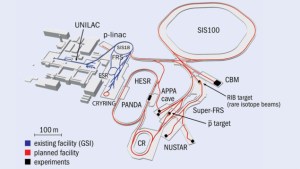
The Facility for Antiproton and Ion Research (FAIR) in Darmstadt, Germany, is embarking on a pioneering mission that will transform accelerator research and expand our understanding of the universe. With its ambitious vision to explore an extensive research canvas, FAIR is set to become a global hub for scientific exploration,...
Adult Corals Have Been Safely Frozen and Revived for the First Time

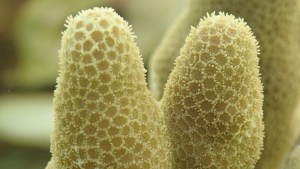
Like something out of science fiction, small colonies of mature corals have been safely frozen and revived for the first time, though more work will be needed to ensure their long-term survival, researchers report reported in Nature Communications. Freezing chunks of living corals for safekeeping — or cryopreserving them —...

Cryogenic Prober Determines Quality of Qubit Devices

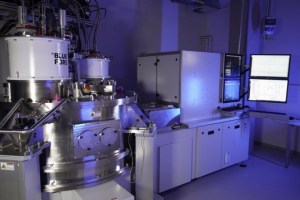
Germany’s first cryogenic measuring setup for the statistical quality measurement of qubit devices on 200- and 300-mm wafers has commenced operation at Fraunhofer IAF. With the newly established cryogenic on-wafer prober, researchers at the Fraunhofer Institute for Applied Solid State Physics IAF aim to gain a deeper understanding of the...

GKN, Marshall and Parker to Cooperate on Hydrogen Flight

Aerospace industry supplier GKN Aerospace is joining forces with Marshall and Parker Aerospace to explore liquid hydrogen fuel systems for aircraft. The partners plan to develop a liquid hydrogen system suitable for both fuel cell and internal combustion engine aircraft. The planned collaboration will benefit from the UK government-funded H2GEAR...

Unveiling the Intricate Protein Complex Guiding Signaling to Cilia

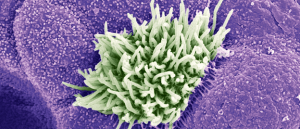
Cilia, the tiny hair-like projections found on the surface of most eukaryotic cells, act as the conduits for a myriad of signaling processes that orchestrate cellular activities. However, these intricate organelles are not equipped to craft the signaling proteins themselves. Instead, they rely on an intricate network of transport mechanisms...

Electrifying Space: Zenno’s fuel-free satellite pointing system

New Zealand-based space-flight systems company, Zenno Astronautics (Zenno), has proudly announced a remarkable achievement—surpassing a staggering $75 million in product sales (equivalent to USD 48 million) for its groundbreaking innovation, the Z01™ superconducting magnetorquer for spacecraft attitude control. At the heart of Zenno’s success is the Z01, a revolutionary satellite...

ADVERTISEMENT

Dewar

A dewar is a type of cryostat named after Sir James Dewar, the researcher who first developed the concept of a vacuum insulated container with silvered walls to reflect thermal radiation. Dewar was the first to liquefy hydrogen, and he created the device to store his discovery. The thermos bottle...

Stirling and Gifford-McMahon Cryocoolers

Stirling and Gifford-McMahon (GM) cryocoolers are two of the most commonly used cryocoolers in cryogenics. Both devices have a significant industrial base and operate at a wide range of temperatures and capacities. The thermodynamic cycles for both of these cryocoolers are quite similar. The Stirling cycle consists of a compressor,...

Liquefied Natural Gas (LNG)

A significant commercial application of cryogenics is the liquefaction, transport and storage of natural gas. Liquefied Natural Gas (LNG) is generally 95 percent methane with a few percent ethane and much lower concentrations of propane and butane. LNG liquefies at 111.6 K. Unlike many applications of cryogenics, the motivation for...

History of Cryogenics

From the Fall 1999 issue of Cold Facts magazine Millennium Breakthroughs A variety of CSA members give different perspectives on the past millennium: What were the most significant breakthroughs in cryogenics during the past millennium? Prof. R.G. Scurlock, Kryos Technology, scurlock@soton.ac.uk (“Breakthrough” = way through obstacles — Oxford English Dictionary)...

Cryobiology

Andreas Sputtek Past President Society for Cryobiology sputtek@uke.uni-hamburg.de or http://www.sputtek.de/. The word cryobiology (from the Greek words “cryo” = cold, “bios” = life, and “logos” = science) literally signifies the science of life at low temperatures. In practice, this field comprises the study of any biological material or system (e.g.,...

Cryogenic Insulation

James E. Fesmire Cryogenics Test Laboratory NASA Kennedy Space Center james.e.fesmire@nasa.gov Introduction In today’s world, the use of cryogenics and low-temperature refrigeration is taking a more and more significant role. From the food industry, transportation, energy, and medical applications to the Space Shuttle, cryogenic liquids must be stored, handled, and...

Cryogenic Treatment of Materials

F.J. Diekman Controlled Thermal Processing, Inc. info@metal-wear.com Cryogenic Processing (also called cryogenic treatment, and incorrectly “cryogenic tempering”) is a process that uses cryogenic temperatures to modify materials to enhance their performance. Cryogenic Processing involves the slow reduction in temperature of the material to at least -300°F (-185°C) and holding the...

Thermal conductivity of niobium, tantalum, lead, tin

I am interested in the thermal conductivity and other properties of low temperature superconductors. Specifically I am interested in materials like Niobium, Tantalum, Lead and Tin. Would you know of a publication that dealt with thermal properties in general and also gave specific data on these materials?