ADVERTISEMENT

A Quantum Leap in Next-Gen Optical Atomic Clocks

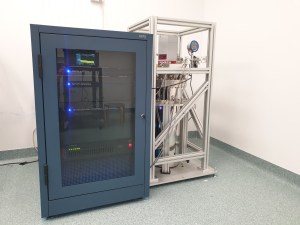
QuantX Labs, an Australian deep technology company, has achieved a groundbreaking advancement with its cryogenic sapphire oscillator, the Cryoclock. Operating at microwave frequencies, it offers unparalleled signal purity and stability, attracting interest from defense and commercial markets while also spearheading the development of advanced quantum technology for space applications.  QuantX...
Strain Manipulates TaSe3 for Quantum Effects

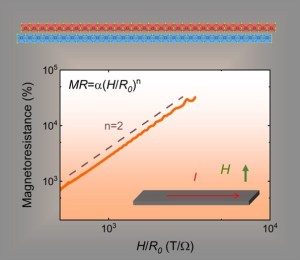
Topological effects are predicted to have many potential uses in future electronic devices. Therefore, finding ways to control these effects is desirable. As predicted by first-principles calculations, the one-dimensional (1D) transition-metal trichalcogenide TaSe3 is a strongly topological semimetal. It has a unique atomic arrangement of two inequivalent chains; the shorter...

Cryogenics at FAIR Unleashes the Power of Discovery

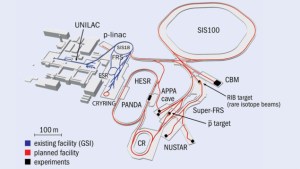
The Facility for Antiproton and Ion Research (FAIR) in Darmstadt, Germany, is embarking on a pioneering mission that will transform accelerator research and expand our understanding of the universe. With its ambitious vision to explore an extensive research canvas, FAIR is set to become a global hub for scientific exploration,...

Adult Corals Have Been Safely Frozen and Revived for the First Time

Like something out of science fiction, small colonies of mature corals have been safely frozen and revived for the first time, though more work will be needed to ensure their long-term survival, researchers report reported in Nature Communications. Freezing chunks of living corals for safekeeping — or cryopreserving them —...

Cryogenic Prober Determines Quality of Qubit Devices

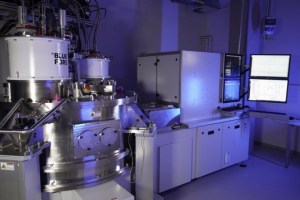
Germany’s first cryogenic measuring setup for the statistical quality measurement of qubit devices on 200- and 300-mm wafers has commenced operation at Fraunhofer IAF. With the newly established cryogenic on-wafer prober, researchers at the Fraunhofer Institute for Applied Solid State Physics IAF aim to gain a deeper understanding of the...

GKN, Marshall and Parker to Cooperate on Hydrogen Flight

Aerospace industry supplier GKN Aerospace is joining forces with Marshall and Parker Aerospace to explore liquid hydrogen fuel systems for aircraft. The partners plan to develop a liquid hydrogen system suitable for both fuel cell and internal combustion engine aircraft. The planned collaboration will benefit from the UK government-funded H2GEAR...

ADVERTISEMENT

Dewar

A dewar is a type of cryostat named after Sir James Dewar, the researcher who first developed the concept of a vacuum insulated container with silvered walls to reflect thermal radiation. Dewar was the first to liquefy hydrogen, and he created the device to store his discovery. The thermos bottle...

Stirling and Gifford-McMahon Cryocoolers

Stirling and Gifford-McMahon (GM) cryocoolers are two of the most commonly used cryocoolers in cryogenics. Both devices have a significant industrial base and operate at a wide range of temperatures and capacities. The thermodynamic cycles for both of these cryocoolers are quite similar. The Stirling cycle consists of a compressor,...

Liquefied Natural Gas (LNG)

A significant commercial application of cryogenics is the liquefaction, transport and storage of natural gas. Liquefied Natural Gas (LNG) is generally 95 percent methane with a few percent ethane and much lower concentrations of propane and butane. LNG liquefies at 111.6 K. Unlike many applications of cryogenics, the motivation for...

Magnetic Levitation

From http://www.superconductors.org. Magnetic-levitation is an application where superconductors perform extremely well. Transport vehicles such as trains can be made to “float” on strong superconducting magnets, virtually eliminating friction between the train and its tracks. Not only would conventional electromagnets waste much of the electrical energy as heat, they would have...

Superconductivity

From Superpower website. History of Superconductivity Superconductivity was discovered in 1911 by the Dutch physicist, Heike Kammerlingh Onnes when he was able to liquefy helium by cooling it to 4 Kelvin, or -452°F. This enabled him to cool other materials close to absolute zero and investigate their electrical properties. He...

Medical Applications of Cryogenics

Neutron Therapy Cryogenics is at the heart of nuclear accelerators. Accelerators such as Fermilab’s Tevatron make neutron therapy for cancer possible. From Fermilab Today 4/20/09: Fermilab currently offers neutron therapy. But staff at Fermilab designed and built the proton accelerator used by the nation’s first hospital-based treatment center to use...

Nuclear Physics

Al Zeller National Superconducting Cyclotron Lab (NSCL) at Michigan State University zeller@nscl.msu.edu Cryogenics has a long history in nuclear physics. The technology has its origins in the use of cold traps for maintaining a vacuum, which is required to prevent beam loss and for generating high voltages used in acceleration....