ADVERTISEMENT

World-First in Oman

A momentous event unfolded as the world’s first-ever liquefied hydrogen carrier, Suiso Frontier, graced the shores of Sultan Qaboos Port in Muscat on August 14. Proudly crafted by the renowned Kawasaki Heavy Industries (KHI), this marks the long-anticipated debut of Suiso Frontier in the Sultanate of Oman. The name “Suiso”...

Breakthrough Enables Quench Detection in High-Field Magnets for Fusion Reactors

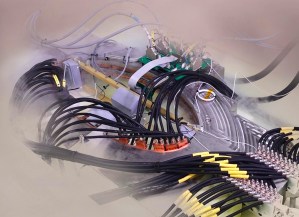
Researchers at Berkeley Lab’s Accelerator Technology & Applied Physics (ATAP) Division have developed a method for detecting and predicting the local loss of superconductivity in large-scale magnets that are capable of generating high magnetic fields. These high-field magnets are a core enabling technology for many areas of scientific research, medicine...

NASA Rocket Hardware Prepped for Shipment to Space Coast

With Artemis teammates and media watching, United Launch Alliance (ULA) crews guided the interim cryogenic propulsion stage (ICPS) for NASA’s SLS (Space Launch System) rocket for Artemis III to the loading dock at ULA’s facility in Decatur, Alabama, July 31. ULA’s R/S RocketShip will transport the flight hardware to ULA’s...

Green Hydrogen Facility May Be Coming to NY

A new green facility may be coming to Massena, NY. Air Products, an industrial gas supply company, has proposed a green hydrogen facility in Massena, according to a press release from C&S Engineers. This facility would produce liquid hydrogen by electrolysis to be used as a renewable fuel source. Project...

ADVERTISEMENT

Dewar

A dewar is a type of cryostat named after Sir James Dewar, the researcher who first developed the concept of a vacuum insulated container with silvered walls to reflect thermal radiation. Dewar was the first to liquefy hydrogen, and he created the device to store his discovery. The thermos bottle...

Stirling and Gifford-McMahon Cryocoolers

Stirling and Gifford-McMahon (GM) cryocoolers are two of the most commonly used cryocoolers in cryogenics. Both devices have a significant industrial base and operate at a wide range of temperatures and capacities. The thermodynamic cycles for both of these cryocoolers are quite similar. The Stirling cycle consists of a compressor,...

Liquefied Natural Gas (LNG)

A significant commercial application of cryogenics is the liquefaction, transport and storage of natural gas. Liquefied Natural Gas (LNG) is generally 95 percent methane with a few percent ethane and much lower concentrations of propane and butane. LNG liquefies at 111.6 K. Unlike many applications of cryogenics, the motivation for...

History of Cryogenics

From the Fall 1999 issue of Cold Facts magazine Millennium Breakthroughs A variety of CSA members give different perspectives on the past millennium: What were the most significant breakthroughs in cryogenics during the past millennium? Prof. R.G. Scurlock, Kryos Technology, scurlock@soton.ac.uk (“Breakthrough” = way through obstacles — Oxford English Dictionary)...

Cryobiology

Andreas Sputtek Past President Society for Cryobiology sputtek@uke.uni-hamburg.de or http://www.sputtek.de/. The word cryobiology (from the Greek words “cryo” = cold, “bios” = life, and “logos” = science) literally signifies the science of life at low temperatures. In practice, this field comprises the study of any biological material or system (e.g.,...

Cryogenic Insulation

James E. Fesmire Cryogenics Test Laboratory NASA Kennedy Space Center james.e.fesmire@nasa.gov Introduction In today’s world, the use of cryogenics and low-temperature refrigeration is taking a more and more significant role. From the food industry, transportation, energy, and medical applications to the Space Shuttle, cryogenic liquids must be stored, handled, and...

Cryogenic Treatment of Materials

F.J. Diekman Controlled Thermal Processing, Inc. info@metal-wear.com Cryogenic Processing (also called cryogenic treatment, and incorrectly “cryogenic tempering”) is a process that uses cryogenic temperatures to modify materials to enhance their performance. Cryogenic Processing involves the slow reduction in temperature of the material to at least -300°F (-185°C) and holding the...

Approximating pressure changes over time in cryogenic cylinders

I am an Air Resources Engineer with the California Air Resources Board (CARB). My senior management has asked me to investigate approximating pressure changes over time in cryogenic cylinders that contain LNG. So far, I have taken a stab at the problem, seeking to take a back-of-the-envelope approach (as directed...