ADVERTISEMENT

World-First in Oman

A momentous event unfolded as the world’s first-ever liquefied hydrogen carrier, Suiso Frontier, graced the shores of Sultan Qaboos Port in Muscat on August 14. Proudly crafted by the renowned Kawasaki Heavy Industries (KHI), this marks the long-anticipated debut of Suiso Frontier in the Sultanate of Oman. The name “Suiso”...

Breakthrough Enables Quench Detection in High-Field Magnets for Fusion Reactors

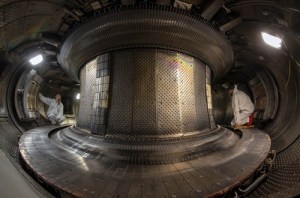
Researchers at Berkeley Lab’s Accelerator Technology & Applied Physics (ATAP) Division have developed a method for detecting and predicting the local loss of superconductivity in large-scale magnets that are capable of generating high magnetic fields. These high-field magnets are a core enabling technology for many areas of scientific research, medicine...

NASA Rocket Hardware Prepped for Shipment to Space Coast

With Artemis teammates and media watching, United Launch Alliance (ULA) crews guided the interim cryogenic propulsion stage (ICPS) for NASA’s SLS (Space Launch System) rocket for Artemis III to the loading dock at ULA’s facility in Decatur, Alabama, July 31. ULA’s R/S RocketShip will transport the flight hardware to ULA’s...

Green Hydrogen Facility May Be Coming to NY

A new green facility may be coming to Massena, NY. Air Products, an industrial gas supply company, has proposed a green hydrogen facility in Massena, according to a press release from C&S Engineers. This facility would produce liquid hydrogen by electrolysis to be used as a renewable fuel source. Project...

ADVERTISEMENT

Helium II

Helium II (He II) refers to the second liquid phase of the most abundant helium isotope (4He). Helium II is also referred to as superfluid helium. Helium II occurs once the temperature of the liquid helium drops below 2.17K. The phase transition between the first liquid phase of Helium (referred...

Air Separation and Liquefaction

by Nils Tellier, PE, President, EPSIM Corporation (CSA CSM) nils@epsim.us All illustrations courtesy EPSIM Corporation Background History of Air Separation and Liquefaction This section builds on a rich history of methods to develop deep refrigeration and cryogenic liquefaction during the 19th Century. You are encouraged to read Cryo Central’s History...

Bose-Einstein Condensate

A Bose-Einstein condensate, first proposed in 1925 by Albert Einstein based on work done by Satyendra Nath Bose (the same Bose from whom the term boson is derived), is a super-cold state of matter in which almost all of the individual atoms have “condensed” down to the lowest possible quantum...

Cold Technology for Pest Control

While it does not reach temperatures cold enough to be called cryogenic, carbon dioxide snow is at the heart of a new way of dealing with unwanted pests. It utilizes a quick freezing process that takes advantage of the properties of carbon dioxide snow and has a number of benefits...

Cryogenic Finishing

The following 3 articles discuss the uses and procedures of various type of cryogenic finishing. 1) By Robin A. Rhodes, Cryogenic Institute of New England, Inc. rrhodes@nitrofreeze.com Cryogenic Deflashing is employed to remove undesired residual mold flash that remains on molded parts after they are removed or ejected from the...

Specs and info on turbo expanders

I am a fourth year chemical engineering student doing a design project for the liquefaction of natural gas to DME and we are using a turbo expansion unit. I was wondering whether you would send me some specs and any additional information on turbo expanders that I could use as...

Colleges that offer cryogenic studies

Would you happen to know of any colleges in the US that offer cryogenics as a major? If not, should I major in something like biology or physics before, then branch off to the field of cryogenics? Any information that you could give me would be greatly appreciated, considering this...

Data on hardness of Indium?

Where can I find experimental data on the hardness of Indium, as a function of temperature, as well as any existing data on the thermal contact conductance of junctions containing Indium foil, also as a function of temperature?