ADVERTISEMENT

Superconductivity Breakthrough: First Direct Visualization of a Zero-Field Pair Density Wave

In the field of superconductivity—the phenomenon in which electrons can flow through a material with essentially zero resistance—the “holy grail” of discovery is a superconductor that can perform under everyday temperatures and pressures. Such a material could revolutionize modern life. But currently, even the “high-temperature” (high-Tc) superconductors that have been...

New Superconductor Could Lead to Quantum Computing Breakthrough

Superconductivity is the property of zero electrical resistance at ultralow temperatures and was discovered in 1911 by the Dutch physicist Kamerling-Ohnes. It plays a crucial role in many industries and technologies, ranging from quantum computing to energy. “Superconductors are amazing materials which have many strange and unusual properties,” explained Joe Carroll,...

Cryogenic SRAM IP Demonstrator Taped Out

sureCore’s cryogenic SRAM is a building block for any digital sub-system, that is capable of operating from 77K (-196° C) down to the near absolute zero temperatures needed by Quantum Computers (QCs).  Standard cell and IO cell libraries have been re-characterized for operation at cryogenic temperatures, thereby enabling an industry...

New Bolometer Could Lead to Better Cryogenic Quantum Technologies

A new type of bolometer that covers a broad range of microwave frequencies has been created by researchers in Finland. The work builds on previous research by the team, and the new technique could potentially characterize background noise sources and thereby help to improve the cryogenic environments necessary for quantum...

AVCO Sets its Sights on Mars

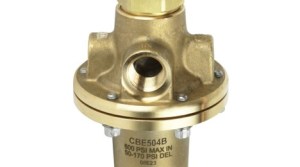
“You’re Going to The Moon” should now be quoted as “You’re Going to Mars.” From the 1990s downturn in the aerospace industry to today’s exponential growth, the demand for precision flow control and flow measurement has continued to follow the same growth trajectory. The focus of Alloy Valves and Control...

CCAT Observatory Approaches First Light

For the past six years, CCAT Observatory Inc., a nonprofit research organization formed by more than a dozen academic institutions led by Cornell University, has been developing a new telescope, the Fred Young Submillimeter Telescope (FYST, pronounced “feast”) and its supporting infrastructure to observe at submillimeter wavelengths. The infrastructure is...

ADVERTISEMENT

Dewar

A dewar is a type of cryostat named after Sir James Dewar, the researcher who first developed the concept of a vacuum insulated container with silvered walls to reflect thermal radiation. Dewar was the first to liquefy hydrogen, and he created the device to store his discovery. The thermos bottle...

Stirling and Gifford-McMahon Cryocoolers

Stirling and Gifford-McMahon (GM) cryocoolers are two of the most commonly used cryocoolers in cryogenics. Both devices have a significant industrial base and operate at a wide range of temperatures and capacities. The thermodynamic cycles for both of these cryocoolers are quite similar. The Stirling cycle consists of a compressor,...

Liquefied Natural Gas (LNG)

A significant commercial application of cryogenics is the liquefaction, transport and storage of natural gas. Liquefied Natural Gas (LNG) is generally 95 percent methane with a few percent ethane and much lower concentrations of propane and butane. LNG liquefies at 111.6 K. Unlike many applications of cryogenics, the motivation for...

Air Separation and Liquefaction

by Nils Tellier, PE, President, EPSIM Corporation (CSA CSM) nils@epsim.us All illustrations courtesy EPSIM Corporation Background History of Air Separation and Liquefaction This section builds on a rich history of methods to develop deep refrigeration and cryogenic liquefaction during the 19th Century. You are encouraged to read Cryo Central’s History...

Bose-Einstein Condensate

A Bose-Einstein condensate, first proposed in 1925 by Albert Einstein based on work done by Satyendra Nath Bose (the same Bose from whom the term boson is derived), is a super-cold state of matter in which almost all of the individual atoms have “condensed” down to the lowest possible quantum...

Cold Technology for Pest Control

While it does not reach temperatures cold enough to be called cryogenic, carbon dioxide snow is at the heart of a new way of dealing with unwanted pests. It utilizes a quick freezing process that takes advantage of the properties of carbon dioxide snow and has a number of benefits...

Cryogenic Finishing

The following 3 articles discuss the uses and procedures of various type of cryogenic finishing. 1) By Robin A. Rhodes, Cryogenic Institute of New England, Inc. rrhodes@nitrofreeze.com Cryogenic Deflashing is employed to remove undesired residual mold flash that remains on molded parts after they are removed or ejected from the...