ADVERTISEMENT

Cryogenic Bearings Smooth Way To ‘Greener’ Marine Power

The pressure to reduce greenhouse gas emissions continues as does the search for ‘greener energy solutions’ and one of the consequences of this is significant growth in the use of Liquid Natural Gas for marine applications. LNG has long been regarded as a sustainable fuel and has gained significant traction...

New Approach for the Identification of Metabolites Using LC with Ion Mobility and Cryogenic Spectroscopy

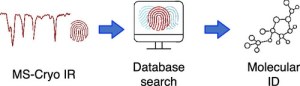
Researchers from Polytechnique Fédérale de Lausanne in Switzerland have developed a new approach for identifying isomeric and isobaric metabolites using high-resolution ion mobility spectrometry (IMS) and cryogenic infrared (IR) spectroscopy. The complex structure of metabolites has made their identification challenging, and analytical standards are often required to confirm their presence...

Consortium Develops Cryogenic 4 K and 77 K Transistor Models

The Innovate UK-funded CryoCMOS Consortium, led by SureCore Ltd, reports that it has successfully created new, PDK-quality, transistor models characterized for both 4 K and 77 K cryogenic operation. SureCore is using these to develop key foundation IP to enable the design of cryo-control ASICs for use in the quantum...

4 Ways Cryogenic Applications of Helium Can Be Used

Helium is a gas with properties that make it useful for many different purposes, from cooling to providing lift in airships. By understanding the basics of its cryogenic principles, we can understand how this gas works and its various uses. The aspects of cryogenic science emerged in early 19th-century experiments by Faraday...

ADVERTISEMENT

Dewar

A dewar is a type of cryostat named after Sir James Dewar, the researcher who first developed the concept of a vacuum insulated container with silvered walls to reflect thermal radiation. Dewar was the first to liquefy hydrogen, and he created the device to store his discovery. The thermos bottle...

Stirling and Gifford-McMahon Cryocoolers

Stirling and Gifford-McMahon (GM) cryocoolers are two of the most commonly used cryocoolers in cryogenics. Both devices have a significant industrial base and operate at a wide range of temperatures and capacities. The thermodynamic cycles for both of these cryocoolers are quite similar. The Stirling cycle consists of a compressor,...

Liquefied Natural Gas (LNG)

A significant commercial application of cryogenics is the liquefaction, transport and storage of natural gas. Liquefied Natural Gas (LNG) is generally 95 percent methane with a few percent ethane and much lower concentrations of propane and butane. LNG liquefies at 111.6 K. Unlike many applications of cryogenics, the motivation for...

Magnetic Levitation

From http://www.superconductors.org. Magnetic-levitation is an application where superconductors perform extremely well. Transport vehicles such as trains can be made to “float” on strong superconducting magnets, virtually eliminating friction between the train and its tracks. Not only would conventional electromagnets waste much of the electrical energy as heat, they would have...

Superconductivity

From Superpower website. History of Superconductivity Superconductivity was discovered in 1911 by the Dutch physicist, Heike Kammerlingh Onnes when he was able to liquefy helium by cooling it to 4 Kelvin, or -452°F. This enabled him to cool other materials close to absolute zero and investigate their electrical properties. He...

Medical Applications of Cryogenics

Neutron Therapy Cryogenics is at the heart of nuclear accelerators. Accelerators such as Fermilab’s Tevatron make neutron therapy for cancer possible. From Fermilab Today 4/20/09: Fermilab currently offers neutron therapy. But staff at Fermilab designed and built the proton accelerator used by the nation’s first hospital-based treatment center to use...

Nuclear Physics

Al Zeller National Superconducting Cyclotron Lab (NSCL) at Michigan State University zeller@nscl.msu.edu Cryogenics has a long history in nuclear physics. The technology has its origins in the use of cold traps for maintaining a vacuum, which is required to prevent beam loss and for generating high voltages used in acceleration....

Designing a liquid oxygen bath

I’m designing a Liquid Oxygen Bath to place composite coupons in the bath and soak 96 samples for intervals of 8 hours, 24 hours, 7 days, 21 days, 42 days, 62 days and 90 days.

Metallic Salts Normally Used to Produce Ultra-Low Temperatures?

Regarding the method known as the Adiabatic Demagnetization of Paramagnetic Salts: What metallic salts are normally used to produce the ultra-low temperatures used for near-absolute-zero cryogenic research? Which salts are the most efficient? Which make the best cooling agents? And which are used most commonly by physicists? I am looking...