ADVERTISEMENT

New Instrument Measures Supercurrent Flow with Quantum Benefits

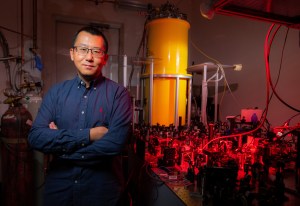
Jigang Wang offered a quick walk-around of a new sort of microscope that can help researchers understand, and ultimately develop, the inner workings of quantum computing. Wang, an Iowa State University professor of physics and astronomy who’s also affiliated with the U.S. Department of Energy’s Ames National Laboratory, described how the instrument works in extreme...

Cryomech Celebrates 60 Years of Cryo-Innovations

Cryomech was founded in 1963 by William E. “Bill” Gifford. Gifford was a professor at Syracuse University from 1961 to 1978 and (in collaboration with Dr. Howard O. McMahon) invented the Gifford-McMahon (GM) cycle cryo­cooler in 1957. This invention made research at very low temperatures much more accessible to the...

The “New” Space Mission–Cryogenic Bearings

Since the late 1990s, advancements in communication technology and the advent of GPS expanded the desire for companies and governments to invest in satellite technologies that operate in higher orbit. Today, companies like SpaceX, Blue Origin, Virgin Orbit, Relativity Space and ULA are developing cost-effective, reusable launch systems.  Manufacturers understand...

Why the LNG Retrofit Revolution Has Cryospain at Work Across Land and Sea

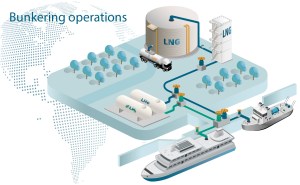
What is it about liquefied natural gas (LNG) for transport that has Cryospain’s teams hard at work across continents and oceans, on existing and brand-new vehicles and all over the world? Within the context of the global challenge of slashing emissions, LNG as fuel is taking a more and more...

What’s the Matter? STAR Cryoelectronics Builds Superconducting Quantum Sensors for X-ray Analysis and Dark Matter Searches

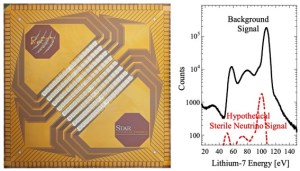
STAR Cryoelectronics, founded in 1999, is a leading worldwide supplier of advanced ultrasensitive quantum sensors and X-ray detectors based on superconductors and related control and readout electronics. The company also offers custom thin-film foundry services for superconductor electronics applications, cryogen-free, adiabatic demagnetization refrigerator (ADR) cryostats, and high-resolution spectrometers based on...

ADVERTISEMENT

Dewar

A dewar is a type of cryostat named after Sir James Dewar, the researcher who first developed the concept of a vacuum insulated container with silvered walls to reflect thermal radiation. Dewar was the first to liquefy hydrogen, and he created the device to store his discovery. The thermos bottle...

Stirling and Gifford-McMahon Cryocoolers

Stirling and Gifford-McMahon (GM) cryocoolers are two of the most commonly used cryocoolers in cryogenics. Both devices have a significant industrial base and operate at a wide range of temperatures and capacities. The thermodynamic cycles for both of these cryocoolers are quite similar. The Stirling cycle consists of a compressor,...

Liquefied Natural Gas (LNG)

A significant commercial application of cryogenics is the liquefaction, transport and storage of natural gas. Liquefied Natural Gas (LNG) is generally 95 percent methane with a few percent ethane and much lower concentrations of propane and butane. LNG liquefies at 111.6 K. Unlike many applications of cryogenics, the motivation for...

Food Processing

Cryogenics and Food The industrial gas industry provides a host of products and services related to food. The various gases have useful and sometimes fascinating applications in food industry. “The food industry is not a homogenous industry. The needs of customers processing hamburger vs. poultry vs. strawberries vs. seafood, for...

Primary Standards

Elie K. Track Hypres, Inc. elie@hypres.com http://www.hypres.com/ Primary standards involve the exact definition and realization of units of measurement for various quantities, time, length, mass, voltage, resistance, current, etc. International agreements based on the latest scientific knowledge define those units, and their realizations vary depending on the unit itself. For...

Shrink Fitting

Robin A. Rhodes Cryogenic Institute of New England, Inc. rrhodes@nitrofreeze.com Shrink fitting, (or “compression fitting” as it is sometimes called), is a method used to insert a pin or bushing into a housing or other assembly requiring an extremely tight tolerance fit. It can be used as an alternative to...

Telecommunications

From the Winter 2004 issue of Cold Facts magazine The recent M-Calc IV — 4th Industry Assessment workshop discussing military and commercial applications for low-cost cryocoolers, held in November in San Diego, highlighted progress being made in cryogenics as applied in telecommunications. The reliability and long lifetime of projects now...

Power usage: cryogenic systems vs. regular refrigerators

A recent project highlighted to me that closed cycle cryogenic cooling systems use far more electrical power to reduce temperatures by a few watts than regular refrigerators. I am sure it must be something to do with the extra difficulty of removing the heat from the liquid nitrogen or similar...

Redundancy strategies for mechanical -80C freezers

I was wondering what kind of redundancy strategies are people using for their mechanical -80C freezers? I am aware of the following. Please add if you are doing something different. 1) 1 Backup freezer for every 10 freezers – Empty and maintained at -80C at all times 2) Backup C02...

Method to move components in a cryogenic environment

Does anyone know of a method with which to reliably move components in a cryogenic environment? We are interested in moving detectors in a cryogenically cooled (2K) vacuum chamber, which is contained within a larger cryostat/isolation vacuum with thermal shields. As the desired horizontal or vertical displacement is between 10...