ADVERTISEMENT

A Quarter-Century Industry Experience Brings About New Company

After 25 years in the high-tech cryogenics field, while employed at Cryogenic Technical Services (CTS) and High Precision Devices (HPD) and working with some of the best scientific minds in the world, Charlie Danaher started Danaher Cryogenics in early 2022 to respond to the ever-increasing demand for elegant, collaborative solutions...

Are We Alone in the Cosmos? Space Dynamics Lab to Help Answer the Question

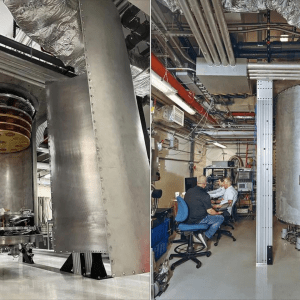
Utah State University’s Space Dynamics Laboratory (USU SDL) announced in May 2022 that it has delivered a critical subsystem to NASA’s Jet Propulsion Laboratory (JPL) for integration onto the Nancy Grace Roman Space Telescope. The Cryogenic Thermal Subsystem for the Roman Coronagraph Instrument was delivered to JPL at SDL’s facilities...

Turboexpanders Are Key Components to the Energy Transition

With the energy sector looking to decarbonize, the transition away from hydrocarbons is underway, with hydrogen taking center stage in many of the industry’s roadmaps. Georgia-based Chart Industries (NYSE: GTLS) has responded to this interest by bolstering its offering of products and technologies that enable the industry to move away...

Test Chamber for NASA’s New Cosmic Mapmaker Makes Dramatic Entrance

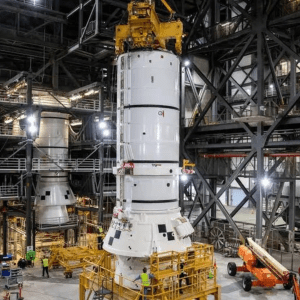
After three years of design and construction, a monthlong boat ride across the Pacific Ocean, and a lift from a 30-ton crane, the customized test chamber for NASA’s upcoming SPHEREx mission has finally reached its destination at Caltech’s Cahill Center for Astronomy and Astrophysics in Pasadena. Set to launch no...

ADVERTISEMENT

Dewar

A dewar is a type of cryostat named after Sir James Dewar, the researcher who first developed the concept of a vacuum insulated container with silvered walls to reflect thermal radiation. Dewar was the first to liquefy hydrogen, and he created the device to store his discovery. The thermos bottle...

Stirling and Gifford-McMahon Cryocoolers

Stirling and Gifford-McMahon (GM) cryocoolers are two of the most commonly used cryocoolers in cryogenics. Both devices have a significant industrial base and operate at a wide range of temperatures and capacities. The thermodynamic cycles for both of these cryocoolers are quite similar. The Stirling cycle consists of a compressor,...

Liquefied Natural Gas (LNG)

A significant commercial application of cryogenics is the liquefaction, transport and storage of natural gas. Liquefied Natural Gas (LNG) is generally 95 percent methane with a few percent ethane and much lower concentrations of propane and butane. LNG liquefies at 111.6 K. Unlike many applications of cryogenics, the motivation for...

Cryogenic Treatment of Materials

F.J. Diekman Controlled Thermal Processing, Inc. info@metal-wear.com Cryogenic Processing (also called cryogenic treatment, and incorrectly “cryogenic tempering”) is a process that uses cryogenic temperatures to modify materials to enhance their performance. Cryogenic Processing involves the slow reduction in temperature of the material to at least -300°F (-185°C) and holding the...

Cryogenics in Space

Peter Kittel University of California-Berkeley pkittel@cal.berkeley.edu Space Cryogenics is the application of cryogenics to space missions. These applications fall into two broad areas, supporting space science missions and supporting the space transportation infrastructure. Science applications: The atmosphere is opaque to much of the electro-magnetic spectrum. In space, the absence of...

Cryosurgery

Review of Cryosurgery Boris Rubinsky, PhD Hebrew University School of Science and Engineering Research Center for Biomedical Engineering 78b Ross Building Givat Ram, Jerusalem 91904 Israel rubinsky@cs.huji.ac.il as published in Annual Review of Biomedical Engineering, August 2000, Vol. 2, pp. 157-187. Abstract: Cryosurgery is a surgical technique that employs freezing...

Liquefied Natural Gas

Liquefied Natural Gas as it relates to the Field of Cryogenics John W. Bonn VJ Systems, LLC johnbonn@vjsystems-lic.com Today the world is looking for a cleaner fuel and Liquefied Natural Gas (LNG) plays a large part in achieving this goal. LNG in a liquid form is at -162°C (-259°F) and...

Could an Amateur Construct a Liquid Air Plant?

I am a newly retired experimental physicist. Is it feasible for an “amateur” to construct a liquid air plant? Do you have detailed descriptions of older (presumably simpler) liquid air plants, or references that might be of assistance?