ADVERTISEMENT

New Microscope Advances Cryo-ET Research

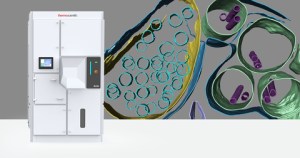
Thermo Fisher Scientific Inc. unveiled the Thermo Scientific Arctis Cryo-Plasma Focused Ion Beam (Cryo-PFIB), a new connected and automated microscope designed to advance the pace of cryo-electron tomography (cryo-ET) research. Cryo-ET makes it possible to study how proteins and other molecules operate together in a cellular context, at resolutions unsurpassed by...


Excavation of Huge Caverns for DUNE Particle Detector Underway

Around a mile below the surface in South Dakota, construction crews are hard at work excavating around 1,000 tons of rock per day. Their goal is to make room for a large underground facility that will house an international effort aimed at studying neutrinos—highly elusive subatomic particles that may hold...

In DNA–Scientists find solution to building superconductor that could transform technology

Scientists at the University of Virginia School of Medicine and their collaborators have used DNA to overcome a nearly insurmountable obstacle to engineer materials that would revolutionize electronics.  One possible outcome of such engineered materials could be superconductors, which have zero electrical resistance, allowing electrons to flow unimpeded. That means...

Researchers Take First-Ever Cryo-EM Images of Nitrogenase in Action

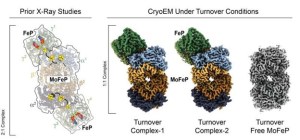
Previously, it has been impossible to capture the high-resolution images of nitrogenase, the only enzyme capable of reducing nitrogen into ammonia, during catalytic action. Now, for the first time, researchers at the University of California San Diego report near-atomic-resolution snapshots of nitrogenase during catalysis using cryogenic electron microscopy (cryoEM). The...

ADVERTISEMENT

Regenerators

Regenerators or regenerative heat exchangers are a key component of cryocoolers such as pulse tube cryocoolers (Cold Facts, August 2014). Regenerator performance greatly affects the coefficient of performance of cryocoolers. Improvements in regenerator design and, in particular, regenerator materials have been an important factor in the improvement of the performance...

Pulse Tube Cryocoolers

The development of pulse tube cryocoolers has been a significant topic of research and development over the past 20 or so years. Pulse tube cryocoolers have a number of advantages over other types of cryocoolers and are now available commercially. In order to understand pulse tube cryocoolers, it’s best to...

Thermal Expansion

Thermal expansion refers to the change in size (length or volume) that a material undergoes as its temperature changes. In cryogenic systems this effect can be quite large and must be allowed for in the design. In isotropic materials, which include most engineering materials, the thermal expansion is the same...

Air Separation and Liquefaction

by Nils Tellier, PE, President, EPSIM Corporation (CSA CSM) nils@epsim.us All illustrations courtesy EPSIM Corporation Background History of Air Separation and Liquefaction This section builds on a rich history of methods to develop deep refrigeration and cryogenic liquefaction during the 19th Century. You are encouraged to read Cryo Central’s History...

Bose-Einstein Condensate

A Bose-Einstein condensate, first proposed in 1925 by Albert Einstein based on work done by Satyendra Nath Bose (the same Bose from whom the term boson is derived), is a super-cold state of matter in which almost all of the individual atoms have “condensed” down to the lowest possible quantum...

Cold Technology for Pest Control

While it does not reach temperatures cold enough to be called cryogenic, carbon dioxide snow is at the heart of a new way of dealing with unwanted pests. It utilizes a quick freezing process that takes advantage of the properties of carbon dioxide snow and has a number of benefits...

Cryogenic Finishing

The following 3 articles discuss the uses and procedures of various type of cryogenic finishing. 1) By Robin A. Rhodes, Cryogenic Institute of New England, Inc. rrhodes@nitrofreeze.com Cryogenic Deflashing is employed to remove undesired residual mold flash that remains on molded parts after they are removed or ejected from the...

Power usage: cryogenic systems vs. regular refrigerators

A recent project highlighted to me that closed cycle cryogenic cooling systems use far more electrical power to reduce temperatures by a few watts than regular refrigerators. I am sure it must be something to do with the extra difficulty of removing the heat from the liquid nitrogen or similar...

Redundancy strategies for mechanical -80C freezers

I was wondering what kind of redundancy strategies are people using for their mechanical -80C freezers? I am aware of the following. Please add if you are doing something different. 1) 1 Backup freezer for every 10 freezers – Empty and maintained at -80C at all times 2) Backup C02...

Method to move components in a cryogenic environment

Does anyone know of a method with which to reliably move components in a cryogenic environment? We are interested in moving detectors in a cryogenically cooled (2K) vacuum chamber, which is contained within a larger cryostat/isolation vacuum with thermal shields. As the desired horizontal or vertical displacement is between 10...