ADVERTISEMENT

Space Cryogenics: The ECOSTRESS Instrument After Four Years in Space

The instrument is approaching four years of operation in space, with its over- all thermal performance as predicted and no changes to cryocooler performance. To date, all three cryocoolers have accumulated over 32,000 operating hours. On the 210th day after the initial power-on, a fault condition was detected, and the...

The Cold Facts of the Spitzer Space Telescope

NASA’s Spitzer Space Telescope, launched in August 2003 and decommissioned in January 2020 after more than 16 glorious years of exploration of the universe at infrared wavelengths, was a technical and scientific marvel. Infrared astronomical studies at wavelengths longward of 1 micron, somewhat beyond the limit of human vision at...

Journey of the Maglev

In early January 2022, a prototype mag- lev train was rolled out in southwest China’s city of Chengdu, one of the latest developments in magnetic levitation trains. The domestically developed locomotive uses high temperature superconducting and will travel with a designed speed of 620 km/h, according to Southwest Jiaotong University,...

The GigaSphere: Game Changer for Next Generation of Clean Energy

Large spheres have been used to store liquid hydrogen for decades. In fact, two 3,218 cubic meter (850,000 gallon) liquid hydrogen storage spheres have supported space flight pro- grams at the Kennedy Space Center since the mid-1960s. Currently, NASA plans to use the latest and largest liquid hydro- gen tank ever...

Eta Space Develops Cryogenic Propellant Depots for Earth and Space

Eta Space, a new space company dedicated to developing advanced cryogenic systems for the modern space and energy age, is celebrating its three-year anniversary in June with milestones scheduled for several key projects. Eta Space is developing LOXSAT, a 135 kg demonstration satellite designed to test critical cryogenic fluid management (CFM) technologies...

Penflex Controls Pressure at the Intersection of Vacuum and Cryogenic Sciences

Vacuum technologies have advanced the field of cryogenics, allowing researchers to push the frontiers of what we know and businesses to apply that knowledge and drive innovation across a wide range of industries. The intersection of vacuum and cryogenic sciences is a demanding one. Pressure and temperature requirements create a...

ADVERTISEMENT

Joule-Thomson Effect

The Joule-Thomson (JT) effect is a thermodynamic process that occurs when a fluid expands from high pressure to low pressure at constant enthalpy (an isenthalpic process). Such a process can be approximated in the real world by expanding a fluid from high pressure to low pressure across a valve. Under...

Current Leads

One of the challenges of using superconducting magnets is the connection of the magnet to a room temperature power supply. This is accomplished via current leads. The trick is that current leads should ideally have a low heat leak, since they connect room temperature to cryogenic temperature, while at the...

Multilayer Insulation

Multilayer insulation (also referred to as superinsulation) is a key component in the reduction of heat leak to cryogenic systems due to thermal radiation. MLI consists of a series of uncooled reflective surfaces placed in the vacuum space between two surfaces, one warmer than the other. Generally speaking, for ideal...

Air Separation and Liquefaction

by Nils Tellier, PE, President, EPSIM Corporation (CSA CSM) nils@epsim.us All illustrations courtesy EPSIM Corporation Background History of Air Separation and Liquefaction This section builds on a rich history of methods to develop deep refrigeration and cryogenic liquefaction during the 19th Century. You are encouraged to read Cryo Central’s History...

Bose-Einstein Condensate

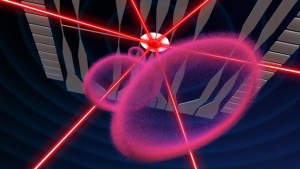
A Bose-Einstein condensate, first proposed in 1925 by Albert Einstein based on work done by Satyendra Nath Bose (the same Bose from whom the term boson is derived), is a super-cold state of matter in which almost all of the individual atoms have “condensed” down to the lowest possible quantum...

Cold Technology for Pest Control

While it does not reach temperatures cold enough to be called cryogenic, carbon dioxide snow is at the heart of a new way of dealing with unwanted pests. It utilizes a quick freezing process that takes advantage of the properties of carbon dioxide snow and has a number of benefits...

Cryogenic Finishing

The following 3 articles discuss the uses and procedures of various type of cryogenic finishing. 1) By Robin A. Rhodes, Cryogenic Institute of New England, Inc. rrhodes@nitrofreeze.com Cryogenic Deflashing is employed to remove undesired residual mold flash that remains on molded parts after they are removed or ejected from the...