ADVERTISEMENT

Space Cryogenics: The ECOSTRESS Instrument After Four Years in Space

The instrument is approaching four years of operation in space, with its over- all thermal performance as predicted and no changes to cryocooler performance. To date, all three cryocoolers have accumulated over 32,000 operating hours. On the 210th day after the initial power-on, a fault condition was detected, and the...

The Cold Facts of the Spitzer Space Telescope

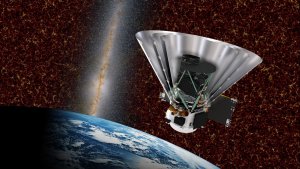
NASA’s Spitzer Space Telescope, launched in August 2003 and decommissioned in January 2020 after more than 16 glorious years of exploration of the universe at infrared wavelengths, was a technical and scientific marvel. Infrared astronomical studies at wavelengths longward of 1 micron, somewhat beyond the limit of human vision at...

Another Primary Webb Space Telescope Instrument Gets the “Go for Science”

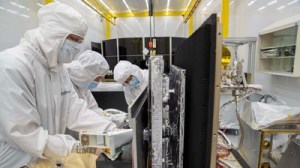
Recently, NIRISS, one of NASA’s James Webb Space Telescope’s four primary scientific instruments concluded its postlaunch preparations and was declared ready for science. Now a second of Webb’s four primary scientific instruments, known as the Mid-Infrared Instrument (MIRI), has also concluded its postlaunch preparations and is now ready for science. MIRI’s coronagraphic imaging...

Physicists Find a Shortcut to Seeing an Elusive Quantum Glow

Theoretical physics is full of weird and wonderful concepts: wormholes, quantum foam and multiverses, just to name a few. The problem is that while such things easily emerge from theorists’ equations, they are practically impossible to create and test in a laboratory setting. But for one such “untestable” theory, an...

NASA’s Webb Delivers Deepest Infrared Image of Universe Yet

NASA’s James Webb Space Telescope has delivered the deepest and sharpest infrared image of the distant universe so far. Webb’s First Deep Field is galaxy cluster SMACS 0723, and it is teeming with thousands of galaxies – including the faintest objects ever observed in the infrared.  Webb’s image is approximately...

ADVERTISEMENT

Dewar

A dewar is a type of cryostat named after Sir James Dewar, the researcher who first developed the concept of a vacuum insulated container with silvered walls to reflect thermal radiation. Dewar was the first to liquefy hydrogen, and he created the device to store his discovery. The thermos bottle...

Stirling and Gifford-McMahon Cryocoolers

Stirling and Gifford-McMahon (GM) cryocoolers are two of the most commonly used cryocoolers in cryogenics. Both devices have a significant industrial base and operate at a wide range of temperatures and capacities. The thermodynamic cycles for both of these cryocoolers are quite similar. The Stirling cycle consists of a compressor,...

Liquefied Natural Gas (LNG)

A significant commercial application of cryogenics is the liquefaction, transport and storage of natural gas. Liquefied Natural Gas (LNG) is generally 95 percent methane with a few percent ethane and much lower concentrations of propane and butane. LNG liquefies at 111.6 K. Unlike many applications of cryogenics, the motivation for...

History of Cryogenics

From the Fall 1999 issue of Cold Facts magazine Millennium Breakthroughs A variety of CSA members give different perspectives on the past millennium: What were the most significant breakthroughs in cryogenics during the past millennium? Prof. R.G. Scurlock, Kryos Technology, scurlock@soton.ac.uk (“Breakthrough” = way through obstacles — Oxford English Dictionary)...

Cryobiology

Andreas Sputtek Past President Society for Cryobiology sputtek@uke.uni-hamburg.de or http://www.sputtek.de/. The word cryobiology (from the Greek words “cryo” = cold, “bios” = life, and “logos” = science) literally signifies the science of life at low temperatures. In practice, this field comprises the study of any biological material or system (e.g.,...

Cryogenic Insulation

James E. Fesmire Cryogenics Test Laboratory NASA Kennedy Space Center james.e.fesmire@nasa.gov Introduction In today’s world, the use of cryogenics and low-temperature refrigeration is taking a more and more significant role. From the food industry, transportation, energy, and medical applications to the Space Shuttle, cryogenic liquids must be stored, handled, and...

Cryogenic Treatment of Materials

F.J. Diekman Controlled Thermal Processing, Inc. info@metal-wear.com Cryogenic Processing (also called cryogenic treatment, and incorrectly “cryogenic tempering”) is a process that uses cryogenic temperatures to modify materials to enhance their performance. Cryogenic Processing involves the slow reduction in temperature of the material to at least -300°F (-185°C) and holding the...

What is the temperature range of cryogenics?

Could you please tell me what is the temperature range of cryogenics? In other words, is -100°F considered cryogenic, or does it start lower? Could I expect to see some extended life in D2 stamping dies? What would the recipe be to achieve the desired results using cryogenics?