ADVERTISEMENT

Extreme Cool – Making Liquid Nitrogen in a Deep Underground Clean Lab

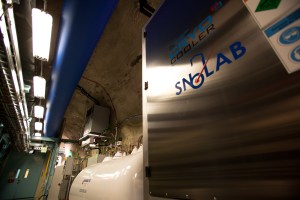
SNOLAB is Canada’s deep underground research laboratory, located two kilometers underground in Vale’s Creighton mine near Sudbury, Ontario, Canada. SNOLAB is a unique facility, providing a low background environment designed for scientific research and operates a 5,000m2 underground campus as a class-2000 clean lab. While the science program is focused...

Turboexpanders Are Key Components to the Energy Transition

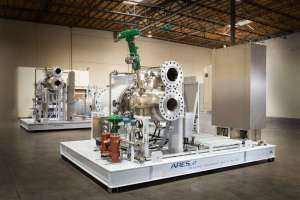
With the energy sector looking to decarbonize, the transition away from hydrocarbons is underway, with hydrogen taking center stage in many of the industry’s roadmaps. Georgia-based Chart Industries (NYSE: GTLS) has responded to this interest by bolstering its offering of products and technologies that enable the industry to move away...

Test Chamber for NASA’s New Cosmic Mapmaker Makes Dramatic Entrance

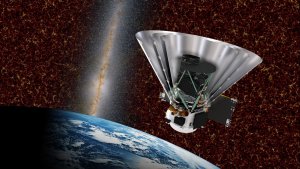
After three years of design and construction, a monthlong boat ride across the Pacific Ocean, and a lift from a 30-ton crane, the customized test chamber for NASA’s upcoming SPHEREx mission has finally reached its destination at Caltech’s Cahill Center for Astronomy and Astrophysics in Pasadena. Set to launch no...

New Microscope Advances Cryo-ET Research

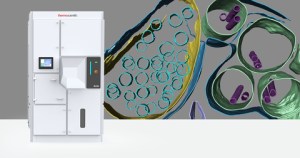
Thermo Fisher Scientific Inc. unveiled the Thermo Scientific Arctis Cryo-Plasma Focused Ion Beam (Cryo-PFIB), a new connected and automated microscope designed to advance the pace of cryo-electron tomography (cryo-ET) research. Cryo-ET makes it possible to study how proteins and other molecules operate together in a cellular context, at resolutions unsurpassed by...

ADVERTISEMENT

Dewar

A dewar is a type of cryostat named after Sir James Dewar, the researcher who first developed the concept of a vacuum insulated container with silvered walls to reflect thermal radiation. Dewar was the first to liquefy hydrogen, and he created the device to store his discovery. The thermos bottle...

Stirling and Gifford-McMahon Cryocoolers

Stirling and Gifford-McMahon (GM) cryocoolers are two of the most commonly used cryocoolers in cryogenics. Both devices have a significant industrial base and operate at a wide range of temperatures and capacities. The thermodynamic cycles for both of these cryocoolers are quite similar. The Stirling cycle consists of a compressor,...

Liquefied Natural Gas (LNG)

A significant commercial application of cryogenics is the liquefaction, transport and storage of natural gas. Liquefied Natural Gas (LNG) is generally 95 percent methane with a few percent ethane and much lower concentrations of propane and butane. LNG liquefies at 111.6 K. Unlike many applications of cryogenics, the motivation for...

Primary Standards

Elie K. Track Hypres, Inc. elie@hypres.com http://www.hypres.com/ Primary standards involve the exact definition and realization of units of measurement for various quantities, time, length, mass, voltage, resistance, current, etc. International agreements based on the latest scientific knowledge define those units, and their realizations vary depending on the unit itself. For...

Shrink Fitting

Robin A. Rhodes Cryogenic Institute of New England, Inc. rrhodes@nitrofreeze.com Shrink fitting, (or “compression fitting” as it is sometimes called), is a method used to insert a pin or bushing into a housing or other assembly requiring an extremely tight tolerance fit. It can be used as an alternative to...

Telecommunications

From the Winter 2004 issue of Cold Facts magazine The recent M-Calc IV — 4th Industry Assessment workshop discussing military and commercial applications for low-cost cryocoolers, held in November in San Diego, highlighted progress being made in cryogenics as applied in telecommunications. The reliability and long lifetime of projects now...

Wind Tunnels

Dr. Robert Kilgore The development of the cryogenic wind tunnel is one of many significant breakthroughs in both cryogenics and wind-tunnel technology made during the past millennium. Interest in the development of high-speed commercial and military aircraft resulted in a review of problems of flow simulation in transonic wind tunnels...

Need help with temperature dependent model

I am a fourth-year student at New Zealand University. My name is Xu Ke. I have a project to generate a temperature dependent model for inductor, capacitor and diode by using PLECS. PLECS is software which acts as a toolbox for MATLAB. In my models, the temperature is very low,...

In what form is water available in LN2?

Does anybody know in what form water is available in LN2? There probably is a block of ice in the bottom of the tank. But as water comes in many shapes, I can imagine snow or crystals floating free in the LN2. When water is available in LN2, could small...

Separating gases using cryogenics

We are looking for some consulting engineers who understand how to separate gases using cryogenics. We have a new process which takes biomass and converts it to 5 gases and we need to separate these gases into their pure forms. Thanks for your help. Malcolm Draper Energy Research Group LLC...