ADVERTISEMENT

QED-C® Announces Four Projects Designed to Advance Cryogenics for Quantum Information Science and Technology

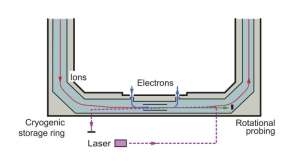
The Quantum Economic Development Consortium (QED-C), managed by SRI International, in strategic partnership with the U.S. Department of Commerce’s National Institute of Standards and Technology (NIST), today announced a $2.3 million research program to advance cryogenic technologies that will enable innovation in quantum information science and technology (QIST). The program aims to...

Realizing the STEP Fusion Dream

Deliver a UK prototype fusion energy plant, targeting 2040, and thereafter a sustainable, long-term pathway to the commercial viability of nuclear fusion. That’s the ambitious objective – and even more ambitious timeline – confronting the scientists, engineers and project managers currently sweating the details for the conceptual design of the...

Graphene Quantum Magic Delivers a New Class of Superconducting Material

Superconductors are materials that conduct electrical current with almost no electrical resistance at all. This property makes them particularly appealing for a variety of applications, including loss-less power cables, electric motors and generators, and powerful electromagnets that can be utilized for MRI imaging and magnetic levitating trains. Nagoya University researchers...

ADVERTISEMENT

Dewar

A dewar is a type of cryostat named after Sir James Dewar, the researcher who first developed the concept of a vacuum insulated container with silvered walls to reflect thermal radiation. Dewar was the first to liquefy hydrogen, and he created the device to store his discovery. The thermos bottle...

Stirling and Gifford-McMahon Cryocoolers

Stirling and Gifford-McMahon (GM) cryocoolers are two of the most commonly used cryocoolers in cryogenics. Both devices have a significant industrial base and operate at a wide range of temperatures and capacities. The thermodynamic cycles for both of these cryocoolers are quite similar. The Stirling cycle consists of a compressor,...

Liquefied Natural Gas (LNG)

A significant commercial application of cryogenics is the liquefaction, transport and storage of natural gas. Liquefied Natural Gas (LNG) is generally 95 percent methane with a few percent ethane and much lower concentrations of propane and butane. LNG liquefies at 111.6 K. Unlike many applications of cryogenics, the motivation for...

Magnets

From “Superconductivity: Present and Future Applications” by the Coalition for the Commercial Application of Superconductors. Particle physics uses accelerators to recreate the conditions of the early universe in an attempt to piece together the complex puzzle of how we got to where we are today. These huge machines are used...

Energy Storage

From “Superconductivity: Present and Future Applications” by the Coalition for the Commercial Application of Superconductors. With power lines increasingly congested and prone to instability, strategic injection of brief bursts of real power can play a crucial role in maintaining grid reliability. Small-scale Superconducting Magnetic Energy Storage (SMES) systems, based on...

Astronomy

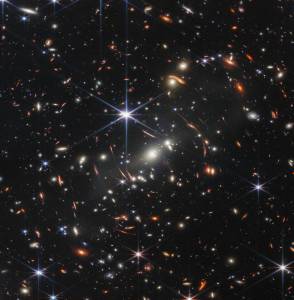
ASTRONOMY IN SPACE by Peter V. Mason, retired,  Jet Propulsion Laboratory, and Visiting Associate, California Institute of Technology. Pmason@alumni.caltech.edu In thinking about the reasons to perform astronomy in space, we first consider the effect of the earth’s atmosphere.  On a scale of decreasing energy, gamma rays, cosmic rays, X-rays and...

Cryocoolers

What is a Cryocooler? A mechanism that can extract heat from an object (cooler) and by doing so draw its temperature down below approximately 150 Kelvin (cryo). — (Courtesy Dr. Willy Gully) What is the difference between a Cryocooler and a Cryostat? A cryostat is any device designed to maintain...

Cryogenic thermophysical property data

I am in search of information regarding cryogenic thermophysical property data, specifically, Thermal Conductivity, Thermal Expansion, Stiffness and Modulus, in the 20K range. My list of materials include: Ti-6AL-4V (ELI), Al 6061-T651, and Invar (36%, plus any other composition which might have data available). Other materials which would be helpful...