ADVERTISEMENT

Emission-Free Flying on the Horizon

Boeing’s groundbreaking cryogenic fuel tank and Airbus’s hydrogen-powered jet engine bring promise to the future of aviation. A new type of cryogenic tank, designed and manufactured by Boeing, completed a critical series of tests at NASA’s Marshall Space Flight Center at the end of 2021. The successful test campaign advances the...

Physicists Observe “Quantum Boomerang” for First Time

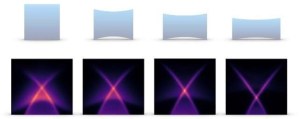
Research on this project was also conducted by Jeremy L. Tanlimco, Hector Mas, Eber Nolasco-Martinez and Ethan Q. Simmons at UCSB; Tommaso Macri at Universidade Federal do Rio Grande do Norte in Brazil and Patrizia Vignolo at Universite Cote d’Azur in Nice, France. Image: The Weld Lab’s quantum boomerang showed...

Could Zero-Boiloff Storage Be Easier Than We Think?

CSA April Newsletter SponsorHigh-performance, highly reliable, long-lasting storage tanks for transporting hydrogen & helium molecules around the globe.​https://www.gardnercryo.com [Contact Jamie Luedtke for Newsletter Sponsorship] Home About Membership Login Calendar Cold Facts Buyer’s Guide News Publications Cryo Careers Resources Donate Join now Log in Cryogenic Society of America, Inc. Twitter Facebook...

2022 Women in Cryogenics

Each year, CSA celebrates women in the fields of cryogenics, superconductivity, and quantum in our annual Women in Cryogenics feature. This year, we meet eight women across various sub-industries of cryogenics who are not only making great accomplishments and impacts in their fields of work, but also who provide powerful advice for how...

Large Hadron Collider Comes Back to Life After Three-year Hiatus

The world’s most powerful particle accelerator—the Large Hadron Collider (LHC)—has sprung back to life after a three-year shutdown. After planned maintenance and upgrades, the Large Hadron Collider has been turned back on and will shortly start another run of cutting-edge experiments. The LHC, in Switzerland, was switched off in December 2018...

ADVERTISEMENT

Helium-3

Helium-3 (3He) is one of the two stable isotopes of helium. The other is the much more common Helium-4 (4He). Neither of these isotopes should be confused with He II, which is the second liquid phase of 4He. He II was discussed in this column in the Spring 2010 edition...

Cryopumping

Cryopumping refers to the use of cryogenic temperatures to produce vacuum in enclosed spaces. More broadly, it can also refer to the removal of gases via cryogenic temperatures from a flow stream or enclosure without necessarily resulting in vacuum pressures. This is an important application of cryogenics and is used...

Thermal Acoustic Oscillations

Thermal Acoustic Oscillations (TAO) are a common event in cryogenic systems that can have significant adverse effects on the performance of the system. TAOs are sustained pressure oscillations that can occur in tubes containing gas, closed at one end (the warm end) that have a very large temperature gradient along...

Air Separation and Liquefaction

by Nils Tellier, PE, President, EPSIM Corporation (CSA CSM) nils@epsim.us All illustrations courtesy EPSIM Corporation Background History of Air Separation and Liquefaction This section builds on a rich history of methods to develop deep refrigeration and cryogenic liquefaction during the 19th Century. You are encouraged to read Cryo Central’s History...

Bose-Einstein Condensate

A Bose-Einstein condensate, first proposed in 1925 by Albert Einstein based on work done by Satyendra Nath Bose (the same Bose from whom the term boson is derived), is a super-cold state of matter in which almost all of the individual atoms have “condensed” down to the lowest possible quantum...

Cold Technology for Pest Control

While it does not reach temperatures cold enough to be called cryogenic, carbon dioxide snow is at the heart of a new way of dealing with unwanted pests. It utilizes a quick freezing process that takes advantage of the properties of carbon dioxide snow and has a number of benefits...

Cryogenic Finishing

The following 3 articles discuss the uses and procedures of various type of cryogenic finishing. 1) By Robin A. Rhodes, Cryogenic Institute of New England, Inc. rrhodes@nitrofreeze.com Cryogenic Deflashing is employed to remove undesired residual mold flash that remains on molded parts after they are removed or ejected from the...

What is the temperature range of cryogenics?

Could you please tell me what is the temperature range of cryogenics? In other words, is -100°F considered cryogenic, or does it start lower? Could I expect to see some extended life in D2 stamping dies? What would the recipe be to achieve the desired results using cryogenics?