ADVERTISEMENT

Stanford Finds Crystal That Could Revolutionize Quantum Tech

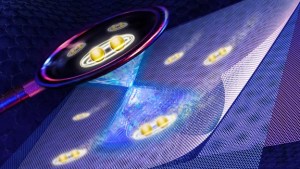
Superconductivity and quantum computing have rapidly evolved from theoretical frontiers to real-world technologies. The 2025 Nobel Prize in Physics recognized breakthroughs in superconducting quantum circuits that promise ultra-powerful computing systems. Yet these technologies demand cryogenic operating conditions, near absolute zero, where most materials lose their useful properties. Identifying materials that...

VALCOR ENGINEERING ADDS NEW VIBRATION LABORATORY

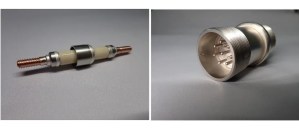
Valcor Engineering Corporation, a longtime designer and manufacturer of precision fluid and motion control components—including cryogenic solenoid valves—has expanded its in-house testing resources with the addition of a new Vibration Laboratory at its Springfield, New Jersey headquarters. The new facility provides full 3-axis (X, Y, Z) vibration testing, including sine...

Delta Reliably Meets the Need for Cryogenic Pipe Shoes in the LNG Space

As the LNG industry has grown, so has the number of suppliers who serve that market. No one knows that better, perhaps, than Delta Machine & Ironworks. The Baton Rouge-based fabricator is rapidly becoming the “go to” supplier of one of the most indisputably vital support products on LNG jobsites. Over...
‘Much-loved’ UW collaborator John Clarke wins the Nobel Prize in Physics

‘Much-loved’ UW collaborator John Clarke wins the Nobel Prize in Physics

  The Royal Swedish Academy of Sciences awarded the 2025 Nobel Prize in Physics jointly to John Clarke, Michel H. Devoret and John M. Martinis, “for the discovery of macroscopic quantum mechanical tunneling and energy quantization in an electric circuit.” Clarke, a professor emeritus of physics at the University of California, Berkeley, collaborates with the Axion Dark...

ADVERTISEMENT

Helium II

Helium II (He II) refers to the second liquid phase of the most abundant helium isotope (4He). Helium II is also referred to as superfluid helium. Helium II occurs once the temperature of the liquid helium drops below 2.17K. The phase transition between the first liquid phase of Helium (referred...

Air Separation and Liquefaction

by Nils Tellier, PE, President, EPSIM Corporation (CSA CSM) nils@epsim.us All illustrations courtesy EPSIM Corporation Background History of Air Separation and Liquefaction This section builds on a rich history of methods to develop deep refrigeration and cryogenic liquefaction during the 19th Century. You are encouraged to read Cryo Central’s History...

Bose-Einstein Condensate

A Bose-Einstein condensate, first proposed in 1925 by Albert Einstein based on work done by Satyendra Nath Bose (the same Bose from whom the term boson is derived), is a super-cold state of matter in which almost all of the individual atoms have “condensed” down to the lowest possible quantum...

Cold Technology for Pest Control

While it does not reach temperatures cold enough to be called cryogenic, carbon dioxide snow is at the heart of a new way of dealing with unwanted pests. It utilizes a quick freezing process that takes advantage of the properties of carbon dioxide snow and has a number of benefits...

Cryogenic Finishing

The following 3 articles discuss the uses and procedures of various type of cryogenic finishing. 1) By Robin A. Rhodes, Cryogenic Institute of New England, Inc. rrhodes@nitrofreeze.com Cryogenic Deflashing is employed to remove undesired residual mold flash that remains on molded parts after they are removed or ejected from the...

Power usage: cryogenic systems vs. regular refrigerators

A recent project highlighted to me that closed cycle cryogenic cooling systems use far more electrical power to reduce temperatures by a few watts than regular refrigerators. I am sure it must be something to do with the extra difficulty of removing the heat from the liquid nitrogen or similar...

Redundancy strategies for mechanical -80C freezers

I was wondering what kind of redundancy strategies are people using for their mechanical -80C freezers? I am aware of the following. Please add if you are doing something different. 1) 1 Backup freezer for every 10 freezers – Empty and maintained at -80C at all times 2) Backup C02...

Method to move components in a cryogenic environment

Does anyone know of a method with which to reliably move components in a cryogenic environment? We are interested in moving detectors in a cryogenically cooled (2K) vacuum chamber, which is contained within a larger cryostat/isolation vacuum with thermal shields. As the desired horizontal or vertical displacement is between 10...