ADVERTISEMENT

The Second Quantum Revolution

For physicists trying to harness the power of electricity, no tool was more important than the vacuum tube. This lightbulb-like device controlled the flow of electricity and could amplify signals. In the early 20th century, vacuum tubes were used in radios, televisions and long-distance telephone networks. But vacuum tubes had...

NSF Grant Funds New 40T Superconducting Magnet Design

A new $15.8 million grant from the National Science Foundation (NSF) will produce a detailed design for the world’s most powerful superconducting magnet at the Florida State University-headquartered National High Magnetic Field Laboratory (CSA CSM). While the National MagLab is already home to more than a dozen world-record magnets used...

Webb Space Telescope Will “Revolutionize Our Understanding” of the Universe

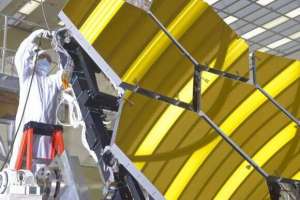
On December 25, the largest and most powerful space telescope ever constructed by NASA was successfully launched from Earth. With unprecedented technology, the James Webb Space Telescope (JWST) will peer both near and far, from the planets and bodies in our solar system to the deepest reaches of space, where the...

CryoHiVac Investigates Cryogenic Market, Affordability from Earth to Space

Today’s time-sensitive market needs revolutionization of traditional costly technologies. The cryogenic and electronic market development and utilization started from 1970 for commercial applications, and both are fast-growing technologies. There has been significant advancement of electronic products. Nowadays, a small smartphone has much more data storage and processing power capability than...

Valcor Releases New White Paper on Cryogenic Launch Vehicle Valves

Launch vehicles, particularly the upper stages, often use cryogenic rocket propellants such as liquid oxygen, liquid hydrogen and liquid methane because of their high specific impulse and high storage density. The pressurization, control and distribution of these propellants requires sophisticated valving that can operate and seal at these extreme temperatures....

ADVERTISEMENT

Liquid Hydrogen

Hydrogen becomes a liquid at 20K and 1 bar. Liquid hydrogen (LH2) is an important substance in industry, transportation and research. Industrial uses of hydrogen include applications in the electronics, glass, chemical and metal processing fields. In these applications, the hydrogen is generally used as a room temperature gas but...

Superconducting Radiofrequency Cavities

Superconducting radio frequency (SRF) cavities represent an important application of cryogenics and superconductivity. SRF cavities are a technology for accelerating charged particle beams via the transfer of radiofrequency (RF) energy to the beams via resonant structures. As such, they are frequently found in large particle accelerators used for scientific research....

Thermal Radiation Shields

Actively cooled thermal radiation shields are a common feature of cryostats whose lowest temperature is less than 77K. These shields, which typically operate at temperatures between that of LN2 and 40K, block thermal radiation from higher temperatures from reaching lower temperature cryogenic components or fluids. Since the heat radiated from...

Air Separation and Liquefaction

by Nils Tellier, PE, President, EPSIM Corporation (CSA CSM) nils@epsim.us All illustrations courtesy EPSIM Corporation Background History of Air Separation and Liquefaction This section builds on a rich history of methods to develop deep refrigeration and cryogenic liquefaction during the 19th Century. You are encouraged to read Cryo Central’s History...

Bose-Einstein Condensate

A Bose-Einstein condensate, first proposed in 1925 by Albert Einstein based on work done by Satyendra Nath Bose (the same Bose from whom the term boson is derived), is a super-cold state of matter in which almost all of the individual atoms have “condensed” down to the lowest possible quantum...

Cold Technology for Pest Control

While it does not reach temperatures cold enough to be called cryogenic, carbon dioxide snow is at the heart of a new way of dealing with unwanted pests. It utilizes a quick freezing process that takes advantage of the properties of carbon dioxide snow and has a number of benefits...

Cryogenic Finishing

The following 3 articles discuss the uses and procedures of various type of cryogenic finishing. 1) By Robin A. Rhodes, Cryogenic Institute of New England, Inc. rrhodes@nitrofreeze.com Cryogenic Deflashing is employed to remove undesired residual mold flash that remains on molded parts after they are removed or ejected from the...

Power usage: cryogenic systems vs. regular refrigerators

A recent project highlighted to me that closed cycle cryogenic cooling systems use far more electrical power to reduce temperatures by a few watts than regular refrigerators. I am sure it must be something to do with the extra difficulty of removing the heat from the liquid nitrogen or similar...

Redundancy strategies for mechanical -80C freezers

I was wondering what kind of redundancy strategies are people using for their mechanical -80C freezers? I am aware of the following. Please add if you are doing something different. 1) 1 Backup freezer for every 10 freezers – Empty and maintained at -80C at all times 2) Backup C02...

Method to move components in a cryogenic environment

Does anyone know of a method with which to reliably move components in a cryogenic environment? We are interested in moving detectors in a cryogenically cooled (2K) vacuum chamber, which is contained within a larger cryostat/isolation vacuum with thermal shields. As the desired horizontal or vertical displacement is between 10...