ADVERTISEMENT

Space Cryogenic Workshop Recap

During a year filled with uncertainty, many were worried about the effects of the pandemic on CSA’s biennial Space Cryogenics Workshop (SCW). After much consideration and effort, we are pleased to report the successful execution of our first – and hopefully only – virtual SCW. Hosted virtually on the Remo®...

Jefferson Lab Accelerator Gets a Fresh Pair of Eyes

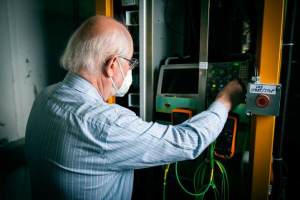
A newly invented detector is allowing physicists at the US Department of Energy’s Thomas Jefferson National Accelerator Facility (CSA CSM) to “see” neutrons like never before. Fresh insight from these devices has improved operation of the lab’s powerful electron accelerator, which is used in nuclear physics studies of the atom’s...

Valcor Release Cryogenic Launch Vehicle Valves White Paper

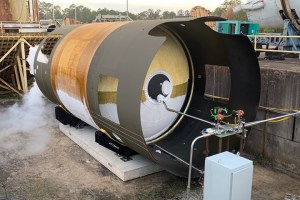
One of the biggest challenges to designing valves for launch vehicle applications, particularly for the upper stages, is meeting flow requirements within tight envelope and weight specifications. Valcor, a company that specializes in the design and manufacture of pilot-operated valves capable of achieving high flows in a compact and lightweight...

ADVERTISEMENT

Cold Compressors

A common way to provide cooling below the normal boiling point of helium (4.2K) is to reduce the pressure above the bath of liquid helium, thus also reducing the bath’s equilibrium saturation temperature. For example, to produce a 1.8K bath of liquid helium, the saturation pressure has to be reduced...

Kapitza Conductance

Kapitza conductance refers to the heat transfer between a solid surface and a fluid that covers that surface. Fundamentally, it describes the inherent difficulty in transferring energy from a solid to the fluid covering the solid surface. This phenomenon was first observed by P. L. Kapitza in 1941 while studying...

Thermosyphons

A thermosyphon (or thermosiphon) is a device that transfers heat via natural convection in a fluid. The natural convection is driven by gravity with the colder, denser fluid flowing downhill and the warmer, less dense fluid flowing back up. Thus, thermosyphons connect an object to be cooled with a reservoir...

Air Separation and Liquefaction

by Nils Tellier, PE, President, EPSIM Corporation (CSA CSM) nils@epsim.us All illustrations courtesy EPSIM Corporation Background History of Air Separation and Liquefaction This section builds on a rich history of methods to develop deep refrigeration and cryogenic liquefaction during the 19th Century. You are encouraged to read Cryo Central’s History...

Bose-Einstein Condensate

A Bose-Einstein condensate, first proposed in 1925 by Albert Einstein based on work done by Satyendra Nath Bose (the same Bose from whom the term boson is derived), is a super-cold state of matter in which almost all of the individual atoms have “condensed” down to the lowest possible quantum...

Cold Technology for Pest Control

While it does not reach temperatures cold enough to be called cryogenic, carbon dioxide snow is at the heart of a new way of dealing with unwanted pests. It utilizes a quick freezing process that takes advantage of the properties of carbon dioxide snow and has a number of benefits...

Cryogenic Finishing

The following 3 articles discuss the uses and procedures of various type of cryogenic finishing. 1) By Robin A. Rhodes, Cryogenic Institute of New England, Inc. rrhodes@nitrofreeze.com Cryogenic Deflashing is employed to remove undesired residual mold flash that remains on molded parts after they are removed or ejected from the...

Power usage: cryogenic systems vs. regular refrigerators

A recent project highlighted to me that closed cycle cryogenic cooling systems use far more electrical power to reduce temperatures by a few watts than regular refrigerators. I am sure it must be something to do with the extra difficulty of removing the heat from the liquid nitrogen or similar...

Redundancy strategies for mechanical -80C freezers

I was wondering what kind of redundancy strategies are people using for their mechanical -80C freezers? I am aware of the following. Please add if you are doing something different. 1) 1 Backup freezer for every 10 freezers – Empty and maintained at -80C at all times 2) Backup C02...

Method to move components in a cryogenic environment

Does anyone know of a method with which to reliably move components in a cryogenic environment? We are interested in moving detectors in a cryogenically cooled (2K) vacuum chamber, which is contained within a larger cryostat/isolation vacuum with thermal shields. As the desired horizontal or vertical displacement is between 10...