ADVERTISEMENT

Solving a Mystery in Dark Matter Detectors Could Improve Quantum Computers

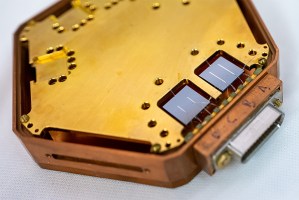
By Lauren Biron Although dark matter makes up most of the mass in our universe, it has never been directly observed. To hunt for lighter dark matter and other rare phenomena, researchers must solve a puzzle in their supersensitive detectors: an unexpected number of low-energy events, called the “low-energy excess”...

Hydrogen Aviation Advances With Airbus and RWTH Aachen’s GENtwoPRO Fuel Cell Project

By Erin Kilgore If you’ve been tracking the future of hydrogen aviation, you know it’s a path packed with big ideas and tricky engineering puzzles. Now, Airbus and RWTH Aachen University have kicked off an Airbus RWTH Aachen partnership laser-focused on a near-term, high-impact goal: using scalable fuel cell technology to power regional aircraft. Early in Airbus’s hydrogen journey,...

ADVERTISEMENT

Mixed Refrigerant Cycles

Most cryogenic refrigeration systems, both large scale systems and cryocoolers, use helium as a working fluid. There are a number of advantages to helium, not the least of which is that helium remains a fluid down to the lowest achievable temperatures. In order to freeze helium, pressures of over 20...

Fountain Pumps and He II Phase Separators

Helium II (He II), the second liquid phase of the 4He isotope described in this column in Cold Facts Spring 2010 (http://2csa.us/he2), can be modeled as consisting of two interpenetrating fluids. One, the superfluid component, has zero viscosity and entropy and the other, the normal fluid component, has nonzero viscosity...

Turboexpanders

A vital technology in the refrigerators and liquefiers described in Cold Facts Volume 31 Number 3 is that of turboexpanders. These devices are rotating machines in which the process fluid (e.g., helium) does work against the turboexpander while moving from high pressure to a lower pressure and thus is cooled....

Magnetic Levitation

From http://www.superconductors.org. Magnetic-levitation is an application where superconductors perform extremely well. Transport vehicles such as trains can be made to “float” on strong superconducting magnets, virtually eliminating friction between the train and its tracks. Not only would conventional electromagnets waste much of the electrical energy as heat, they would have...

Superconductivity

From Superpower website. History of Superconductivity Superconductivity was discovered in 1911 by the Dutch physicist, Heike Kammerlingh Onnes when he was able to liquefy helium by cooling it to 4 Kelvin, or -452°F. This enabled him to cool other materials close to absolute zero and investigate their electrical properties. He...

Medical Applications of Cryogenics

Neutron Therapy Cryogenics is at the heart of nuclear accelerators. Accelerators such as Fermilab’s Tevatron make neutron therapy for cancer possible. From Fermilab Today 4/20/09: Fermilab currently offers neutron therapy. But staff at Fermilab designed and built the proton accelerator used by the nation’s first hospital-based treatment center to use...

Nuclear Physics

Al Zeller National Superconducting Cyclotron Lab (NSCL) at Michigan State University zeller@nscl.msu.edu Cryogenics has a long history in nuclear physics. The technology has its origins in the use of cold traps for maintaining a vacuum, which is required to prevent beam loss and for generating high voltages used in acceleration....