ADVERTISEMENT

Sudbury Underground Lab Becomes One of the Coolest Places on Earth

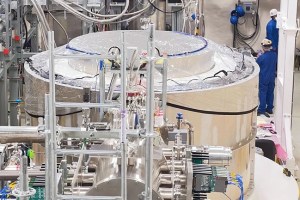
Deep underground in Sudbury’s SNOLAB, a major new experiment has just reached a critical milestone. The very centre of a series of large, nested copper vessels that make up the heart of the newest and one of the most sensitive detectors in the world has now reached a temperature a hundred...

Phantom Space Acquires Thermal Management Technologies to Advance Phantom Cloud Orbital Data Center Development

Phantom Space Corporation, a leader in responsive space transportation, announced it has completed the strategic acquisition of Thermal Management Technologies, LLC (TMT), a pioneer in advanced satellite thermal components. The acquisition strengthens Phantom’s vertical integration strategy and directly supports the rapid development of Phantom Cloud, the company’s orbital data center constellation. TMT...

Spin-Polarized Fusion Fuel Project Gets a Boost

A unique “spin” on fusion energy research is under development at the U.S. Department of Energy’s Thomas Jefferson National Accelerator Facility, fueling future efforts to harness the power of the stars for the world’s electrical grid.  The lab is part of a combined research endeavor exploring the survivability of a...

SuperCDM Experiment Reaches Critical Temperature to Unlock Search for Dark Matter

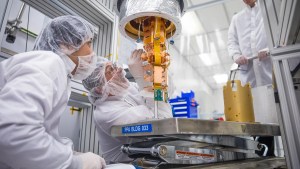
University of Minnesota Twin Cities researchers working on the Super Cryogenic Dark Matter Search (SuperCDMS) experiment are part of a team who successfully cooled the experiment to its base temperature—the temperature required for the superconducting detectors to become operational, which is hundreds of times colder than outer space. Reaching base...

Researchers Reveal New Method for Dialing Up Superconductivity

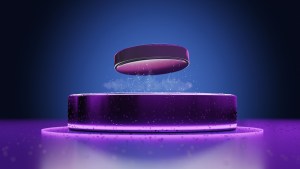
Researchers have discovered evidence that superconductivity can be controlled by influencing the surrounding environment, a finding that may lead to more efficient electronics down the road, according to a new study.  Superconductivity, or the ability of certain materials to conduct electric currents without any energy loss when cooled below a critical...

ADVERTISEMENT

Helium-3

Helium-3 (3He) is one of the two stable isotopes of helium. The other is the much more common Helium-4 (4He). Neither of these isotopes should be confused with He II, which is the second liquid phase of 4He. He II was discussed in this column in the Spring 2010 edition...

Cryopumping

Cryopumping refers to the use of cryogenic temperatures to produce vacuum in enclosed spaces. More broadly, it can also refer to the removal of gases via cryogenic temperatures from a flow stream or enclosure without necessarily resulting in vacuum pressures. This is an important application of cryogenics and is used...

Thermal Acoustic Oscillations

Thermal Acoustic Oscillations (TAO) are a common event in cryogenic systems that can have significant adverse effects on the performance of the system. TAOs are sustained pressure oscillations that can occur in tubes containing gas, closed at one end (the warm end) that have a very large temperature gradient along...

Magnetic Levitation

From http://www.superconductors.org. Magnetic-levitation is an application where superconductors perform extremely well. Transport vehicles such as trains can be made to “float” on strong superconducting magnets, virtually eliminating friction between the train and its tracks. Not only would conventional electromagnets waste much of the electrical energy as heat, they would have...

Superconductivity

From Superpower website. History of Superconductivity Superconductivity was discovered in 1911 by the Dutch physicist, Heike Kammerlingh Onnes when he was able to liquefy helium by cooling it to 4 Kelvin, or -452°F. This enabled him to cool other materials close to absolute zero and investigate their electrical properties. He...

Medical Applications of Cryogenics

Neutron Therapy Cryogenics is at the heart of nuclear accelerators. Accelerators such as Fermilab’s Tevatron make neutron therapy for cancer possible. From Fermilab Today 4/20/09: Fermilab currently offers neutron therapy. But staff at Fermilab designed and built the proton accelerator used by the nation’s first hospital-based treatment center to use...

Nuclear Physics

Al Zeller National Superconducting Cyclotron Lab (NSCL) at Michigan State University zeller@nscl.msu.edu Cryogenics has a long history in nuclear physics. The technology has its origins in the use of cold traps for maintaining a vacuum, which is required to prevent beam loss and for generating high voltages used in acceleration....

An Issue of Pressure and Flow Rate in a Supply Tank

Please help solve this problem: A supply tank requires a vaporizer to generate sufficient pressure to pump stored fluid up into a vehicle or tank. The available head is limited as the tank level falls and it is important to minimize the system pressure drop to maintain the desired flow...

Using MLI on VJ Line Joints or Cryo Storage Tanks

When installing Multi Layer Insulation (MLI) blankets on VJ line joints or cryo storage tanks should they be wrapped and tied down tight or loose? These are usually pre-cut to size. Also should they have an access hole at the point of where the molecular sieve is installed to help...