ADVERTISEMENT

Sudbury Underground Lab Becomes One of the Coolest Places on Earth

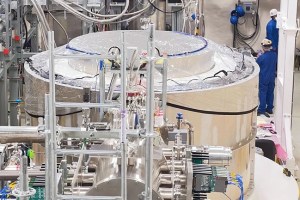
Deep underground in Sudbury’s SNOLAB, a major new experiment has just reached a critical milestone. The very centre of a series of large, nested copper vessels that make up the heart of the newest and one of the most sensitive detectors in the world has now reached a temperature a hundred...

Phantom Space Acquires Thermal Management Technologies to Advance Phantom Cloud Orbital Data Center Development

Phantom Space Corporation, a leader in responsive space transportation, announced it has completed the strategic acquisition of Thermal Management Technologies, LLC (TMT), a pioneer in advanced satellite thermal components. The acquisition strengthens Phantom’s vertical integration strategy and directly supports the rapid development of Phantom Cloud, the company’s orbital data center constellation. TMT...

Spin-Polarized Fusion Fuel Project Gets a Boost

A unique “spin” on fusion energy research is under development at the U.S. Department of Energy’s Thomas Jefferson National Accelerator Facility, fueling future efforts to harness the power of the stars for the world’s electrical grid.  The lab is part of a combined research endeavor exploring the survivability of a...

SuperCDM Experiment Reaches Critical Temperature to Unlock Search for Dark Matter

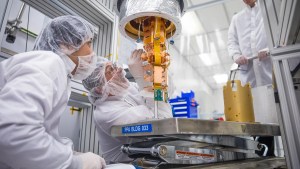
University of Minnesota Twin Cities researchers working on the Super Cryogenic Dark Matter Search (SuperCDMS) experiment are part of a team who successfully cooled the experiment to its base temperature—the temperature required for the superconducting detectors to become operational, which is hundreds of times colder than outer space. Reaching base...

Researchers Reveal New Method for Dialing Up Superconductivity

Researchers have discovered evidence that superconductivity can be controlled by influencing the surrounding environment, a finding that may lead to more efficient electronics down the road, according to a new study.  Superconductivity, or the ability of certain materials to conduct electric currents without any energy loss when cooled below a critical...

ADVERTISEMENT

Dewar

A dewar is a type of cryostat named after Sir James Dewar, the researcher who first developed the concept of a vacuum insulated container with silvered walls to reflect thermal radiation. Dewar was the first to liquefy hydrogen, and he created the device to store his discovery. The thermos bottle...

Stirling and Gifford-McMahon Cryocoolers

Stirling and Gifford-McMahon (GM) cryocoolers are two of the most commonly used cryocoolers in cryogenics. Both devices have a significant industrial base and operate at a wide range of temperatures and capacities. The thermodynamic cycles for both of these cryocoolers are quite similar. The Stirling cycle consists of a compressor,...

Liquefied Natural Gas (LNG)

A significant commercial application of cryogenics is the liquefaction, transport and storage of natural gas. Liquefied Natural Gas (LNG) is generally 95 percent methane with a few percent ethane and much lower concentrations of propane and butane. LNG liquefies at 111.6 K. Unlike many applications of cryogenics, the motivation for...

History of Cryogenics

From the Fall 1999 issue of Cold Facts magazine Millennium Breakthroughs A variety of CSA members give different perspectives on the past millennium: What were the most significant breakthroughs in cryogenics during the past millennium? Prof. R.G. Scurlock, Kryos Technology, scurlock@soton.ac.uk (“Breakthrough” = way through obstacles — Oxford English Dictionary)...

Cryobiology

Andreas Sputtek Past President Society for Cryobiology sputtek@uke.uni-hamburg.de or http://www.sputtek.de/. The word cryobiology (from the Greek words “cryo” = cold, “bios” = life, and “logos” = science) literally signifies the science of life at low temperatures. In practice, this field comprises the study of any biological material or system (e.g.,...

Cryogenic Insulation

James E. Fesmire Cryogenics Test Laboratory NASA Kennedy Space Center james.e.fesmire@nasa.gov Introduction In today’s world, the use of cryogenics and low-temperature refrigeration is taking a more and more significant role. From the food industry, transportation, energy, and medical applications to the Space Shuttle, cryogenic liquids must be stored, handled, and...

Cryogenic Treatment of Materials

F.J. Diekman Controlled Thermal Processing, Inc. info@metal-wear.com Cryogenic Processing (also called cryogenic treatment, and incorrectly “cryogenic tempering”) is a process that uses cryogenic temperatures to modify materials to enhance their performance. Cryogenic Processing involves the slow reduction in temperature of the material to at least -300°F (-185°C) and holding the...

Need help with calculating flow rate

I have to maintain a certain mass (some tons) at 100 K by circulating in it GHe (through apposite channels). How can I calculate the flow rate needed? I suppose that the delta T (T inlet and T outlet) and the heat load on the mass are necessary. Knowing the...