ADVERTISEMENT

Cryogenics at FAIR: Adaptability is Key

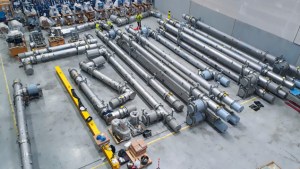
The Facility for Antiproton and Ion Research (FAIR) in Darmstadt, Germany, represents an ambitious reimagining of the GSI Helmholtz Center for Heavy Ion Research, one of Europe’s leading accelerator research laboratories. When it comes online for initial user experiments in 2027, FAIR will provide scientists from around the world with...

Cryogenic SRAM IP Demonstrator Taped Out

sureCore’s cryogenic SRAM is a building block for any digital sub-system, that is capable of operating from 77K (-196° C) down to the near absolute zero temperatures needed by Quantum Computers (QCs).  Standard cell and IO cell libraries have been re-characterized for operation at cryogenic temperatures, thereby enabling an industry...

New Bolometer Could Lead to Better Cryogenic Quantum Technologies

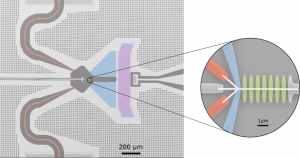
A new type of bolometer that covers a broad range of microwave frequencies has been created by researchers in Finland. The work builds on previous research by the team, and the new technique could potentially characterize background noise sources and thereby help to improve the cryogenic environments necessary for quantum...

Air Gases Can Benefit the Environment

Overview-The commercial production of oxygen and nitrogen supported the industrial revolution in the late 19th century and up to the mid-20th. Oxy-acetylene cutting and welding were important for projects like the Eiffel Tower, the Panama Canal and the Central Valley Project Corporation hydropower plants. Oxygen, nitrogen and argon refined steelmaking...

Analyzing Transcritical CO2 Compression and Pumping Pathways

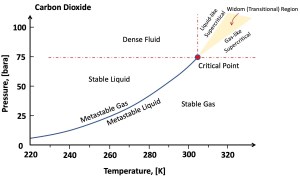
Supercritical carbon dioxide exhibits anomalous behavior in the vicinity above the critical point. The Irish physical chemist Thomas Andrews (1863) was the first who studied the supercritical behavior of carbon dioxide. He explained his observations of the fluid state above the critical point as follows: “…the surface of demarcation between the...

AVCO Sets its Sights on Mars

“You’re Going to The Moon” should now be quoted as “You’re Going to Mars.” From the 1990s downturn in the aerospace industry to today’s exponential growth, the demand for precision flow control and flow measurement has continued to follow the same growth trajectory. The focus of Alloy Valves and Control...

ADVERTISEMENT

Dewar

A dewar is a type of cryostat named after Sir James Dewar, the researcher who first developed the concept of a vacuum insulated container with silvered walls to reflect thermal radiation. Dewar was the first to liquefy hydrogen, and he created the device to store his discovery. The thermos bottle...

Stirling and Gifford-McMahon Cryocoolers

Stirling and Gifford-McMahon (GM) cryocoolers are two of the most commonly used cryocoolers in cryogenics. Both devices have a significant industrial base and operate at a wide range of temperatures and capacities. The thermodynamic cycles for both of these cryocoolers are quite similar. The Stirling cycle consists of a compressor,...

Liquefied Natural Gas (LNG)

A significant commercial application of cryogenics is the liquefaction, transport and storage of natural gas. Liquefied Natural Gas (LNG) is generally 95 percent methane with a few percent ethane and much lower concentrations of propane and butane. LNG liquefies at 111.6 K. Unlike many applications of cryogenics, the motivation for...

Food Processing

Cryogenics and Food The industrial gas industry provides a host of products and services related to food. The various gases have useful and sometimes fascinating applications in food industry. “The food industry is not a homogenous industry. The needs of customers processing hamburger vs. poultry vs. strawberries vs. seafood, for...

Primary Standards

Elie K. Track Hypres, Inc. elie@hypres.com http://www.hypres.com/ Primary standards involve the exact definition and realization of units of measurement for various quantities, time, length, mass, voltage, resistance, current, etc. International agreements based on the latest scientific knowledge define those units, and their realizations vary depending on the unit itself. For...

Shrink Fitting

Robin A. Rhodes Cryogenic Institute of New England, Inc. rrhodes@nitrofreeze.com Shrink fitting, (or “compression fitting” as it is sometimes called), is a method used to insert a pin or bushing into a housing or other assembly requiring an extremely tight tolerance fit. It can be used as an alternative to...

Telecommunications

From the Winter 2004 issue of Cold Facts magazine The recent M-Calc IV — 4th Industry Assessment workshop discussing military and commercial applications for low-cost cryocoolers, held in November in San Diego, highlighted progress being made in cryogenics as applied in telecommunications. The reliability and long lifetime of projects now...

Power usage: cryogenic systems vs. regular refrigerators

A recent project highlighted to me that closed cycle cryogenic cooling systems use far more electrical power to reduce temperatures by a few watts than regular refrigerators. I am sure it must be something to do with the extra difficulty of removing the heat from the liquid nitrogen or similar...

Redundancy strategies for mechanical -80C freezers

I was wondering what kind of redundancy strategies are people using for their mechanical -80C freezers? I am aware of the following. Please add if you are doing something different. 1) 1 Backup freezer for every 10 freezers – Empty and maintained at -80C at all times 2) Backup C02...

Method to move components in a cryogenic environment

Does anyone know of a method with which to reliably move components in a cryogenic environment? We are interested in moving detectors in a cryogenically cooled (2K) vacuum chamber, which is contained within a larger cryostat/isolation vacuum with thermal shields. As the desired horizontal or vertical displacement is between 10...