ADVERTISEMENT

Oxford Cryosystems’ Evolution From Lab to Global Innovation Hub

In the 1980s, John Cosier and Professor Mike Glazier from Oxford University pioneered the creation of an open-flow cooler, initially designed for exclusive use in Oxford University’s Clarendon Laboratory. Its remarkable efficiency quickly gained recognition within the crystallographic community, leading researchers worldwide to seek similar systems. Responding to this demand,...

RIX Liquid Oxygen Generation Plant Supports US Navy’s Newest Aircraft Carriers

Aircraft carriers use highly concentrated gaseous and liquid oxygen for aviation and medical applications. These legacy systems consume large amounts of valuable ship space and require constant attention and adjustment to meet purity and production rates. With the development of USS Gerald R. Ford (CVN-78) – the “first-in-class” nuclear-powered aircraft...

New Glenn Completes Initial Cryogenic Testing at Launch Complex 36

Blue Origin continues to take big steps forward with its New Glenn orbital rocket as hardware rolls out to the launch pad, cryogenic testing begins, and the BE-4 engine gains a new test stand. The company still aims to launch New Glenn at least once in 2024.  Over the past month,...

Maybell Quantum Announces $25 Million Series A Funding Led By Cerberus

Maybell Quantum (“Maybell”), the quantum infrastructure company, has closed a $25 million funding round led by an affiliate of Cerberus Capital Management, L.P. (“Cerberus”), a global leader in alternative investing. This investment marks the start of a pivotal chapter in Maybell’s development. With Cerberus’ financial backing and operational support, Maybell...

ISRO Achieves Big Milestone For Human Mission Gaganyaan’s Cryogenic Engine

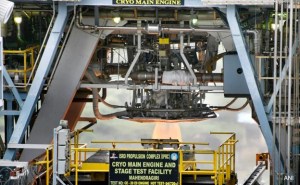
The Indian Space Research Organisation (ISRO), the space agency of the government of India responsible for the country’s space research and exploration programs, has achieved a major milestone in the human rating of its CE20 cryogenic engine, which powers the cryogenic stage of the human-rated LVM3 launch vehicle for Gaganyaan human...

Surface Superconductivity Appears in Topological Materials

Researchers at the Leibniz Institute for Solid State and Materials Research at IFW Dresden, Germany, have found proof for surface superconductivity in a class of topological materials known as Weyl semimetals. Interestingly, the superconductivity, which comes from electrons confined in so-called Fermi arcs, is slightly different on the top and...

ADVERTISEMENT

Dewar

A dewar is a type of cryostat named after Sir James Dewar, the researcher who first developed the concept of a vacuum insulated container with silvered walls to reflect thermal radiation. Dewar was the first to liquefy hydrogen, and he created the device to store his discovery. The thermos bottle...

Stirling and Gifford-McMahon Cryocoolers

Stirling and Gifford-McMahon (GM) cryocoolers are two of the most commonly used cryocoolers in cryogenics. Both devices have a significant industrial base and operate at a wide range of temperatures and capacities. The thermodynamic cycles for both of these cryocoolers are quite similar. The Stirling cycle consists of a compressor,...

Liquefied Natural Gas (LNG)

A significant commercial application of cryogenics is the liquefaction, transport and storage of natural gas. Liquefied Natural Gas (LNG) is generally 95 percent methane with a few percent ethane and much lower concentrations of propane and butane. LNG liquefies at 111.6 K. Unlike many applications of cryogenics, the motivation for...

Primary Standards

Elie K. Track Hypres, Inc. elie@hypres.com http://www.hypres.com/ Primary standards involve the exact definition and realization of units of measurement for various quantities, time, length, mass, voltage, resistance, current, etc. International agreements based on the latest scientific knowledge define those units, and their realizations vary depending on the unit itself. For...

Shrink Fitting

Robin A. Rhodes Cryogenic Institute of New England, Inc. rrhodes@nitrofreeze.com Shrink fitting, (or “compression fitting” as it is sometimes called), is a method used to insert a pin or bushing into a housing or other assembly requiring an extremely tight tolerance fit. It can be used as an alternative to...

Telecommunications

From the Winter 2004 issue of Cold Facts magazine The recent M-Calc IV — 4th Industry Assessment workshop discussing military and commercial applications for low-cost cryocoolers, held in November in San Diego, highlighted progress being made in cryogenics as applied in telecommunications. The reliability and long lifetime of projects now...

Wind Tunnels

Dr. Robert Kilgore The development of the cryogenic wind tunnel is one of many significant breakthroughs in both cryogenics and wind-tunnel technology made during the past millennium. Interest in the development of high-speed commercial and military aircraft resulted in a review of problems of flow simulation in transonic wind tunnels...

Power usage: cryogenic systems vs. regular refrigerators

A recent project highlighted to me that closed cycle cryogenic cooling systems use far more electrical power to reduce temperatures by a few watts than regular refrigerators. I am sure it must be something to do with the extra difficulty of removing the heat from the liquid nitrogen or similar...

Redundancy strategies for mechanical -80C freezers

I was wondering what kind of redundancy strategies are people using for their mechanical -80C freezers? I am aware of the following. Please add if you are doing something different. 1) 1 Backup freezer for every 10 freezers – Empty and maintained at -80C at all times 2) Backup C02...

Method to move components in a cryogenic environment

Does anyone know of a method with which to reliably move components in a cryogenic environment? We are interested in moving detectors in a cryogenically cooled (2K) vacuum chamber, which is contained within a larger cryostat/isolation vacuum with thermal shields. As the desired horizontal or vertical displacement is between 10...