ADVERTISEMENT

Indirect Cryogenic Grinding Enhances Steel Alloy Properties

The machining process covers many material removal procedures; among them, grinding is one of the most important. Improved grinding is crucial to improve the overall machining process; hence, many researches focused on enhancing the performance of grinding operations by focusing on factors like wear, chattering vibrations, grinding wheel topography, temperature,...


GenH2 Supplies Cryostat CS500 System to University

GenH2 has signed an agreement with the University of Melbourne to provide the Cryostat CS500 simulation platform for cryogenic and hydrogen R&D projects. GenH2’s Cryostat CS500 system is capable of testing a wide range of thermal insulation systems, materials, composites, or panels under both cryogenic-vacuum conditions and real-world conditions. The University...

Air Products to Build Europe’s Largest Blue Hydrogen Plant

Air Products announced it will build, own and operate a state-of-the-art carbon capture and carbon dioxide (CO2) treatment facility at its existing hydrogen production plant in Rotterdam, the Netherlands. The facility is expected to be on-stream in 2026, and the resulting “blue” hydrogen product to serve ExxonMobil’s (Esso) Rotterdam refinery...

Maddox Industrial Group Announces Expansion to Gulf Coast

Maddox Industrial Group (MIG), a leader in delivering specialized industrial solutions to the air separation, energy, refining, petrochemical, wastewater, and other industries, has announced its strategic expansion into the Gulf Coast region. This growth is in collaboration with partner, Metalforms LLC (Metalforms), an industrial fabrication, services, and heat transfer solutions...

Cryo-Engineering for SRF

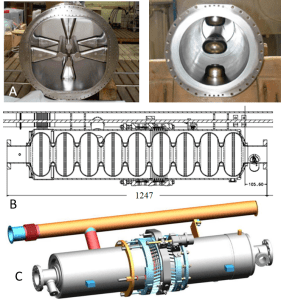
Fifty-Five Years of Inextricable Success-Superconducting Radio Frequency (SRF) cavities are vitally central to SRF accelerators, boasting a Q factor about 105 times higher than copper cavities and the capability to produce accelerating fields (Eacc) on an order of magnitude greater than copper in CW. In the 1960s, SRF cavities were...

H2FLY Pioneers Emissions-Free Flight with Successful Liquid-Hydrogen-Powered Aircraft

Stuttgart-based innovator H2FLY has achieved an unprecedented breakthrough in aviation history by successfully conducting the world’s first piloted flight of an electric aircraft powered by liquid hydrogen. This remarkable milestone marks a pivotal moment in the journey towards sustainable aviation, showcasing the immense potential of hydrogen-based technology in revolutionizing the...

ADVERTISEMENT

Helium-3

Helium-3 (3He) is one of the two stable isotopes of helium. The other is the much more common Helium-4 (4He). Neither of these isotopes should be confused with He II, which is the second liquid phase of 4He. He II was discussed in this column in the Spring 2010 edition...

Cryopumping

Cryopumping refers to the use of cryogenic temperatures to produce vacuum in enclosed spaces. More broadly, it can also refer to the removal of gases via cryogenic temperatures from a flow stream or enclosure without necessarily resulting in vacuum pressures. This is an important application of cryogenics and is used...

Thermal Acoustic Oscillations

Thermal Acoustic Oscillations (TAO) are a common event in cryogenic systems that can have significant adverse effects on the performance of the system. TAOs are sustained pressure oscillations that can occur in tubes containing gas, closed at one end (the warm end) that have a very large temperature gradient along...

Air Separation and Liquefaction

by Nils Tellier, PE, President, EPSIM Corporation (CSA CSM) nils@epsim.us All illustrations courtesy EPSIM Corporation Background History of Air Separation and Liquefaction This section builds on a rich history of methods to develop deep refrigeration and cryogenic liquefaction during the 19th Century. You are encouraged to read Cryo Central’s History...

Bose-Einstein Condensate

A Bose-Einstein condensate, first proposed in 1925 by Albert Einstein based on work done by Satyendra Nath Bose (the same Bose from whom the term boson is derived), is a super-cold state of matter in which almost all of the individual atoms have “condensed” down to the lowest possible quantum...

Cold Technology for Pest Control

While it does not reach temperatures cold enough to be called cryogenic, carbon dioxide snow is at the heart of a new way of dealing with unwanted pests. It utilizes a quick freezing process that takes advantage of the properties of carbon dioxide snow and has a number of benefits...

Cryogenic Finishing

The following 3 articles discuss the uses and procedures of various type of cryogenic finishing. 1) By Robin A. Rhodes, Cryogenic Institute of New England, Inc. rrhodes@nitrofreeze.com Cryogenic Deflashing is employed to remove undesired residual mold flash that remains on molded parts after they are removed or ejected from the...

Power usage: cryogenic systems vs. regular refrigerators

A recent project highlighted to me that closed cycle cryogenic cooling systems use far more electrical power to reduce temperatures by a few watts than regular refrigerators. I am sure it must be something to do with the extra difficulty of removing the heat from the liquid nitrogen or similar...

Redundancy strategies for mechanical -80C freezers

I was wondering what kind of redundancy strategies are people using for their mechanical -80C freezers? I am aware of the following. Please add if you are doing something different. 1) 1 Backup freezer for every 10 freezers – Empty and maintained at -80C at all times 2) Backup C02...

Method to move components in a cryogenic environment

Does anyone know of a method with which to reliably move components in a cryogenic environment? We are interested in moving detectors in a cryogenically cooled (2K) vacuum chamber, which is contained within a larger cryostat/isolation vacuum with thermal shields. As the desired horizontal or vertical displacement is between 10...