ADVERTISEMENT

FormFactor Launches Cryogenic Test Service to Dramatically Reduce the Time and Cost for Superconducting Qubit Characterization

FormFactor, Inc., a leading semiconductor test and measurement supplier, today announced an innovative and new cryogenic test service business model designed to accelerate quantum computing IC development and characterization. Quantum developers can now leverage FormFactor’s state-of-the-art Advanced Cryogenic Lab located at Boulder, Colorado, to characterize qubits and resonators using cryostats...
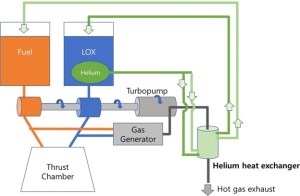
Launch Vehicle Propelled by Innovative Heat Exchanger

Writing in the journal Cryogenics, a team of scientists from the Korea Aerospace Research Institute has evaluated the performance of a helium heat exchanger for launch vehicles. Performance was evaluated under real engine operating conditions.  Launch Vehicles Efficient launch vehicle design is vital for the spacetech industry. Technology has advanced since the...

With Helium in Short Supply, Scientists Are Worried

In the basement of the University of New Mexico’s chemistry building, Karen Smith punched in the code to get into the lab she manages. Inside, three white cylinders on blue legs that looked sort of like nine-foot-tall cousins of R2-D2 were humming away. “You’re going to want to stay fairly close...

Cryogenic Pumps for Research

Vanzetti Engineering’s cryogenic pumps have been chosen for the Aria Project of the National Institute of Nuclear Physics (INFN) in partnership with Carbosulcis S.p.A., a company owned by the Sardinia Region. The Aria Project involves the construction of a cryogenic distillation tower in Sardinia, Italy, for the production of high purity...

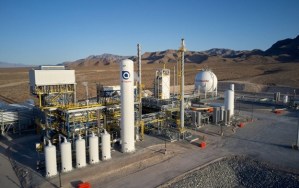
Air Liquide Inaugurates Liquid Hydrogen Plant in Nevada

Oxygen, nitrogen and hydrogen are essential small molecules for life, matter and energy. They embody Air Liquide’s scientific territory and have been at the core of the company’s activities since its creation in 1902. A world leader in gases, technologies and services for industry and health, Air Liquide’s ambition is...

Artemis I Mission Availability

Editor: Rachel Kraft Image: CREDIT: NASA/KIM SHIFLETT Artemis I WDR (6-20-22) Update: ICPS Propellant Loading Begins The launch control team is filling the Space Launch System’s interim cryogenic propulsion stage (ICPS) with liquid hydrogen (LH2) followed by liquid oxygen (LOX) loading. The core stage LH2 and LOX tanks, meanwhile, are being...

ADVERTISEMENT

Dewar

A dewar is a type of cryostat named after Sir James Dewar, the researcher who first developed the concept of a vacuum insulated container with silvered walls to reflect thermal radiation. Dewar was the first to liquefy hydrogen, and he created the device to store his discovery. The thermos bottle...

Stirling and Gifford-McMahon Cryocoolers

Stirling and Gifford-McMahon (GM) cryocoolers are two of the most commonly used cryocoolers in cryogenics. Both devices have a significant industrial base and operate at a wide range of temperatures and capacities. The thermodynamic cycles for both of these cryocoolers are quite similar. The Stirling cycle consists of a compressor,...

Liquefied Natural Gas (LNG)

A significant commercial application of cryogenics is the liquefaction, transport and storage of natural gas. Liquefied Natural Gas (LNG) is generally 95 percent methane with a few percent ethane and much lower concentrations of propane and butane. LNG liquefies at 111.6 K. Unlike many applications of cryogenics, the motivation for...

Air Separation and Liquefaction

by Nils Tellier, PE, President, EPSIM Corporation (CSA CSM) nils@epsim.us All illustrations courtesy EPSIM Corporation Background History of Air Separation and Liquefaction This section builds on a rich history of methods to develop deep refrigeration and cryogenic liquefaction during the 19th Century. You are encouraged to read Cryo Central’s History...

Bose-Einstein Condensate

A Bose-Einstein condensate, first proposed in 1925 by Albert Einstein based on work done by Satyendra Nath Bose (the same Bose from whom the term boson is derived), is a super-cold state of matter in which almost all of the individual atoms have “condensed” down to the lowest possible quantum...

Cold Technology for Pest Control

While it does not reach temperatures cold enough to be called cryogenic, carbon dioxide snow is at the heart of a new way of dealing with unwanted pests. It utilizes a quick freezing process that takes advantage of the properties of carbon dioxide snow and has a number of benefits...

Cryogenic Finishing

The following 3 articles discuss the uses and procedures of various type of cryogenic finishing. 1) By Robin A. Rhodes, Cryogenic Institute of New England, Inc. rrhodes@nitrofreeze.com Cryogenic Deflashing is employed to remove undesired residual mold flash that remains on molded parts after they are removed or ejected from the...

Power usage: cryogenic systems vs. regular refrigerators

A recent project highlighted to me that closed cycle cryogenic cooling systems use far more electrical power to reduce temperatures by a few watts than regular refrigerators. I am sure it must be something to do with the extra difficulty of removing the heat from the liquid nitrogen or similar...

Redundancy strategies for mechanical -80C freezers

I was wondering what kind of redundancy strategies are people using for their mechanical -80C freezers? I am aware of the following. Please add if you are doing something different. 1) 1 Backup freezer for every 10 freezers – Empty and maintained at -80C at all times 2) Backup C02...

Method to move components in a cryogenic environment

Does anyone know of a method with which to reliably move components in a cryogenic environment? We are interested in moving detectors in a cryogenically cooled (2K) vacuum chamber, which is contained within a larger cryostat/isolation vacuum with thermal shields. As the desired horizontal or vertical displacement is between 10...