ADVERTISEMENT

FormFactor Launches Cryogenic Test Service to Dramatically Reduce the Time and Cost for Superconducting Qubit Characterization

FormFactor, Inc., a leading semiconductor test and measurement supplier, today announced an innovative and new cryogenic test service business model designed to accelerate quantum computing IC development and characterization. Quantum developers can now leverage FormFactor’s state-of-the-art Advanced Cryogenic Lab located at Boulder, Colorado, to characterize qubits and resonators using cryostats...
Launch Vehicle Propelled by Innovative Heat Exchanger

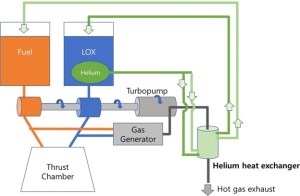
Writing in the journal Cryogenics, a team of scientists from the Korea Aerospace Research Institute has evaluated the performance of a helium heat exchanger for launch vehicles. Performance was evaluated under real engine operating conditions.  Launch Vehicles Efficient launch vehicle design is vital for the spacetech industry. Technology has advanced since the...

With Helium in Short Supply, Scientists Are Worried

In the basement of the University of New Mexico’s chemistry building, Karen Smith punched in the code to get into the lab she manages. Inside, three white cylinders on blue legs that looked sort of like nine-foot-tall cousins of R2-D2 were humming away. “You’re going to want to stay fairly close...

Cryogenic Pumps for Research

Vanzetti Engineering’s cryogenic pumps have been chosen for the Aria Project of the National Institute of Nuclear Physics (INFN) in partnership with Carbosulcis S.p.A., a company owned by the Sardinia Region. The Aria Project involves the construction of a cryogenic distillation tower in Sardinia, Italy, for the production of high purity...

Air Liquide Inaugurates Liquid Hydrogen Plant in Nevada

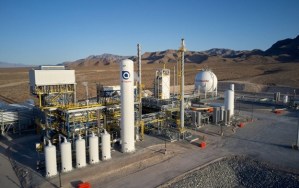
Oxygen, nitrogen and hydrogen are essential small molecules for life, matter and energy. They embody Air Liquide’s scientific territory and have been at the core of the company’s activities since its creation in 1902. A world leader in gases, technologies and services for industry and health, Air Liquide’s ambition is...

Artemis I Mission Availability

Editor: Rachel Kraft Image: CREDIT: NASA/KIM SHIFLETT Artemis I WDR (6-20-22) Update: ICPS Propellant Loading Begins The launch control team is filling the Space Launch System’s interim cryogenic propulsion stage (ICPS) with liquid hydrogen (LH2) followed by liquid oxygen (LOX) loading. The core stage LH2 and LOX tanks, meanwhile, are being...

ADVERTISEMENT

Dewar

A dewar is a type of cryostat named after Sir James Dewar, the researcher who first developed the concept of a vacuum insulated container with silvered walls to reflect thermal radiation. Dewar was the first to liquefy hydrogen, and he created the device to store his discovery. The thermos bottle...

Stirling and Gifford-McMahon Cryocoolers

Stirling and Gifford-McMahon (GM) cryocoolers are two of the most commonly used cryocoolers in cryogenics. Both devices have a significant industrial base and operate at a wide range of temperatures and capacities. The thermodynamic cycles for both of these cryocoolers are quite similar. The Stirling cycle consists of a compressor,...

Liquefied Natural Gas (LNG)

A significant commercial application of cryogenics is the liquefaction, transport and storage of natural gas. Liquefied Natural Gas (LNG) is generally 95 percent methane with a few percent ethane and much lower concentrations of propane and butane. LNG liquefies at 111.6 K. Unlike many applications of cryogenics, the motivation for...

Magnets

From “Superconductivity: Present and Future Applications” by the Coalition for the Commercial Application of Superconductors. Particle physics uses accelerators to recreate the conditions of the early universe in an attempt to piece together the complex puzzle of how we got to where we are today. These huge machines are used...

Energy Storage

From “Superconductivity: Present and Future Applications” by the Coalition for the Commercial Application of Superconductors. With power lines increasingly congested and prone to instability, strategic injection of brief bursts of real power can play a crucial role in maintaining grid reliability. Small-scale Superconducting Magnetic Energy Storage (SMES) systems, based on...

Astronomy

ASTRONOMY IN SPACE by Peter V. Mason, retired,  Jet Propulsion Laboratory, and Visiting Associate, California Institute of Technology. Pmason@alumni.caltech.edu In thinking about the reasons to perform astronomy in space, we first consider the effect of the earth’s atmosphere.  On a scale of decreasing energy, gamma rays, cosmic rays, X-rays and...

Cryocoolers

What is a Cryocooler? A mechanism that can extract heat from an object (cooler) and by doing so draw its temperature down below approximately 150 Kelvin (cryo). — (Courtesy Dr. Willy Gully) What is the difference between a Cryocooler and a Cryostat? A cryostat is any device designed to maintain...