by Dr. Ray Radebaugh, National Institute of Standards and Technology, radebaugh@boulder.nist.gov
1964 seems just like yesterday to me, yet it was 50 years ago. The Cryogenic Society of America (CSA) was born that year, and I was just beginning my professional career in cryogenics. Because I have been active in cryogenics for all these past 50 years, I would like to share some experiences and thoughts about the changes that have occurred, are occurring and will occur in cryogenics.
My introduction to cryogenics actually occurred in 1958 as a high school senior building an air liquefier for a science fair project. I was fascinated by the concept of air turning to liquid when it reached a sufficiently low temperature. In order to design a small liquefier to be run with a 1/2 HP motor, I read whatever articles or encyclopedia sections I could find on cryogenics, most of which were about the history of gas liquefaction, which started in the late 1800s. Even though my “liquid air machine” failed to liquefy air, it succeeded in reaching 105K and in inspiring me to pursue a career in cryogenics. It also prompted Leonard Pool, president of Air Products, to invite me to work in the Air Products research department in Emmaus PA that summer of 1958.
One day while there at Air Products, my supervisor took me to see some “secret” project where miniature Joule-Thomson heat exchangers in the form of finned tubes about 1 mm in diameter were being assembled into rapid cooldown devices for cooling infrared sensors to 77K in missile guidance systems [1]. This was the first time I had heard of cooling some device to cryogenic temperatures without transporting and transferring some liquid cryogen produced elsewhere in a large liquefier. Though this was the first direct coupling of a device to a cryocooler, it still was an open cycle because of the need to attach a small, high-pressure bottle of nitrogen.
In the fall of 1958, I entered the University of Michigan as an engineering major and started looking for a part-time job in cryogenics. My cryogenics project and experience allowed me to land a job in the chemistry department running one of the earliest commercial Collins helium liquefiers, developed less than ten years earlier. My job and that of two other students for the next two years was to run the liquefier and fill liquid helium dewars for use by low temperature research projects on campus and other research institutes near Ann Arbor. I also spent some time running a nitrogen liquefier elsewhere on campus. At that time, much of cryogenics involved the liquefaction of gases at one location, transporting them to another location and then transferring the liquid into a cryostat to maintain a cryogenic temperature, mostly for research applications.
The following year, Russell B. Scott’s book, “Cryogenic Engineering,” was published, which was the first book on the subject [2]. I immediately purchased the book. A large portion of the book was about gas liquefaction and the storage of liquid cryogens. That’s how most of cryogenics was carried out at that time. There also was a great deal of emphasis on the newly measured properties of fluids and solids at cryogenic temperatures to aid in their use for new engineering applications, such as in rocket propulsion. The space race began in earnest after the 1957 launch of Sputnik-1 by the Soviet Union. In 1960, Gifford and McMahon developed the cryocooler bearing their name, but for the first several years after that it was used mostly for experimental purposes [3].
I entered the physics department of Purdue University in 1962 with a goal of achieving a PhD in low temperature physics. My first two years were occupied with classes and some teaching. But then in 1964, the year CSA was formed, I began work on my thesis, which led to 50 wonderful years pursuing a career in cryogenics. The classes at Purdue were challenging, but my thesis research on the thermodynamics of vanadium in the superconducting, normal and mixed states was fun and filled with excitement in anticipation of being able to contribute something new to the field of cryogenics and superconductivity. My research on superconducting vanadium (Tc = 5.4K) required the generation of a magnetic field to suppress the superconducting state and determine the upper critical field (0.3 T at 0K). Previous work in 1960 on niobium in the Purdue laboratory of Peter Keesom utilized a bulky normal magnet to suppress its superconducting state. But in 1961, the first high-field superconducting alloys, NbZr and NbTi, were discovered by Hulm and Blaugher at Westinghouse [4], which allowed the generation of high magnetic fields with a small solenoid at 4.2K. So in 1964, we purchased some experimental NbZr wire, and I wound our first superconducting magnet. Soon after that, NbTi wire became commercially available for magnet use.

In 1964, the DC superconducting quantum interference device (SQUID) was invented [5], which relied on the Josephson effect that was predicted in 1962 [6] and experimentally verified in 1963 [7, 8]. Also in 1964, the pulse tube cryocooler was invented by Gifford and Longsworth [9], though that version, now called the basic pulse tube, is not useful for cryogenic refrigeration. The popular version used today for cryocoolers was not invented until 20 years later [10]. When I finished my PhD at Purdue in 1966, small Stirling cryocoolers were just beginning to be produced to provide 1 W at 80K for cooling infrared sensors in military night vision equipment. This cryogenic application represented the first major use of closed-cycle cryocoolers for direct cooling of a device.
I came to NIST Boulder in the summer of 1966 as a postdoctoral associate to carry out research in the millikelvin temperature range. My proposed plan was to build an adiabatic demagnetization refrigerator (ADR) to reach such temperatures, but a few months before I arrived at NIST, the 3He-4He dilution refrigerator reached temperatures below 0.1 K [11, 12]. I quickly changed plans and began work on modeling the properties of 3He-4He mixtures and the thermodynamics of the dilution refrigerator. A year or two later we built our first dilution refrigerator.
The period around 1964, plus or minus a few years, was certainly an active period for new developments in cryogenics. These important cryogenic developments are summarized as: Sputnik-1 launched (1957), first book on cryogenic engineering (1959), Gifford-McMahon cryocooler invented (1960), NbTi superconducting wire developed (1961), Josephson effect discovered (1963), superconducting quantum interference device (SQUID) invented (1964), forerunner of present-day pulse tube cryocooler invented (1964), CSA formed (1964), US hydrogen liquefaction capacity reaches 200 tons per day (1965), first closed-cycle cryocooler (Stirling) coupled directly to device to be cooled (1966), dilution refrigerator invented (1966), Apollo 11 landed on the moon propelled by a Saturn V rocket using large quantities of liquid oxygen and hydrogen for propulsion (1969). Thus, 1964 was a good time to form CSA with so much important cryogenic activity occurring around that time.
In the 50 years since 1964, tremendous progress in cryogenics and CSA has occurred. The attainment of cryogenic temperatures wherever needed (including space) has been greatly simplified by all the advances in cryocoolers. The push for cryocoolers on satellites began in the late 1980s, which resulted in greatly improved efficiencies and reliability of small cryocoolers. Since 2000, well over 40 cryocoolers have flown in space, mostly for cooling infrared sensors, and some have operated continuously for more than 12 years. The progress was described well by Peter Shirron in the February 2014 issue of Cold Facts on page 20.
These advances were made possible by the development of the linear compressor drive (1978) [13], flexure bearings (1990) [14] for long lifetimes in pressure oscillators (compressors) and the development of the orifice pulse tube cryocooler (1984) [10] followed by the double inlet and inertance tube additions. In the past 25 years, maximum efficiencies of small cryocoolers have increased from a few percent of Carnot to about 20 percent of Carnot at 80K. The market for commercial Gifford McMahon (GM) cryocoolers expanded enormously after their use in cryopumps for the semiconductor industry starting in about 1972. In the 1980s, over 5,000 per year were being manufactured [15]. Temperatures of 4K were achieved in GM cryocoolers (1989) [16] and then also in two-stage pulse tubes (1997) [17], which has led to their popularity for use in MRI systems and in replacing the use of liquid helium cryostats in research laboratories.
Microcryocoolers have also appeared on the scene since 1964, especially in the last 10 years, with cold heads only about 3 mm x 20 mm x 0.1 mm fabricated with wafer-level techniques [18, 19]. NbTi superconducting wire and cables have been manufactured in very large quantities for use in MRI magnets starting in 1977, and now at least 30,000 such superconducting MRI systems are in use. Many large accelerator projects, such as Fermilab and the Large Hadron Collider (LHC) at CERN, were made feasible after the introduction of NbTi wire. High temperature superconductivity was discovered in 1986 [20] with its subsequent use in transmission lines and large experimental motors and generators. A timeline of many important cryogenic discoveries and inventions is shown in
Figure 1.
A lot of changes have also occurred with CSA in the past 50 years, partially to keep up with the developments in cryogenics. The February 2014 issue of Cold Facts details some of these CSA changes including the reorganizations and the first publication of Cold Facts in 1985. I’m not sure when I became aware of CSA, but it may have been in the 1970s. At first I paid little attention to it because I felt its focus on industrial gas liquefaction and industrial cryogenic equipment didn’t overlap much with my narrow research interests at that time. However, its range of articles and influence began to greatly expand at some point, especially after Laurie Huget became a board member in 1987. My range of interests also expanded, and I started reading Cold Facts cover to cover instead of quickly skimming through it.
The education mission of CSA has greatly expanded in the last couple of decades to include Cold Facts columns not just on cryogenic engineering subjects, but also on the latest developments in low temperature physics and superconductivity. I not only keep up on the cryogenics news by reading Cold Facts, but I also learn many new scientific and engineering concepts through the informative articles written by well-known experts in the field. The switch to color printing in 2001 for the covers and the entire magazine in 2003 has greatly added to its appeal. Though the word “America” is in the Society’s name, it has become truly international in its coverage of important events and discoveries in cryogenics and superconductivity all over the world.
In 1997, prior to the Cryogenic Engineering Conference in Portland OR, someone (I forgot who) asked if I would give a short course on pulse tube cryocoolers. I agreed, but I wasn’t comfortable with handling the registration and administrative tasks. I decided to ask Laurie Huget if CSA would be willing to handle the registration and advertising, and fortunately for me she agreed. The short course repertoire of CSA has grown since then to offer a wide variety of cryogenics-related courses before such conferences as the Cryogenic Engineering Conference (CEC), the International Cryocooler Conference (ICC) and the Applied Superconductivity Conference (ASC). Two-day short courses for NASA and other organizations along with web-based courses have also been presented by CSA in the last few years.
What will cryogenics and CSA be like in the next 50 years? I can’t find a reliable crystal ball, so you won’t get any definite answers. What I do know is that there will be big changes based on all the changes that have occurred in the past 50 years. Most changes should be for the good of cryogenics and CSA. By simply extrapolating recent trends, I would guess that today’s cryocooler types will achieve efficiencies in the range of 30 percent to 40 percent of Carnot at 80K (up from today’s 20 percent) and 5 percent to 10 percent of Carnot at 4K (up from today’s 1 percent). Of course they will be more compact because of operating at several hundred hertz instead of about 60 Hz, and the cost will be lower because of higher production quantities for more applications.
Space travel to Mars and back will be relatively common and require cryogens and cryocoolers for zero boiloff and for cooling sensitive detectors. Microcryocoolers will become quite common in the cooling of electronic and photonic devices. They will be made smaller, but I don’t foresee a driving force to make the complete cooler much smaller than a millimeter or so. It would be too easy to lose them. However, the active cooling medium may be microscopic, such as electrons, photons or an ensemble of atoms or molecules.
Laser cooling and magneto-optical trapping of atoms has become very useful in the past 20 years or so in achieving many new phenomena, such as Bose-Einstein condensates in the nanokelvin temperature range. The physics involved is much different than that of current cryocoolers, and the physicists active in this type of cooling have little interaction with the cryogenics and cryocooler people of today. I foresee a day in the next 50 years when applications of laser-cooled atoms will be rather common, and those working in the field will be active members of CSA and be participating in cryogenics conferences where there will be sessions on laser cooling. I hope there will be conference sessions on other cooling methods that we don’t use or even know about today.
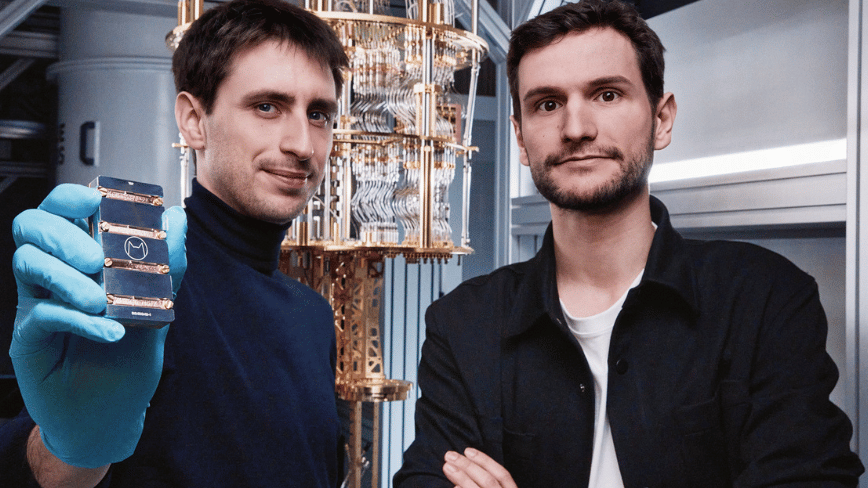
In the area of superconductivity, I am sure there will be new superconductors developed and in commercial use within 50 years that have operating temperatures around 100K. However, I don’t expect any room temperature superconductors of any practical use, so cryogenics will still be necessary for superconductivity. Quantum computers will be available to solve certain difficult problems, and low temperatures will be necessary to maintain the qubits in the ground state. Finally, CSA will have greatly expanded in 50 years to include an even wider variety of international researchers and users active in many new application areas of cryogenics. To those of you just beginning your careers in cryogenics, I ask that when you happen to look back at these predictions 50 years from now, don’t laugh too hard, but see what you can learn from them for guessing at the status of cryogenics in the next century.
References
[1] J. M. Geist and P. K. Lashmet, “Miniature Joule-Thomson refrigeration system,” in Adv. Cryogenic Engineering 5, New York: Plenum Press, pp. 324-331 (1960).
[2] R.B. Scott, Cryogenic Engineering, D. Van Nostrand, Princeton (1959).
[3] H. O. McMahon and W. E. Gifford, “A new low-temperature gas expansion cycle,” in Adv. Cryogenic Engineering 5, New York: Plenum Press, pp. 354-372 (1960).
[4] J. K. Hulm and R. D. Blaugher, “Superconducting Solid Solution Alloys of the Transition Elements,” Phys. Rev. 123, pp. 1569-1580 (1961).
[5] R. C. Jaklevic, J. Lambe, A. H. Silver, and J. E. Mercereau, “Quantum interference effects in Josephson tunneling,” Phys. Rev. Lett. 12, pp. 159-160 (1964).
[6] B. D. Josephson, “Possible new effects in superconducting tunneling,” Phys. Lett.1, pp. 251-253 (1962).
[7] P. W. Anderson and J. M. Rowell, “Probable observation of the Josephson superconducting tunnel effect,” Phys. Rev. Lett., vol. 10, pp. 230, 1963.
[8] S. Shapiro, “Josephson currents in superconducting tunnelling: the effect of microwaves and other observations,” Phys. Rev. Lett. 11, pp. 80-82 (1963).
[9] W. E. Gifford and R. C. Longsworth, “Pulse tube refrigeration,” Trans. of the ASME, J. of Engineering for Industry, vol. Aug. 1964, pp. paper No. 63-WA-290 (1964).
[10] E. I. Mikulin, A. A. Tarasov, and M. P. Shkrebyonock, “Low temperature expansion pulse tubes,” in Adv. Cryogenic Engineering, 29, New York: Plenum Press, pp. 629-637, (1984).
[11] H.E. Hall, P.J. Ford, and K. Thompson, “A Helium-3 Dilution Refrigerator,” Cryogenics 6, pp. 80-88 (1966).
[12] B.S. Neganov, N. Borisov, and M. Liburg, Zh. Eksp. Teor. Fiz. 50, 1445, (1966); translation: Sov. Phys. –JETP 23, 959 (1966).
[13] G.J Haarhuis, “The MC80—a magnetically driven Stirling refrigerator,” Cryogenics, 18, pp. 656-658 (1978).
[14] G. Davey, “Review of the Oxford cryocooler,” Adv. Cryogenic Engineering 35, New York: Plenum Press, pp. 1423-1430 (1990).
[15] M.C. Bridwell and J.G. Rodes, “History of the modern cryopump,” J. Vac. Sci. and Tech. A 3, pp. 472-475 (1985).
[16] T. Kuriyama, R. Hakamada, H. Nakagome, Y. Tokai, M. Sahashi, R. Li, O. Yoshida, K. Matsumoto, and T. Hashimoto, “High efficiency two-stage GM refrigerator with magnetic material in the liquid helium temperature region,” Adv. in Cryogenic Engineering 35, New York: Plenum Press, pp 1261-1269 (1990).
[17] C. Wang, G. Thummes, and C. Heiden, “A two-stage pulse tube cooler operating below 4 K,” Cryogenics 37, pp. 159-164 (1997).
[18] P.P.P.M. Lerou, H.J.M. ter Brake, H.V. Jansen, J.F. Burger, H.J. Holland, and H. Rogalla, “Micro Machined Joule-Thomson Coolers,” Advances in Cryogenic Engineering 53, American Institute of Physics, Melville, NY, pp. 614-621 (2008).
[19] Y. Wang, R. Lewis, R. Radebaugh, M.-H. Lin, and Y.C. Lee, “A Monolithic Polyimide Micro Cryogenic Cooler: Design, Fabrication, and Test,” J. Microelectromechanical Systems, to be published (2014).
[20] J. G. Bednorz and K. A. Muller, “Possible High Tc Superconductivity in the Ba-La-Cu-O System,” Z. Phys. B – Condensed Matter 64, pp. 189-193 (1986).