The Royal Swedish Academy of Sciences awarded the 2016 Nobel Prize in Physics to David J. Thouless, F. Duncan M. Haldane and J. Michael Kosterlitz, three laureates who have used advanced topological methods to study unusual phases of matter, such as superconductors, superfluids or thin magnetic films.
Topology is a branch of mathematics that describes properties that only change step-wise. Using topology as a tool, the laureates were able to astound experts, and thanks to their pioneering work, the hunt is now on for new and exotic phases of matter thought to impact future applications in both materials science and electronics.
In the early 1970s, Michael Kosterlitz and David Thouless overturned the then current theory that superconductivity or suprafluidity could not occur in thin layers, demonstrating that superconductivity could occur at low temperatures. They also explained the mechanism, phase transition, that makes superconductivity disappear at higher temperatures.
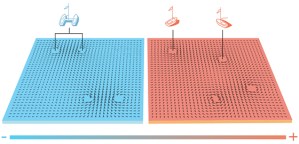
Researchers now know of many topological phases, not only in thin layers and threads but also in ordinary three-dimensional materials. Over the last decade, this area has boosted frontline research in condensed matter physics, not least because of the hope that topological materials could be used in new generations of electronics and superconductors, or in future quantum computers.
The three laureates will share the approximately $1.8 million prize, half awarded to Thouless and the other shared by Haldane and Kosterlitz. All three scholars were born in the UK but now live and teach in the US. Thouless received his PhD from Cornell University in 1958 and is currently an emeritus professor at the University of Washington. Haldane earned his PhD at Cambridge University in 1978 and currently teaches physics at Princeton University, while Kosterlitz, who teaches physics at Brown University, was awarded his PhD at Oxford University in 1969.