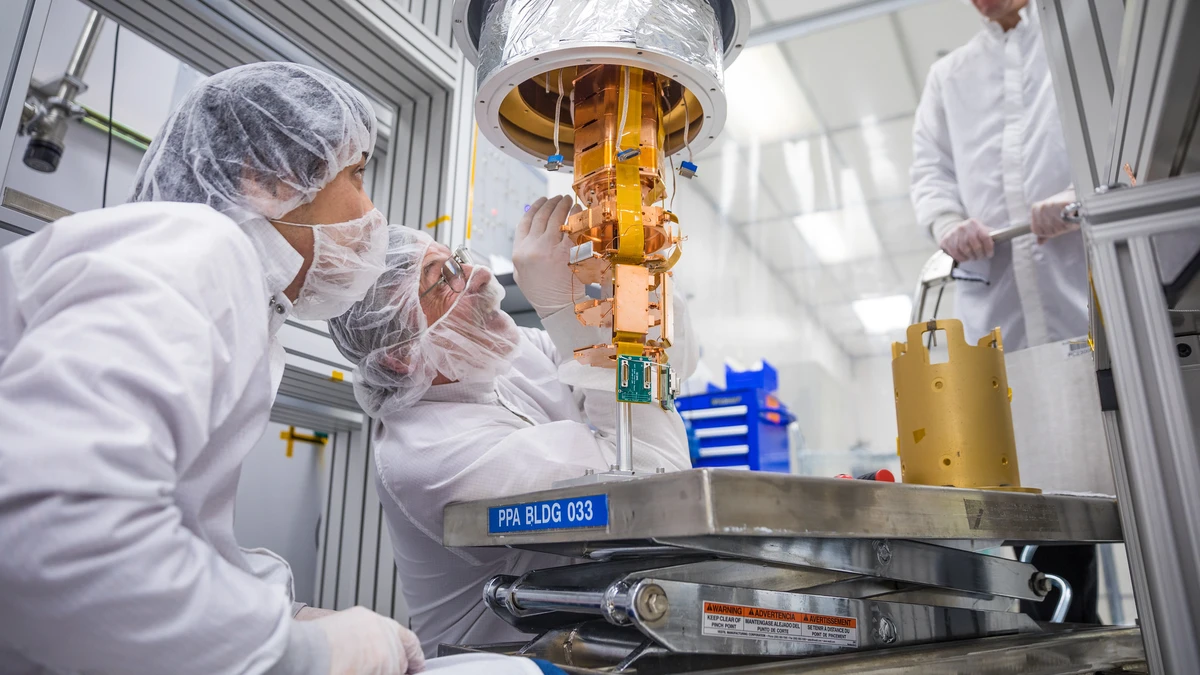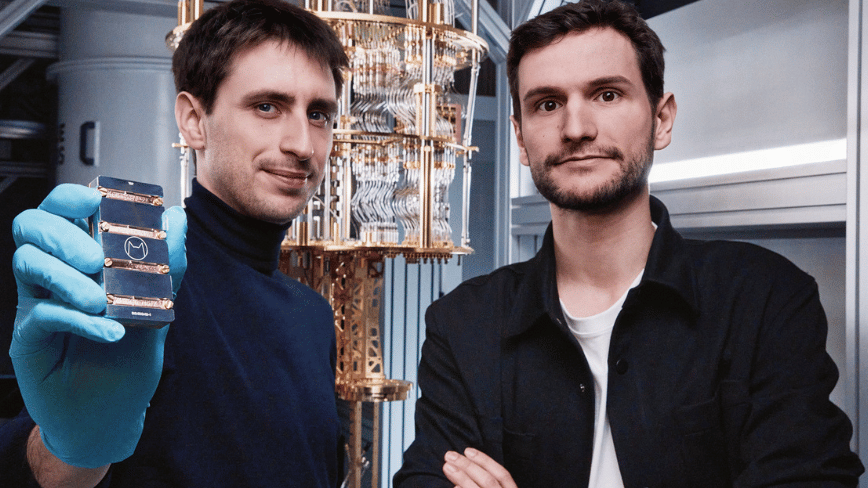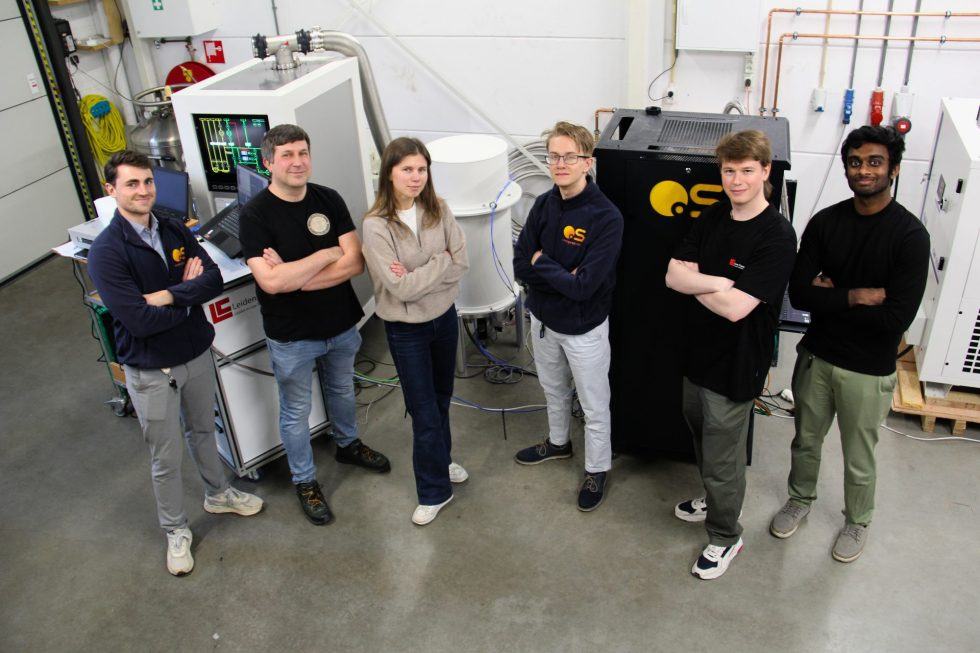
Leiden Cryogenics has built a prototype compact dilution refrigerator, dubbed Quper, that can achieve millikelvin temperatures.
Developed by the Dutch company in partnership with quantum chip testing startup Orange Quantum Systems (OrangeQS), the tabletop system has an inverted fridge design and can cool samples below 25 millikelvin before returning to room temperature in less than 24 hours.
The fridge can achieve these temperatures without the need for liquid nitrogen and with a significantly lower helium-3 requirement than traditional cryostats, the companies said in a statement.
The project was funded by Quantum Delta NL, an organization that is itself funded by the Dutch National Growth Fund. It took three years from conception to successfully build a prototype of Quper, with the fridge offering remote monitoring capabilities via OrangeQS’ open-source operating system, OrangeQS Juice, and SubZero cryogenic control software.
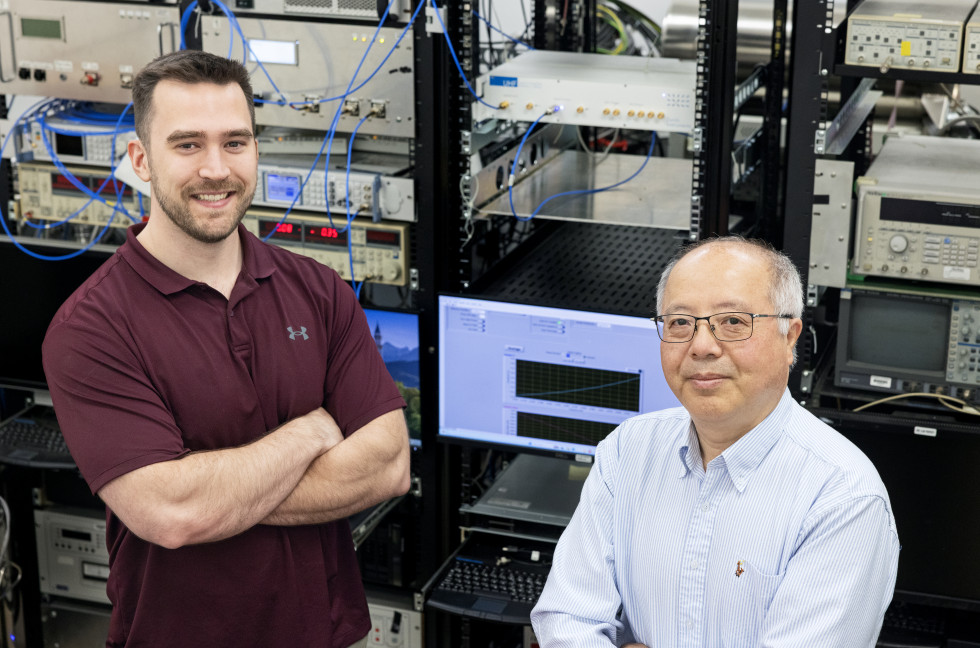
“Fast, compact, simple, but fully functional dilution refrigerators – be it for quantum chip testing and development, optical or beamline experiments, etc. – have been a popular request from our customers for many years, and now we are finally ready to fulfill it,” said Sasha Usenko, CTO, Leiden Cryogenics.
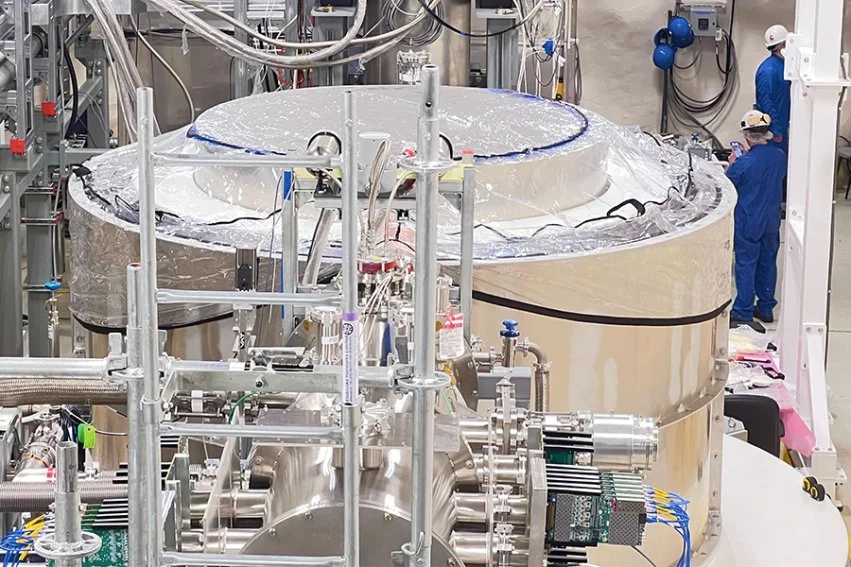
Existing cryostats can traditionally take more than 24 hours to warm up and cool down, with some systems taking multiple days. This can slow research and development efforts for technologies such as new quantum chips.
By shortening this thermal cycle to less than a day, Quper could significantly accelerate the pace of experimental iteration for researchers working on next-generation quantum processors. Faster cooldown and warm-up times mean scientists can test more device configurations within the same time frame, an advantage for teams developing superconducting qubits and other cryogenic quantum technologies.
Compact dilution refrigerators are becoming increasingly important as quantum hardware development expands beyond a handful of specialized laboratories into universities, startups, and industrial R&D facilities. Traditional large-scale cryostats often require dedicated infrastructure, complex helium handling systems, and trained operators. Systems like Quper aim to lower those barriers by reducing both operational complexity and the amount of scarce helium-3 required.
The ability to run experiments without liquid nitrogen also simplifies installation in smaller lab environments. According to Leiden Cryogenics, the inverted refrigerator architecture helps optimize thermal management while maintaining the stability required for millikelvin experiments.
In addition to quantum chip characterization, compact dilution refrigerators could support a range of low-temperature physics applications, including detector development, nanoscience experiments, and materials research that relies on ultra-low temperature measurements. As the quantum computing ecosystem grows, tools that streamline cryogenic testing are expected to play a critical role in scaling research and development workflows across the industry.
Source: Data Center Dynamics