Alexandria Burger, Bluefors – Manufacturing Engineer Manager
Current projects: My current focus is leading a team to improve manufacturing efficiencies for 2026. These efficiency improvements will not only offset the increasing costs of materials but also allow us to reduce lead times. I also contribute to manufacturing documentation, 6S events, manufacturing process upgrades and automation, and continue to assist in the manufacturing of dilution refrigerators in the US.
Proudest accomplishment: I am most proud of a bottleneck improvement project I led shortly after joining the company. By quickly getting up to speed and collaborating closely with my team, we improved the efficiency of the work center to the point where it was no longer the company’s primary bottleneck, resulting in a 78% reduction in cycle time. One of the main challenges was building the technical knowledge needed to propose effective process improvements, so my team and I worked firsthand alongside operators to fully understand and optimize the process.
Future advancements: I strive to build my technical knowledge of cryogenics while making improvements on the manufacturing side of the company. I hope to continue learning from internal and external experts in cryogenics to contribute to Bluefors’ and the Cryomech brand’s continued success as the global leader in cryocoolers and dilution refrigerators.
Advances for women: I would like to see more women in engineering management and leadership positions. The next critical step is actively supporting qualified women as they advance into senior positions. While the “women in STEM movement” has made important progress in bringing more women into these fields, we must place greater focus on empowering, retaining and elevating women throughout their careers.
Best approach: The best approach to getting more women into industrial engineering, especially in specialized fields like cryogenics, is through early exposure, mentorship and visible female role models in technical and leadership roles. Creating supportive workplace cultures that encourage growth, flexibility and career advancement helps retain women once they enter the field. I think we also need to challenge certain narratives about women in STEM. There’s a widespread belief that women are given opportunities or recognition simply because of their gender, and that undermines the work many of us put in to earn them. It’s frustrating to have accomplishments discounted in that way. Empowerment means equality—being held to the same standards and recognized for merit, not
assumptions.
……………………………………

Roza Doubnik, Ph.D., Fermi Forward Discovery Group, LLC (FermiForward) – Senior Engineer, Liquid Argon Cryogenic Group
Current projects: I am currently working on the Far Detector Cryogenics (FDC) systems for the LBNF/DUNE-US Project, a flagship international neutrino experiment led by the U.S. Department of Energy. The Long-Baseline Neutrino Facility (LBNF) at the Sanford Underground Research Facility (SURF) in South Dakota hosts the Deep Underground Neutrino Experiment (DUNE), which uses cryostats containing nearly 70,000 metric tons of high-purity liquid argon (LAr). My work focuses on Brazil’s in-kind contributions led by the State University of Campinas (UNICAMP), which develops argon purification and regeneration systems for the Vertical Drift (VD) and Horizontal Drift (HD) cryostats.
I serve as the technical liaison and a control account manager by training for these contributions, ensuring alignment with the overall project, maintaining documentation, coordinating schedules and fostering collaboration across international teams. In addition to this international coordination, I lead integration efforts for cryogenic subsystems, managing piping and instrumentation diagrams (P&IDs), interfaces and overall design integration. This work combines engineering rigor with global collaboration, ensuring that these large-scale cryogenic systems are delivered successfully and meet the stringent requirements of the DUNE experiment.
Proudest accomplishment: I am most proud of advancing the Argon Purification and Regeneration Systems and strengthening international collaboration with UNICAMP and its industrial partners. Our design reviews ensured technical excellence and readiness, demonstrating Fermilab’s leadership in large-scale cryogenics while supporting one of the world’s most ambitious neutrino experiments.
Logistics required that equipment pass through the Ross Shaft elevator with a maximum of 52 inches on one side, a challenge comparable to assembling a ship inside a bottle. We verified design limits on vessels and piping to ensure successful underground delivery. Liquid argon purity was another critical challenge, as HD and VD detectors require electron lifetimes greater than 3 ms and 6 ms respectively. Using lessons from ICARUS and SBND, we ensured these stringent purity levels. Nitrogen contamination was addressed through a Li FAU based method developed by UNICAMP, which was successfully tested in small scale cryostats. Through careful planning, design reviews and innovative solutions, we ensured systems meet performance and installation requirements.
Future advancements: The LBNF/DUNE-US project represents an unprecedented scale in cryogenic engineering, with a significant portion of the infrastructure located nearly one mile underground in Lead, South Dakota. Looking ahead, the advancement lies in successfully designing, transporting and installing these massive systems under such constraints. This effort will require not only technical innovation but also seamless collaboration among engineers, designers, scientists, project managers and technical specialists across cryogenic, mechanical, electrical and control disciplines from more than 30 countries. Achieving this milestone will push the boundaries of cryogenic technology and set new standards for global teamwork in large-scale scientific projects.
Advances for women: I advocate for greater female representation in technical leadership, structured career development, mentorship and inclusive work environments. Early outreach and visible role models are essential to inspire and retain women in these fields.
Best approach: Sustained early engagement – through STEM programs, internships, shadowing, and outreach – is key. Highlighting real stories of women in cryogenics, combined with mentorship programs and clear career pathways, supports entry, retention, and advancement. Partnerships with professional organizations and participation in conferences further amplify opportunities.
……………………………………
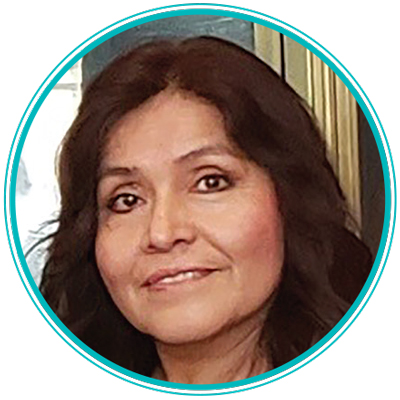
Widy Linn, CPC-Cryolab, part of OPW Clean Energy Solutions, a Dover company – Manufacturing Engineer
Current projects: Currently I am working on multiple projects; I will mention the production of custom vacuum jacketed hoses that will be utilized in the Cape Canaveral launch pad. I transfer the design input into production outputs, assuring rigorous regulatory and customer requirements are followed with a team effort for a successful completion.
Proudest accomplishment: The production of the 10-inch vacuum jacketed valves for NASA that our team was able to ship on time, meeting all the customer expectations. Our challenge was to synchronize all the deliverables at the right time: focusing on the quality of the product, operational qualification and documentation. This was a team effort in problem-solving where our efforts worked to minimize any roadblock in the project from machining, welding, assembly and quality control. During the customer visits, our team received special recognition for each milestone accomplished for this project.
Future advancements: Research and evaluate with the team the option of using new cryogenic materials that are emerging in the industry. Our manufacturing processes would leverage any shortages in material we may encounter in the future.
Advances for women: Bring more manufacturing facilities home and include women in the workforce with the same opportunities and let them shine at all levels starting from internships to management.
Best approach: I believe in early incentives starting at an early age. At home let’s show our children manufacturing processes on tv videos, educational games, crafts; at school let’s recommend including chapters in science and technology classes that relates to industries and include field trips to the manufacturing facilities. There is nothing like a visual aid to open the bright minds of women in manufacturing.
……………………………………

Yinghe Qi, National High Magnetic Field Laboratory (NHMFL), Florida State University – Postdoctoral Researcher
Current projects: My research spans low-temperature physics and cryogenic engineering. I am part of the TESSERACT Collaboration, which develops ultrasensitive cryogenic detectors for low-mass dark matter detection, where I focus on the design and integration of the multistage cryogenic system to achieve sub-100 mK thermal performance and ultralow vibration. I am also developing a 3D model to study sudden loss-of-vacuum events in liquid-helium-cooled superconducting accelerator beamlines to improve system safety and reliability. In addition, I am working on an electron-on-solid-neon qubit program and on the development of Particle Levitation Velocimetry, a new technique for measuring near-wall velocities in high-Reynolds-number liquid helium flows.
Proudest accomplishment: I am most proud of designing the specialized cryogenic system for the TESSERACT dark matter detection experiment. The detector required exceptional cryogenic stability to achieve record-high phonon energy resolution in the sub-GeV dark matter range. To meet this challenge, we designed a custom cryogenic platform with multistage thermal anchoring, optimized sub-100 mK thermal links, and low vibration isolation. This work was highlighted in Physical Review Letters and Florida State University News.
Future advancements: I hope to continue advancing cryogenic instrumentation for fundamental physics experiments, particularly those using superfluid helium and other quantum fluids. I am especially interested in helium-based dark matter detectors and levitation qubit platforms for scalable quantum devices.
Advances for women: I would like to see more women in technical leadership roles in large-scale cryogenic engineering projects, along with greater recognition and visibility through awards, keynote talks, and leadership of major experimental projects.
Best approach: Active mentorship combined with early hands-on experience is essential. Giving students ownership of hardware projects builds confidence and technical skills, while supportive lab cultures and formal mentorship networks help women remain and advance in the field.
……………………………………

Daniela Ribeiro, GKN Aerospace – Senior Research Engineer – Cryogenics
Current projects: I am currently working on a hydrogen systems program called H2FlyGHT. My work involves test rig and equipment under test design, test plan definition, management of suppliers and resources, health and safety, execution and analysis. Therefore, I lead commissioning and testing campaigns including high vacuum generation, leak testing, liquid hydrogen, liquid and gaseous nitrogen and gaseous helium. I am also the custodian of the cryogenics lab, where I do resources management, activities prioritization and H&S inspection. Recently, I have been lecturing and running experimental labs in the Cryogenic Engineering for Sustainable Flight Course developed by GKN Aerospace and the University of Bath.
Proudest accomplishment: I’ve dedicated two years of my life to a project called Hy4, a liquid hydrogen storage test rig. I was the build leader of this test rig, which was my first test rig outside academia and the first one with liquid hydrogen. I am really proud of the success of this test campaign, and I believe this work provided important information on critical loss of vacuum scenarios and their consequences.
There were many challenges, one of them was related to safety since the test plan included several intended failure cases. However, a huge team effort led us to perform the experiments with all necessary safety measures. The safety mechanisms of the system showed us that even under critical conditions, it is possible to operate it without critical consequences.
Future advancements: My background is aerospace engineering and my main goal at the moment is to contribute to the development of hydrogen-powered aircraft. I am driven by sustainability, and I do believe we can decarbonize civil aviation. Excited to be part of the development of an Aerospace Cryogenic Electrical Network for aerospace applications.
Advances for women: As a female engineer, I believe actions speak louder than words. I think women are currently working hard to get recognition and be able to take leadership roles. I would like to see this effort recognized by organizations in order to inspire young generations and show them that hard work fueled by passion will be rewarded independently of their gender. Additionally, I would like to see more mentorship and hands-on opportunities for early careers to identify potential in the cryogenics field and support their development.
Best approach: I believe the best approach to bring more women into the field is to work with academia and create opportunities for the young generations to get to know and understand the field. Hands-on opportunities, mentorship and research scholarships can be powerful pathways to bring more women into the cryogenic field. Additionally, organizations need to raise awareness for diversity into their teams to guarantee equal opportunities will be provided to women. Finally, and once again, recognizing the women in the field and encouraging them to take leadership positions will inspire others to join the cryogenic field.
……………………………………

Sydney Therien, University of Wisconsin – Madison, Research Assistant in UW’s Cryogenics Engineering Laboratory (CEL) under Prof. Franklin Miller and Prof. Greg Nellis, Master’s Candidate in Mechanical Engineering
Current projects: My thesis research focuses on improving the efficiency of continuous adiabatic demagnetization refrigerators (CADRs), which are commonly used to cool launchable astrophysics detectors such as transition edge sensors (TES) and kinetic inductance detectors (KIDs). Using alternate metals in the superconducting heat switch, which connects the detector to the lowest temperature stage, may greatly reduce parasitic heat loss. The team at CEL and I are working on material characterization and purification of vanadium, which is our most promising candidate superconductor due to a combination of transition temperature and transport characteristics. I have just designed, built and tested an electrolytic vanadium purification chamber which should remove the impurities most detrimental to electron conduction. I am currently assembling a single-shot ADR and will work with others in the lab to test the thermal conductivity of the purified vanadium sample in both the normal and superconducting states. The ratio of these two thermal conductivity measurements will tell us how effectively we are able to “turn off” electron conduction in the vanadium, and therefore how good a heat switch the material might create.
Proudest accomplishment: I am proud that I recently proved the functionality of my electrolytic vanadium purification chamber! Commercially available vanadium isn’t sufficiently pure for our heat switch, so we had to do additional in-house purification. It was rewarding to read about different processes, pick one that targets the most harmful impurities, design a rig that can do the purification, build it, and create a product I could hold in my hands. We plan to do chemical analysis of the product in addition to thermal conductivity measurements, and this will tell us how well the process actually worked. I’m keeping my fingers crossed, but if it’s not perfect the first time, I have plenty of ideas for making the second batch even better.
Future advancements: It would be amazing if my thesis research ended up proving successful and it becomes possible to increase CADR efficiency by using a vanadium superconducting heat switch. This would help make astrophysics payloads lighter and allow detectors to operate for longer periods of time. That would mean a cheaper mission that supplies higher volumes of crucial astro-physics data. I am making my best effort to learn as much as possible about cryogenics and superconductivity during my degree, so I am well-equipped to tackle other challenges that I encounter in my career!
Advances for women: I would love to see more women represented in the field. Our area will only grow stronger as the more diversity is valued and actively sought out. So much in this line of work is deeply counterintuitive, and dismantling that mystery should start early. More mentorship opportunities and hands-on experiences for young women that display the uniqueness of cryogenics and superconductivity would make the subjects more accessible.
Best approach: We can get more women into the field with outreach that showcases the remarkable physical phenomena and machines that we get to work with as cryogenic and superconducting engineers. I’m an engineer today because of clever teachers who connected math and physics to observable curiosities and opportunities for creative problem solving. We need to inspire more young women with macroscopic demonstrations of quantum principles and beautiful pictures of deep space made possible by highly sensitive cryocooled instruments. Communicating the wonders of the field early, often, and at a high level will motivate the next generation of inquisitive women to dig into our biggest questions.
……………………………………
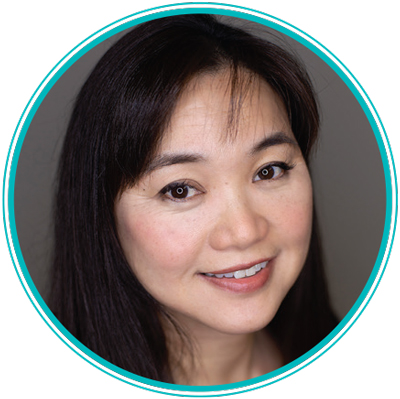
Kathy Trengove, Iris Technology, Irvine, California – Principal Electrical Engineer, EE Manager
Current projects: I’m currently developing cryocooler control electronics rated to deliver up to 650 W, designed to drive contemporary high-capacity, dual-opposed, split-Stirling cryocoolers in the 30 W at
77 K cooling capacity class.
Proudest accomplishment: The accomplishment that stands out most is leading my team to deliver a production run of 20 space-flight-grade cryocooler control electronics units on an extremely tight schedule. The challenge was to maintain rigorous flight-quality standards while increasing throughput and reducing schedule risk. To meet this challenge, my team and I broke the effort into clearly defined phases including risk analysis, prototyping on a dedicated test stand, staged hardware release and carefully scripted assembly and test plans. We improved the design for manufacturability, standardized work instructions and streamlined test processes to reduce rework and variability. Equally important, we invested in cross-training and clear communication across design engineers, manufacturing engineers, assemblers and test operators so that everyone understood the system, the risks and the goals, and felt genuine ownership of the results. The project was completed on time with improved yield across the building and has since become a template for other high-volume space-flight hardware projects.
Future advancements: From an electrical engineering perspective, the most exciting advancements in cryogenics lie at the intersection of smarter control, higher efficiency and better integration with emerging applications. I hope to contribute to systems that are more energy-efficient and reliable through optimized power distribution, drives, and control strategies that reduce total energy consumption. In practical terms, this means standardizing cryocooler control electronics architectures and designing electrical systems that are modular and scalable enough to support the next generation of cryocoolers.
Advances for women: Women remain
underrepresented in cryogenics and superconductivity, especially in senior and highly visible roles. Advances that would make a real difference include structured support for career progression, clear promotion paths, equitable access to high-impact assignments and transparent criteria for leadership roles so that advancement is based on contribution rather than visibility or networking alone.
Best approach: Increasing participation requires a full-pipeline approach from early education through senior leadership. At Iris Technology, we sponsor summer internships for female engineering students that provide real responsibility in cryocooler control, electronics engineering and testing rather than observational roles. Highlighting women’s technical achievements in talks, panels, publications and internal reviews, not only in women-in-STEM features, also plays an important role in normalizing women’s leadership and encouraging long-term retention in the field.
……………………………………

Katyayini Kumar Vemulkar, SLAC National Accelerator Laboratory – Staff Engineer 2
Current projects: I’m currently working on the Cryogenic Distribution System for the LCLS-II-HE project, which is an upgrade of LCLS-II, the world’s most powerful X-ray laser. The LCLS-II-HE project will add 23 1.3 GHz SRF cryomodules to the LCLS-II system. These new cryomodules require a stable supply and return of helium to support stable continuous wave superconducting operation. The Cryogenic Distribution System includes all the equipment required to allow for this flow between the cryogenic plant and the superconducting cryomodules. As part of the CDS team, I have been working on its design from conception through installation.
Proudest accomplishment: One of the accomplishments I’m most proud of is working with my team to bring the HE Cryogenic Distribution System to fruition. The project presented numerous design challenges that required quick and effective solutions. Some of these challenges were identified closer to installation. By tackling problems collaboratively, we were able to resolve issues efficiently and keep the project moving forward. This involved close coordination across vendors and multiple departments to successfully execute the work.
Future advancements: Looking ahead, I hope to contribute to cryogenic designs that are technically advanced and energy efficient. I’m excited about developing systems that can support the next generation of superconducting accelerators at SLAC with designs that make these complex facilities sustainable and easier to operate over their lifetimes.
Advances for women: I’d really like to see greater representation of women in senior technical and leadership roles within cryogenics and superconductivity. It’s important to create clear and supported pathways for women to advance in their careers through mentorship and recognition of technical contributions. When leadership better reflects the diversity of the community doing the work, the field becomes stronger and more sustainable.
Best approach: Introducing high school and college level women to the field of cryogenics is vital. Because cryogenics is not always included in traditional curricula, outreach is key to showing how impactful and exciting the work can be. I’m currently involved in outreach through SAGE, Science Accelerating Growth and Engagement, which helps expose students to cryogenics and accelerator science. Increasing hands on undergraduate internships at places like SLAC helps students build interest and envision a long term career in cryogenics.
……………………………………
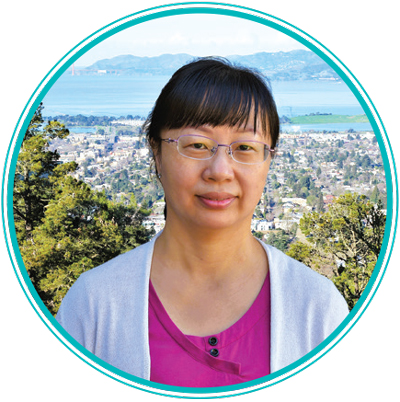
Li Wang, Berkeley Center for Magnet Technology, Mechanical Department, Engineering Division, Lawrence Berkeley National Lab (LBNL) – Mechanical Cryogenic Engineer
Current projects: I am currently working on several projects as the Lead Cryogenic Engineer at LBNL, collaborating closely with my colleagues. We are designing and developing a new helium liquefaction system to replace a 45-year-old liquefier. The new system will provide a mixed liquefaction rate of at least 140 liters per hour and
35 W of refrigeration capacity at 4.5 K, using liquid nitrogen pre-cooling. This upgrade will significantly enhance the capability and efficiency of the magnet testing facility at LBNL, enabling the development and testing of novel superconductors and magnet configurations and supporting the US Magnet Development Program and the High Energy Physics Program at the laboratory.
I am also working on the development of a novel NbTi/Cu superconducting magnet layout known as MARS-D to advance Electron Cyclotron Resonance Ion Source technology. We are currently developing a cryocooler-cooled cryostat operating at
4.2 K for this system. In addition, we are designing a cryocooler-based hydrogen liquefaction and re-liquefaction system to support a liquid hydrogen target that will be installed on the GRETA detector at FRIB.
Proudest accomplishment: One of my proudest achievements has been serving as one of the founders of the Institute of Cryogenics and Superconductivity Technology at one of China’s top ten science and engineering universities. As Project Manager, I led the design of China’s first kW-scale 4.5 K helium cryogenic system, which supported multiple superconducting devices for the BEPCII project and was successfully commissioned in 2006. I also led China’s contributions to the MICE superconducting coupling solenoid magnet program in collaboration with Lawrence Berkeley National Laboratory, overcoming major technical challenges and achieving successful testing at LBL and Fermilab.
Future advancements: I am interested in advancing the use of liquid hydrogen as a coolant for superconducting magnets, including the technical and safety challenges associated with hydrogen liquefaction, transfer systems, cryostats and magnet performance at 20 K. I am also interested in applying artificial intelligence technologies in cryogenics.
Advances for women: I would like to see greater representation and true equality for women in cryogenics and superconductivity, supported by inclusive workplaces, equal opportunities for advancement, and recognition of women’s contributions at all levels.
Best approach: Early encouragement and exposure to STEM through hands-on learning, mentorship, internships and research opportunities are essential. Inclusive environments with visible female role models and clear pathways for advancement will help more women enter and remain in the field.
……………………………………

Jennifer Wester, Prentex Alloy Fabricators, Inc. – Chief Operations Officer
Current projects: We’re currently working on streamlining custom-built operations for the space industry and launching the newest generation of our off-the-shelf product line for labs.
Proudest accomplishment: I am most proud of the generational rollover that our company has successfully navigated recently. Now on our 3rd generation of family owner-ship, a new generational mix in drafting and engineering, a new generation of floor staffing, and a new generation of leadership, we’ve successfully taken our internal systems analysis as top priority in ensuring we could continue to produce the highest quality, custom cryogenic dewar vessels well into the future.
Future advancements: We’re looking to continue meeting the needs of the space industry for bringing their engineer’s visions to life in high-quality, ASME stamped, cryogenic vessel systems. With the pace of private space ramping up, we’re hoping to show the value of an agile small business that produces to the highest standards amidst and in comparison with larger (and slower) mass manufacturers.
Advances for women: I would like to see women increasing their project management roles in the cryogenics field. I think the multitasking of the position – needing to understand and navigate multiple players, stakeholders, and production limitations with trackable communication and documentation that can limit errors and reduce liabilities is a skillset that I feel women are particularly skilled to handle.
Best approach: To be in my field, you have to appreciate the logistical challenges of custom products. A honed curiosity about every part of the manufacturing process, business management, people management and purpose of cryogenic systems is necessary for success. And you have to have a resolve to face every problem head-on: “The bigger the problem, the faster the phone call.” Fearlessly asking every question and being ready to help find the answers – no matter how far out of the box – will go a long way. As well as having potentially more opportunities for shadowing and mentoring others in the field.