by Mel Janecka, Atlas Technologies
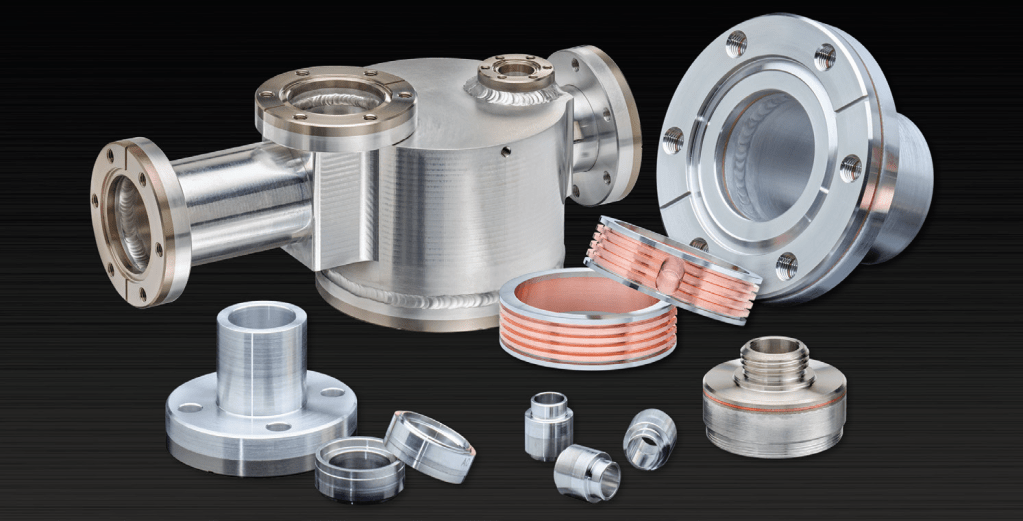
Shown with bonded bimetal components in copper, niobium, aluminum, and stainless. Credit: Atlas Technologies
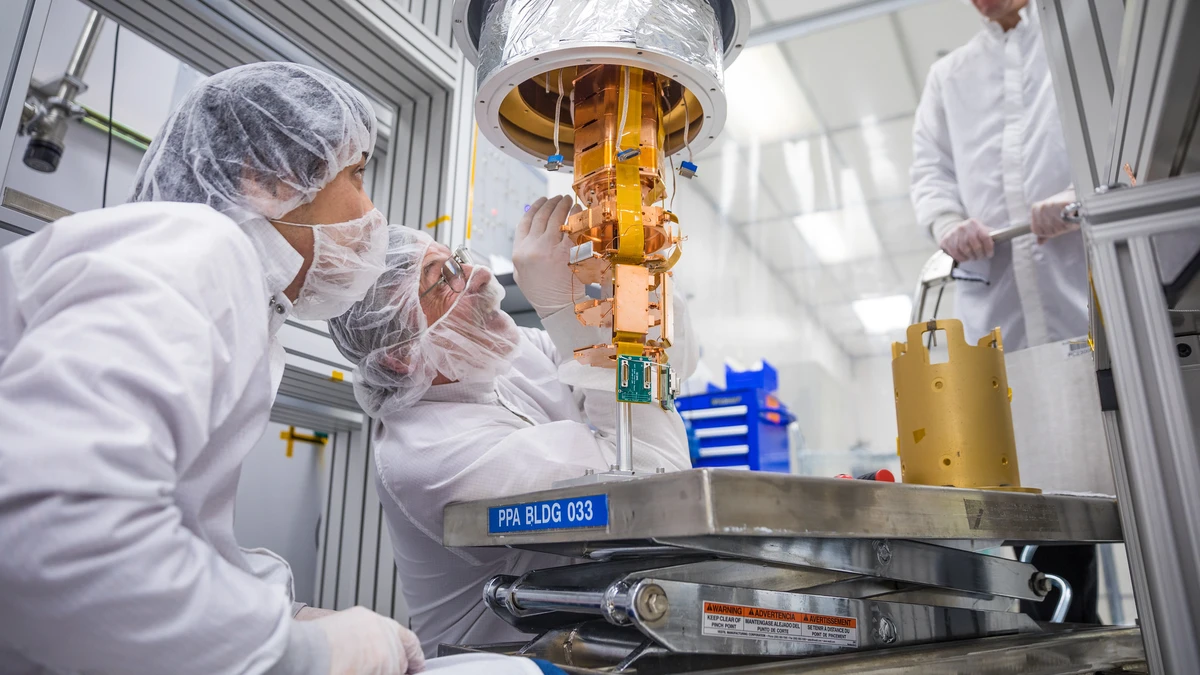
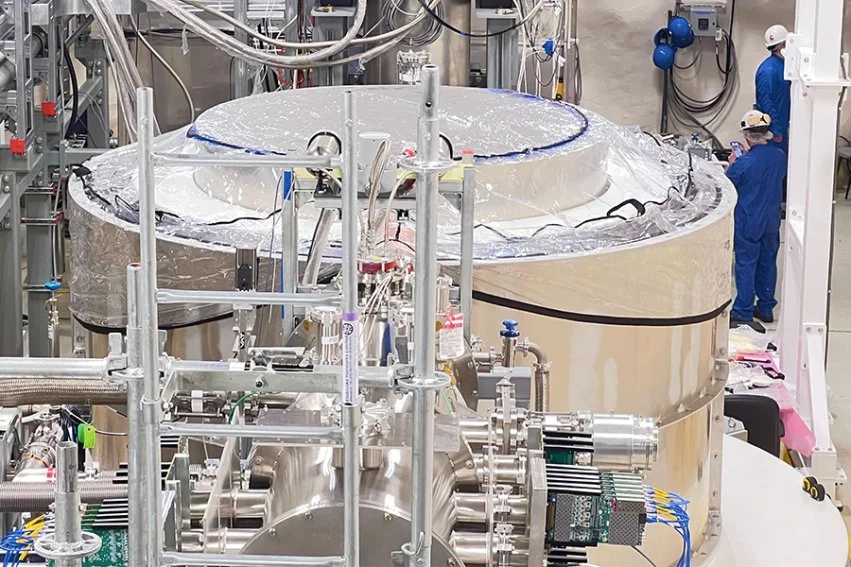
Quantum computing companies and research facilities often find aluminum and titanium vacuum chambers to be better equipped to maintain purity and ultrahigh-vacuum (UHV) status. Plus, the chambers are non-magnetic and perform effectively within cryogenic conditions, critical for keeping qubits stable. Qubits, the basic units of quantum information, are impacted by contamination, vibration, loss of pressure, thermal noise, radiation and electrical interference. Thus, they require a highly controlled environment.
A similar environment is needed for UHV suitcases. Normally, fabricating a sample under UHV in one place and studying it in another involves breaking the vacuum to remove and transport the sample. This creates two problems. First, exposing a sample to air may change or destroy its material properties. Second, the opened UHV chamber must be baked out before it can be used again. These problems can be avoided by transferring a sample into a UHV suitcase and moving it down the hall, across campus, or around the world – where it can then be transferred to another UHV system without contamination or loss of pressure.
“The idea of a UHV suitcase is not new,” explains PhD physicist Igor Pinchuk, founder of Volkvac Instruments. “The earliest iterations were simply standard vacuum chambers that were disconnected from one UHV system and then quickly wheeled to another — without being pumped.” But Volkvac set out to create a better UHV suitcase. It needed to be small enough and light enough to easily carry by hand. The sample handoff had to occur without opening the chamber or requiring bake-out. And the chamber had to be completely non-magnetic to allow transport of samples with delicate magnetic properties.
The use of an Atlas Technologies custom aluminum chamber with bimetal aluminum-titanium flanges is integral to the success of VolkVac’s UHV suitcases. Aluminum is used instead of stainless steel, another common chamber material, as aluminum is lighter and much easier to machine. In addition, the initial aluminum chamber bake-out takes a few hours while a similar stainless-steel chamber could require several days, which can significantly delay critical projects.
Access to the chambers is provided by conflat (CF) aluminum-titanium bimetal flanges which have sharp edges that are driven into a copper gasket to create an exceptionally airtight seal. While aluminum is ideal for UHV suitcase chambers, it is too soft to provide durable long-lasting edges on flanges. That’s why VolkVac came to Atlas — for their expertise in dissimilar metal bonding and fabrication as well as aluminum chamber development. Atlas fabricated the aluminum flanges with titanium knife-edges. The aluminum and titanium are hermetically joined via explosion bonding.
Jimmy Stewart, Technical Sales Manager at Atlas, coordinated the collaboration with VolkVac. Stewart said “VolkVac continues to work closely with our lead machinist and lead engineer to develop new chambers. This is necessary because bimetal materials have special requirements when it comes to welding and stress relief. We often work like this with our customers across various industries to produce the specialized equipment they require.”
“Because of the historical use of stainless steel in UHV systems, some customers are unfamiliar with bimetal components”, said Stewart. “They may have heard about the benefits of bimetal, but they don’t have the expertise. They come to us for our 30 years of experience and in-depth knowledge of bimetal and aluminum vacuum.” Pinchuk agrees adding “I know stainless steel UHV technology forwards and backwards, but now I’m benefitting from Atlas’s expertise in aluminum chambers and bimetal technology for my latest products.”
Aluminum and titanium UHV and XHV chambers operate well in adverse conditions. Bimetal transitions easily and effectively connect dissimilar metals that cannot be connected through welding, or in situations where adhesives or other sealing approaches would fail. Within cryogenic applications, these chambers increase predictability and reliability. AtlasUHV.com. Look for the handy bimetal ebook
https://2csa.org/ebook