by Joe Procunier, LJC Design & Engineering
Chicago is set to redefine the future of quantum computing, just as Taiwan reshaped the global semiconductor industry. In 1987, Morris Chang famously started TSMC (Taiwan Semiconductor Manufacturing Company) after working as a pivotal figure at Texas Instruments.[1] The Taiwanese government encouraged him to move to the island and promised a wide range of support. The goal of the government was to transition Taiwan from a basic manufacturing economy to advanced manufacturing focused on leading edge technology. Chang led the ITRI (Industrial Technology Research Institute).[2] Taiwan also invested in Hsinchu Science Park where TSMC would be headquartered. This ecosystem helped develop TSMC into a trillion-dollar company. A similar ecosystem and strategy are emerging to focus on the rise of quantum computing in Chicago, Illinois.
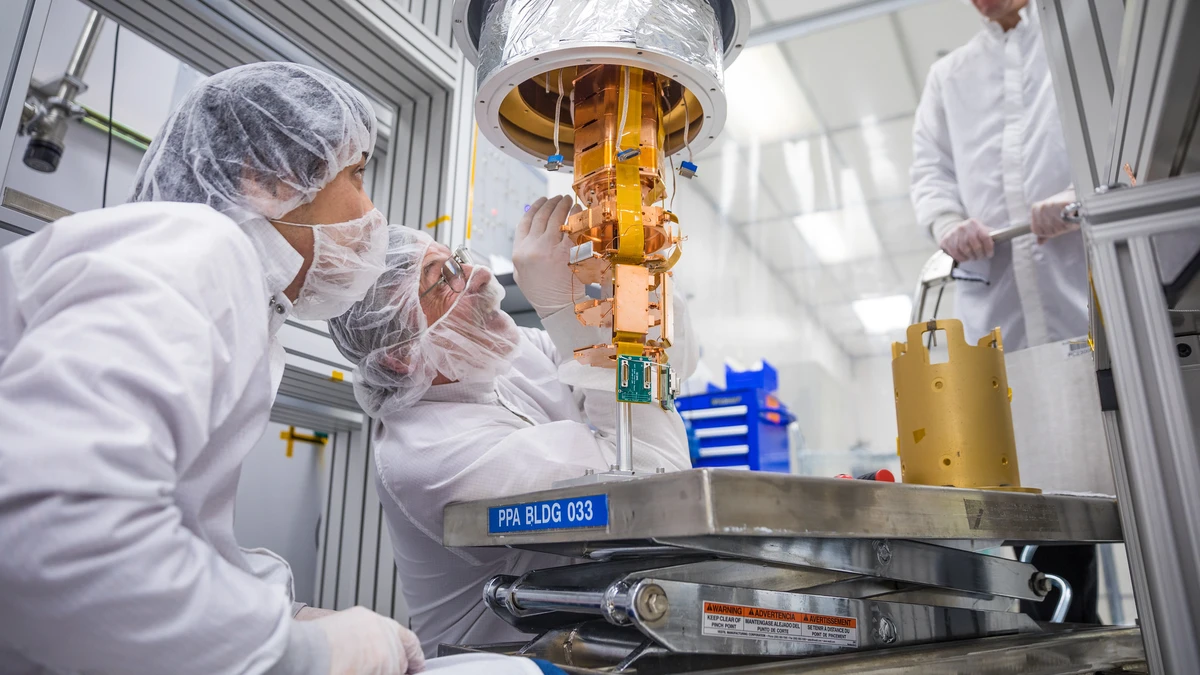
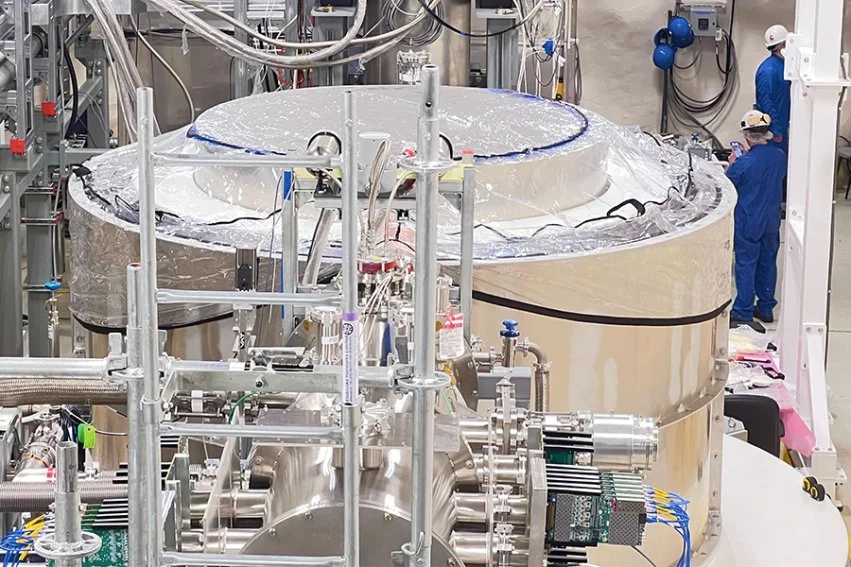
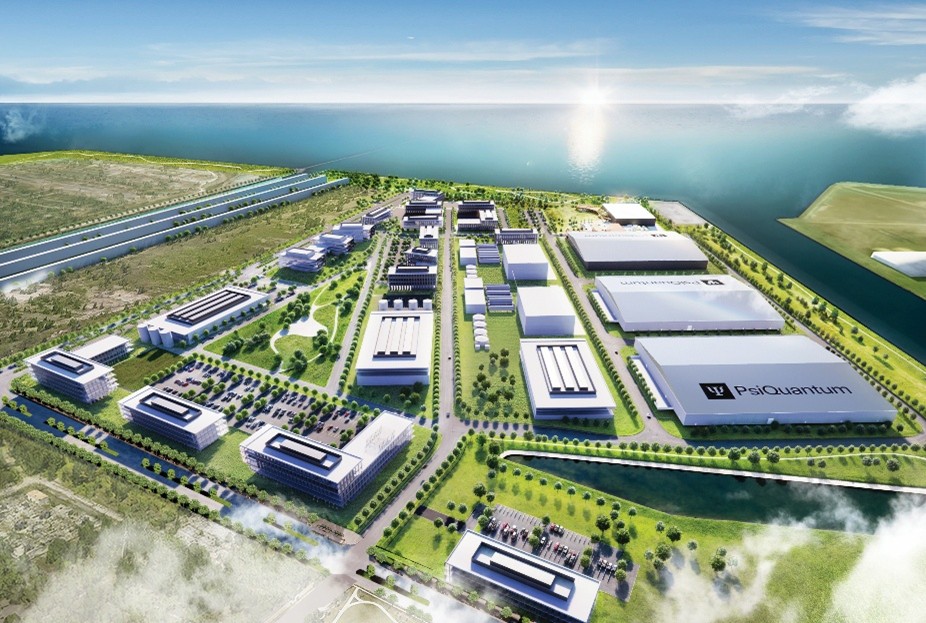
A pivotal moment is happening in the quantum industry in Chicago, where there are a confluence of leading national laboratories, higher education, incubators, industrial heritage, and governmental collaboration and incentives. The state formally created the IQMP (Illinois Quantum and Microelectronics Park) in 2024 to be run as a URO (University-Related Organization). The IQMP is a collaboration between public and private partners with complementary expertise.[3] It is funded by hundreds of millions of dollars to support development of the technology park. A key aspect of this funding is to provide the cryogenics technology critical to the quantum computing industry. Anchor tenant of the park PsiQuantum has shared that the state is contributing funding to building out a cryogenic plant at the site.[4]
This state funding is similar to strategies that the Taiwanese government initiated to help invigorate semiconductor manufacturing. Illinois also has a framework in place for collaboration between the national labs (Argonne and Fermilab), higher education, incubators, etc., through the Chicago Quantum Exchange, a community of more than 50 corporate, international, nonprofit and regional partners.[5]
Building a competitive edge with a robust cryogenics’ backbone is critical for Chicago to lead the next frontier in quantum computing. Since most startup companies cannot afford robust access to the expensive hardware required to create the liquid helium essential to stabilizing quantum hardware, the government-supported infrastructure will ultimately help companies grow out of the incubator / startup phase and grow to mature companies. McKinsey predicts the quantum computing market will grow to $28-72 billion by 2035. In the next 5-10 years, there will be significant spending on the hardware and infrastructure to support this technology.[6] In 2025, about 80% of quantum companies were focused on full-stack quantum hardware development.[7]
If the State of Illinois follows through with its announcement of funding for the IQMP site and direct funding for cryogenics, this is a major competitive advantage that will help advance the quantum computing industry locally and as a whole. Based on public reports of several well-known quantum companies setting up operations in Chicago, it is interesting to see the parallels with the semiconductor industry in Taiwan. The Hsinchu Science Park currently employs around 170,000 workers and 500 companies which grew over about 40 years.[8] The benefits the IQMP could provide to the quantum computing industry are significant and potentially follow a similar trajectory.
Given that most large-scale cryogenics installations are located at national labs, the IQMP and State of Illinois are taking on a new frontier in developing large-scale cryogenics intended mainly to help drive private company growth. With the promises of quantum computing being truly extraordinary, these investments in critical infrastructure echo earlier U.S. Department of Defense efforts such as DARPA’s funding of ARPANET – the first packet-switching network which led directly to the internet[9] – and the development of GPS (Global Positioning System).[10] Both inventions changed the way we interact with the world we know today. If fiber optics and semiconductors are the backbone of the internet and GPS, cryogenics will certainly be the first infrastructure of quantum computing. Similar to other large-scale computing infrastructures, it usually takes longer to construct projects than advance smaller prototypes in a lab environment. Quantum computing centers that are first to procure and build large scale cryogenic plants will have an advantage in the market. The cryogenics industry is dominated by a small number of vendors which can result in longer lead times and supply chain fragility. Chicago will have a first-mover advantage with the state’s incentives to procure and construct cryogenic plants.
At the Chicago Quantum Summit in November 2025, the enthusiasm of hundreds of attendees shows how Chicago has emerged as an epicenter of the global advancement of quantum computing technology. As these companies scale, the cryogenics industry has a unique opportunity to grow in unison. The unity between cryogenics and quantum computing echoes similarities between large-scale labs and semiconductor manufacturing. If the quantum and cryogenics industries can truly master scalability, reliability and cost efficiency, the opportunities to grow these critical technologies are endless.
References
[1] Computer History Museum. (n.d.). Morris Chang. https://computerhistory.org/profile/fellow-morris-chang
[2] Tsai, Terence; Cheng, Borshiuan. (2006). The Silicon Dragon: High-tech Industry in Taiwan. Edward Elgar Publishing. p. 92. ISBN 9781847203137.
[3] Illinois Quantum and Microelectronics Park. (n.d.). Illinois Quantum and Microelectronics Park. https://iqmp.org/
[4] PsiQuantum. (2024). PsiQuantum to build first U.S.-based utility-scale quantum computer in Chicago, Illinois. https://www.psiquantum.com/news-import/illinois-iqmp
[5] Chicago Quantum Exchange. (n.d.). Who we are. https://chicagoquantum.org/about
[6] Soller, H., Gschwendtner, M., Shabani, S., & Svejstrup, W. (2025, June 23). The year of quantum: From concept to reality in 2025 (Quantum Technology Monitor 2025). McKinsey & Company. https://www.mckinsey.com/~/media/mckinsey/business%20functions/mckinsey%20digital/our%20insights/the%20year%20of%20quantum%20from%20concept%20to%20reality%20in%202025/quantum-monitor-2025.pdf
[7] New Market Pitch. (2026). Quantum computing market fundraising deals. https://newmarketpitch.com/blogs/news/quantum-computing-funding-deals
[8] “Number of Employees in Hsinchu Science Park.” Government Open Data Platform. Hsinchu Science Park Bureau, National Science and Technology Council. Retrieved 2024-12-23.
[9] “ARPANET – The First Internet”. Living Internet. Retrieved 19 March 2021.
[10] National Aeronautics and Space Administration (NASA). (n.d.). Global Positioning System (GPS).