ADVERTISEMENT

HiLumi LHC: cryogenics equipment arrives underground

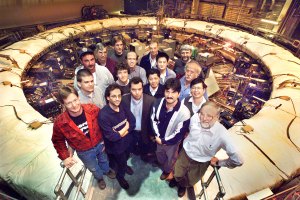
By Corinne Pralavorio The vertiginous descent of equipment into the depths of the accelerator tunnels is always a captivating event. The stars of the show over the last few weeks have been the two gleaming cold boxes that have arrived in the new service tunnels of the High-Luminosity LHC (HiLumi...

Pelican Wire Designs for Cryogenic and Extreme Energy Systems

As renewable energy, electrification and advanced research technologies continue to expand, the demands placed on wire and cable systems are evolving just as rapidly. Higher power densities, tighter system integration and increasingly extreme operating environments are pushing manufacturers beyond traditional commodity wire solutions. Caleb Lemmons, Business Development Manager at Pelican...
Structure model of the newly discovered substance with extraordinary properties. Credit: Maximilian Stremel, Markus Suta, Ingo Widmann, Hubert Huppertz

From Cryogenic to Red-Hot: Optical temperature sensing from 77 K to 873 K

by University of Innsbruck An international collaboration involving researchers from the University of Innsbruck has developed a novel luminescent material that enables particularly robust and precise optical temperature sensing across an exceptionally broad temperature range. Optical luminescence thermometry has been gaining increasing attention, as it allows contactless temperature measurement even under...
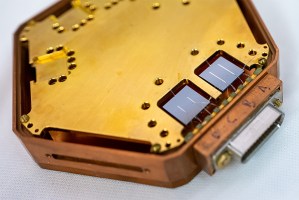
Researchers at QuTech, working on a Fujitsu-funded project, have developed the first cryogenic control chip able to directly control both electron and nuclear spins in diamond-based qubits.

Scalable Diamond Quantum Computing with Cryogenic Chip Integration

NV centers are among the most promising qubit platforms, combining fast electron-spin control with exceptionally stable nuclear-spin memories. However, until now, these systems have depended on room-temperature electronics connected by long cables to the cryogenic environment: a setup that considerably hinders scalability and reliability. The new cryo-CMOS controller solves this...
Superconductors are essential to the wholesale overhaul of systems needed to implement the energy transformation. Image: Reuters/Ina Fassbender

What Happens When Industry Demands the Impossible? Superconductors Step In

Energy transformation is not simply a fuel switch – it’s a redesign of the systems that underpin economic growth and national energy security. Electricity demand is rising sharply, driven by the electrification of end uses and the rising demand from data centres and AI. At the same time, power systems...

ADVERTISEMENT

Joule-Thomson Effect

The Joule-Thomson (JT) effect is a thermodynamic process that occurs when a fluid expands from high pressure to low pressure at constant enthalpy (an isenthalpic process). Such a process can be approximated in the real world by expanding a fluid from high pressure to low pressure across a valve. Under...

Current Leads

One of the challenges of using superconducting magnets is the connection of the magnet to a room temperature power supply. This is accomplished via current leads. The trick is that current leads should ideally have a low heat leak, since they connect room temperature to cryogenic temperature, while at the...

Multilayer Insulation

Multilayer insulation (also referred to as superinsulation) is a key component in the reduction of heat leak to cryogenic systems due to thermal radiation. MLI consists of a series of uncooled reflective surfaces placed in the vacuum space between two surfaces, one warmer than the other. Generally speaking, for ideal...

Air Separation and Liquefaction

by Nils Tellier, PE, President, EPSIM Corporation (CSA CSM) nils@epsim.us All illustrations courtesy EPSIM Corporation Background History of Air Separation and Liquefaction This section builds on a rich history of methods to develop deep refrigeration and cryogenic liquefaction during the 19th Century. You are encouraged to read Cryo Central’s History...

Bose-Einstein Condensate

A Bose-Einstein condensate, first proposed in 1925 by Albert Einstein based on work done by Satyendra Nath Bose (the same Bose from whom the term boson is derived), is a super-cold state of matter in which almost all of the individual atoms have “condensed” down to the lowest possible quantum...

Cold Technology for Pest Control

While it does not reach temperatures cold enough to be called cryogenic, carbon dioxide snow is at the heart of a new way of dealing with unwanted pests. It utilizes a quick freezing process that takes advantage of the properties of carbon dioxide snow and has a number of benefits...

Cryogenic Finishing

The following 3 articles discuss the uses and procedures of various type of cryogenic finishing. 1) By Robin A. Rhodes, Cryogenic Institute of New England, Inc. rrhodes@nitrofreeze.com Cryogenic Deflashing is employed to remove undesired residual mold flash that remains on molded parts after they are removed or ejected from the...

Approximating pressure changes over time in cryogenic cylinders

I am an Air Resources Engineer with the California Air Resources Board (CARB). My senior management has asked me to investigate approximating pressure changes over time in cryogenic cylinders that contain LNG. So far, I have taken a stab at the problem, seeking to take a back-of-the-envelope approach (as directed...