ADVERTISEMENT

En Route Toward the First German Quantum Computer

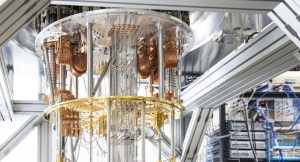
Fraunhofer IPMS is collaborating on the development of an integrated German quantum computer based on superconducting quantum chips. Together with 24 German research institutions and companies, under the coordination of Forschungszentrum (FZ) Jülich, Fraunhofer IPMS is working on this quantum computer with the goal of improving error rates. At the halfway...

Indian Student to Research Liquid Hydrogen with Monash University

A Ph.D. student from India is conducting groundbreaking research with Monash University’s Department of Civil Engineering after being selected as the recipient of the prestigious Australian government-funded Maitri Scholars Program. Chennai native Rohith Prakash will focus on advancing the safe transport and storage of liquid hydrogen, with a particular emphasis on...

Lightweight Supramolecular Material for Compressed Hydrogen Storage

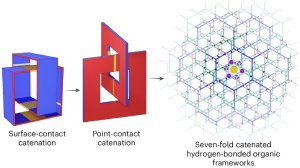
A team of chemists from the University of Hong Kong, Northwestern University, and Duke University has developed a supramolecular material capable of compressing hydrogen for storage without being too heavy. Their study, published in Nature Chemistry, demonstrates the use of porous organic crystals for hydrogen storage. Hydrogen has long been...

Rising Helium Demand Set to Double by 2035

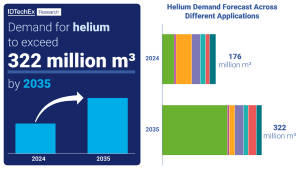
A new report from IDTechEx suggests that global helium demand is set to double by 2035, driven by the wide-ranging applications of this vital element. Helium, a finite yet critical resource, is indispensable across multiple industries. From medical imaging to semiconductor manufacturing, helium’s unique properties—such as high thermal conductivity, chemical...

Cryogenic Therapy Puts the Freeze on Esophageal Cancer

Patients with esophageal tumors often experience malignant dysphagia, or difficulty swallowing due to an obstruction, complicating their treatment and preventing them from eating normally. The Advanced Center for Therapeutic Endoscopy at WVU Medicine J.W. Ruby Memorial Hospital is the first in West Virginia to offer an innovative solution to this...

Superconducting Nanowires Enable Cooler Photon-Counting Electronics

References M. Castellani et al., “Nanocryotron ripple counter integrated with a superconducting nanowire single-photon detector for megapixel arrays,” Phys. Rev. Appl. 22, 024020 (2024). Image: This micrograph image shows a counting device for a single-photon detector. In this new design, both the detector and the signal processing electronics are fabricated from superconducting nanowires. Credit: M....

ADVERTISEMENT

Helium II

Helium II (He II) refers to the second liquid phase of the most abundant helium isotope (4He). Helium II is also referred to as superfluid helium. Helium II occurs once the temperature of the liquid helium drops below 2.17K. The phase transition between the first liquid phase of Helium (referred...

Air Separation and Liquefaction

by Nils Tellier, PE, President, EPSIM Corporation (CSA CSM) nils@epsim.us All illustrations courtesy EPSIM Corporation Background History of Air Separation and Liquefaction This section builds on a rich history of methods to develop deep refrigeration and cryogenic liquefaction during the 19th Century. You are encouraged to read Cryo Central’s History...

Bose-Einstein Condensate

A Bose-Einstein condensate, first proposed in 1925 by Albert Einstein based on work done by Satyendra Nath Bose (the same Bose from whom the term boson is derived), is a super-cold state of matter in which almost all of the individual atoms have “condensed” down to the lowest possible quantum...

Cold Technology for Pest Control

While it does not reach temperatures cold enough to be called cryogenic, carbon dioxide snow is at the heart of a new way of dealing with unwanted pests. It utilizes a quick freezing process that takes advantage of the properties of carbon dioxide snow and has a number of benefits...

Cryogenic Finishing

The following 3 articles discuss the uses and procedures of various type of cryogenic finishing. 1) By Robin A. Rhodes, Cryogenic Institute of New England, Inc. rrhodes@nitrofreeze.com Cryogenic Deflashing is employed to remove undesired residual mold flash that remains on molded parts after they are removed or ejected from the...

What is the temperature range of cryogenics?

Could you please tell me what is the temperature range of cryogenics? In other words, is -100°F considered cryogenic, or does it start lower? Could I expect to see some extended life in D2 stamping dies? What would the recipe be to achieve the desired results using cryogenics?