ADVERTISEMENT

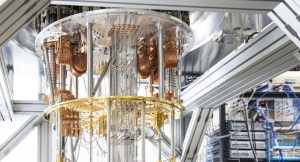
En Route Toward the First German Quantum Computer

Fraunhofer IPMS is collaborating on the development of an integrated German quantum computer based on superconducting quantum chips. Together with 24 German research institutions and companies, under the coordination of Forschungszentrum (FZ) Jülich, Fraunhofer IPMS is working on this quantum computer with the goal of improving error rates. At the halfway...

Indian Student to Research Liquid Hydrogen with Monash University

A Ph.D. student from India is conducting groundbreaking research with Monash University’s Department of Civil Engineering after being selected as the recipient of the prestigious Australian government-funded Maitri Scholars Program. Chennai native Rohith Prakash will focus on advancing the safe transport and storage of liquid hydrogen, with a particular emphasis on...

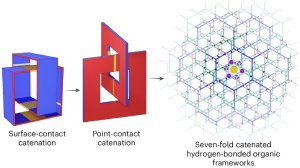
Lightweight Supramolecular Material for Compressed Hydrogen Storage

A team of chemists from the University of Hong Kong, Northwestern University, and Duke University has developed a supramolecular material capable of compressing hydrogen for storage without being too heavy. Their study, published in Nature Chemistry, demonstrates the use of porous organic crystals for hydrogen storage. Hydrogen has long been...

Rising Helium Demand Set to Double by 2035

A new report from IDTechEx suggests that global helium demand is set to double by 2035, driven by the wide-ranging applications of this vital element. Helium, a finite yet critical resource, is indispensable across multiple industries. From medical imaging to semiconductor manufacturing, helium’s unique properties—such as high thermal conductivity, chemical...

Cryogenic Therapy Puts the Freeze on Esophageal Cancer

Patients with esophageal tumors often experience malignant dysphagia, or difficulty swallowing due to an obstruction, complicating their treatment and preventing them from eating normally. The Advanced Center for Therapeutic Endoscopy at WVU Medicine J.W. Ruby Memorial Hospital is the first in West Virginia to offer an innovative solution to this...

Superconducting Nanowires Enable Cooler Photon-Counting Electronics

References M. Castellani et al., “Nanocryotron ripple counter integrated with a superconducting nanowire single-photon detector for megapixel arrays,” Phys. Rev. Appl. 22, 024020 (2024). Image: This micrograph image shows a counting device for a single-photon detector. In this new design, both the detector and the signal processing electronics are fabricated from superconducting nanowires. Credit: M....

ADVERTISEMENT

Adiabatic Demagnetization Refrigeration

Reaching temperatures below 1K requires different techniques than the various helium gas cycles found in large scale refrigeration plants and small cryocoolers. One of these techniques is Adiabatic Demagnetization Refrigeration (ADR). This technique takes advantage of the fact that the entropy of paramagnetic materials in a magnetic field is lower than...

Cryogen-Free

A cryogen is any fluid that operates at cryogenic temperatures (below roughly 150K – 120K). Using this definition, helium gas at 40K is a cryogen. Another more restrictive definition is to use cryogen to refer specifically to liquids at cryogenic temperatures. This is generally how it is used in the...

Cryostats and Cryocoolers

A cryostat is any device designed to maintain things (including fluids) at cryogenic temperatures. In general usage, cryostats tend to be passive devices rather than providing active cooling. In this usage, cryostats keep things cold by thermally isolating them from room temperature. This generally is accomplished by a combination of...

Magnetic Levitation

From http://www.superconductors.org. Magnetic-levitation is an application where superconductors perform extremely well. Transport vehicles such as trains can be made to “float” on strong superconducting magnets, virtually eliminating friction between the train and its tracks. Not only would conventional electromagnets waste much of the electrical energy as heat, they would have...

Superconductivity

From Superpower website. History of Superconductivity Superconductivity was discovered in 1911 by the Dutch physicist, Heike Kammerlingh Onnes when he was able to liquefy helium by cooling it to 4 Kelvin, or -452°F. This enabled him to cool other materials close to absolute zero and investigate their electrical properties. He...

Medical Applications of Cryogenics

Neutron Therapy Cryogenics is at the heart of nuclear accelerators. Accelerators such as Fermilab’s Tevatron make neutron therapy for cancer possible. From Fermilab Today 4/20/09: Fermilab currently offers neutron therapy. But staff at Fermilab designed and built the proton accelerator used by the nation’s first hospital-based treatment center to use...

Nuclear Physics

Al Zeller National Superconducting Cyclotron Lab (NSCL) at Michigan State University zeller@nscl.msu.edu Cryogenics has a long history in nuclear physics. The technology has its origins in the use of cold traps for maintaining a vacuum, which is required to prevent beam loss and for generating high voltages used in acceleration....

An Issue of Pressure and Flow Rate in a Supply Tank

Please help solve this problem: A supply tank requires a vaporizer to generate sufficient pressure to pump stored fluid up into a vehicle or tank. The available head is limited as the tank level falls and it is important to minimize the system pressure drop to maintain the desired flow...

Using MLI on VJ Line Joints or Cryo Storage Tanks

When installing Multi Layer Insulation (MLI) blankets on VJ line joints or cryo storage tanks should they be wrapped and tied down tight or loose? These are usually pre-cut to size. Also should they have an access hole at the point of where the molecular sieve is installed to help...