ADVERTISEMENT

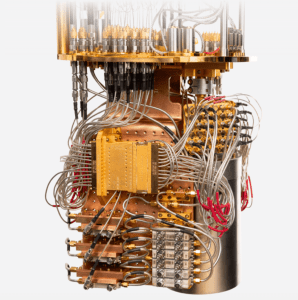
How Cryogenic Chip Cooling Could Aid Data Center Efficiency

CSA April Newsletter SponsorHigh-performance, highly reliable, long-lasting storage tanks for transporting hydrogen & helium molecules around the globe.​https://www.gardnercryo.com [Contact Jamie Luedtke for Newsletter Sponsorship] Home About Membership Login Calendar Cold Facts Buyer’s Guide News Publications Cryo Careers Resources Donate Join now Log in Cryogenic Society of America, Inc. Twitter Facebook...

OPW Acquires Demaco in Cryogenics Consolidation

OPW announced today that it has completed the acquisition of Demaco, a provider of vacuum jacketed piping and other cryogenic equipment for gas producers, research institutions, EPC contractors, and end-users of liquefied gasses within various end-markets. Demaco will become part of the OPW Clean Energy Solutions business unit.  Established in...

BHEX Leverages Cryogenics to Capture Black Holes

Introduction to BHEX-The Black Hole Explorer (BHEX) is a mission that will discover and measure a black hole’s photon ring, capturing light that has orbited a black hole. BHEX will extend the Event Horizon Telescope (EHT) into space, producing the sharpest images in the history of astronomy, whilst operating a...

Looking Backward and Forward

Since 2018 I have been writing this column on pioneers in cryogenics. So far, a total of 30 people have been profiled. With this column taking a slightly different direction in the future (more below), it’s worth asking if these pioneers had anything in common. Here are a few common...

Equigas’ Strategic Acquisition is a Catalyst for Innovation

Equigas, Inc., a North Carolina-based gas equipment distributor, has embarked on an exciting new chapter with its recent acquisition of Correct Cryogenics, a respected cryogenic service provider headquartered in the Southwest US. This strategic move is a pivotal moment for Equigas as it seeks to expand its service offerings and...

ADVERTISEMENT

Dewar

A dewar is a type of cryostat named after Sir James Dewar, the researcher who first developed the concept of a vacuum insulated container with silvered walls to reflect thermal radiation. Dewar was the first to liquefy hydrogen, and he created the device to store his discovery. The thermos bottle...

Stirling and Gifford-McMahon Cryocoolers

Stirling and Gifford-McMahon (GM) cryocoolers are two of the most commonly used cryocoolers in cryogenics. Both devices have a significant industrial base and operate at a wide range of temperatures and capacities. The thermodynamic cycles for both of these cryocoolers are quite similar. The Stirling cycle consists of a compressor,...

Liquefied Natural Gas (LNG)

A significant commercial application of cryogenics is the liquefaction, transport and storage of natural gas. Liquefied Natural Gas (LNG) is generally 95 percent methane with a few percent ethane and much lower concentrations of propane and butane. LNG liquefies at 111.6 K. Unlike many applications of cryogenics, the motivation for...

Magnets

From “Superconductivity: Present and Future Applications” by the Coalition for the Commercial Application of Superconductors. Particle physics uses accelerators to recreate the conditions of the early universe in an attempt to piece together the complex puzzle of how we got to where we are today. These huge machines are used...

Energy Storage

From “Superconductivity: Present and Future Applications” by the Coalition for the Commercial Application of Superconductors. With power lines increasingly congested and prone to instability, strategic injection of brief bursts of real power can play a crucial role in maintaining grid reliability. Small-scale Superconducting Magnetic Energy Storage (SMES) systems, based on...

Astronomy

ASTRONOMY IN SPACE by Peter V. Mason, retired,  Jet Propulsion Laboratory, and Visiting Associate, California Institute of Technology. Pmason@alumni.caltech.edu In thinking about the reasons to perform astronomy in space, we first consider the effect of the earth’s atmosphere.  On a scale of decreasing energy, gamma rays, cosmic rays, X-rays and...

Cryocoolers

What is a Cryocooler? A mechanism that can extract heat from an object (cooler) and by doing so draw its temperature down below approximately 150 Kelvin (cryo). — (Courtesy Dr. Willy Gully) What is the difference between a Cryocooler and a Cryostat? A cryostat is any device designed to maintain...