ADVERTISEMENT

Shuttle, Family Inspire NASA’s Cryogenic Technology Manager

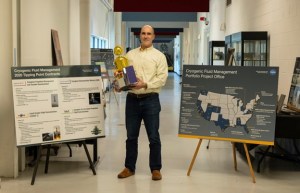
Jeremy Kenny squinted his eyes as he looked toward the brilliant light. Then came the deafening sound waves that vibrated his body. This was the moment he’d dreamed about since childhood. It was Nov. 16, 2009, at NASA’s Kennedy Space Center in Florida, and Kenny and his wife were watching space...
Bluefors Launches Helium Recovery Solution for Single Unit NMR Systems

Bluefors has introduced its latest advancement: the Cryomech HeRL02-RM. This cutting-edge helium reliquefier, specifically engineered for helium recovery from individual nuclear magnetic resonance (NMR) units, marks a significant stride in helium conservation and management. The Cryomech HeRL02-RM establishes a closed-loop, zero-boiloff system for NMR magnets, ensuring optimal helium utilization. Boiled-off helium...

The LSST Camera Set to Unveil the Cosmos

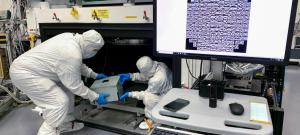
The completion of the Legacy Survey of Space and Time (LSST) Camera, after two decades of collaborative work involving scientists and engineers at the Department of Energy’s SLAC National Accelerator Laboratory and international partners, signifies a significant milestone in the construction of the Vera C. Rubin Observatory in Chile. The...

Scientists Uncover a Hidden Electronic State

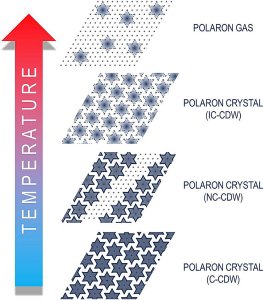
Research often unfolds as a multistage process. The solution to one question can spark several more, inspiring scientists to reach further and look at the larger problem from several different perspectives. Such projects can often be the catalyst for collaborations that leverage the expertise and capabilities of different teams and...

GKN Aerospace Joins HyFIVE Consortium Development of Hydrogen Fuel

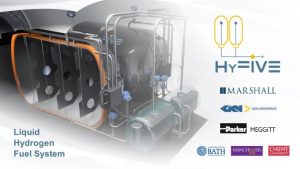
HyFIVE represents a significant leap forward in advancing a world-leading liquid hydrogen fuel system and future supply chain within the aviation sector. This collaborative effort underscores GKN Aerospace’s unwavering commitment to fostering innovation and sustainability. Led by Marshall, the HyFIVE consortium is on the cusp of achieving major milestones, including the...

ADVERTISEMENT

Stability

Stability refers to the ability of a device employing superconductors to remain in its superconducting state after part of the superconductor transitions back to its normal conducting state due to a disturbance. While the concept can apply to many superconducting devices—transmission lines, generators, motors, etc.—it is most commonly considered in...

Cable-in-Conduit Conductors

Cable-in-Conduit Conductors (CICC) are a common form of superconducting cable used in large-scale applications. There are several varieties of CICCs, but they all consist of many small, stabilized superconducting wires contained within a conduit through which a coolant (typically supercritical He II) flows. Figure 1 shows the cross section of...

Bayonet Coupling

A bayonet coupling is a demountable joint that allows for quick and easy connection and disconnection of cryogenic components, including transfer lines, cryostats, liquefiers and refrigerators. Bayonets provide a number of advantages, chief among them the ability to connect and disconnect the bayonets while components they connect are still at...

Air Separation and Liquefaction

by Nils Tellier, PE, President, EPSIM Corporation (CSA CSM) nils@epsim.us All illustrations courtesy EPSIM Corporation Background History of Air Separation and Liquefaction This section builds on a rich history of methods to develop deep refrigeration and cryogenic liquefaction during the 19th Century. You are encouraged to read Cryo Central’s History...

Bose-Einstein Condensate

A Bose-Einstein condensate, first proposed in 1925 by Albert Einstein based on work done by Satyendra Nath Bose (the same Bose from whom the term boson is derived), is a super-cold state of matter in which almost all of the individual atoms have “condensed” down to the lowest possible quantum...

Cold Technology for Pest Control

While it does not reach temperatures cold enough to be called cryogenic, carbon dioxide snow is at the heart of a new way of dealing with unwanted pests. It utilizes a quick freezing process that takes advantage of the properties of carbon dioxide snow and has a number of benefits...

Cryogenic Finishing

The following 3 articles discuss the uses and procedures of various type of cryogenic finishing. 1) By Robin A. Rhodes, Cryogenic Institute of New England, Inc. rrhodes@nitrofreeze.com Cryogenic Deflashing is employed to remove undesired residual mold flash that remains on molded parts after they are removed or ejected from the...

What is the temperature range of cryogenics?

Could you please tell me what is the temperature range of cryogenics? In other words, is -100°F considered cryogenic, or does it start lower? Could I expect to see some extended life in D2 stamping dies? What would the recipe be to achieve the desired results using cryogenics?