ADVERTISEMENT

Machine Learning Takes Hassle Out of Cold-Atom Experiments

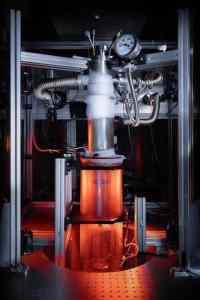
Cold atoms solve many problems in quantum technology. Want a quantum computer? You can make one from an array of ultracold atoms. Need a quantum repeater for a secure communications network? Cold atoms have you covered. How about a quantum simulator for complicated condensed-matter problems? Yep, cold atoms can do that, too. The downside...

Cryospain Introduces Vacuum Insulated Pipes in Rotterdam

Cryospain demonstrates its dedication to pioneering cryogenic equipment through the design and production of state-of-the-art super-insulated pipes for cryogenics employing high vacuum technology. Positioned at the forefront of progress toward a more sustainable future, Cryospain continues to assert its central role in advancing innovative solutions. The latest endeavor in Rotterdam...

Beckman Institute Welcomes New Ultra-High-Performance PET-CT Scanner

The Molecular Imaging Laboratory at the Beckman Institute for Advanced Science and Technology, with support from the Roy J. Carver Charitable Trust, has added to its imaging repertoire a new ultra-high-performance positron emission tomography and X-ray computed tomography scanner, opening new possibilities for cutting-edge research. PET imaging is a highly...

Scaling Up Cryogenics for Quantum Computing

As we enter 2024, the field of quantum computing continues to develop rapidly. Accessibility to quantum processing and the scaling of systems are key factors in the growing industry. Cloud-based services offer one potential access route to quantum processing, but systems are also being deployed for customers to host on-premises....

‘First-Ever’ Cryogenic Refueling space Mission Announced

Two space infrastructure specialists, Space Machines Company and Spaceium, have joined forces to embark on what they believe to be the first-ever cryogenic refueling space mission in space in 2025. Under terms of a signed agreement, Canada’s Spaceium will integrate its cryogenic storage technology into Space Machine’s platform. Spaceium will then...

Cryogenics Airmen Supply Cool Fuel for Climatic Munition Test

During the intense heat of summer and throughout the humid Florida fall, Airmen donned protective gear to handle, manage, and deliver over 19,000 gallons of liquid nitrogen at temperatures below minus 300 degrees Fahrenheit to support a three-month munition test at Eglin Air Force Base. The 96th Logistics Readiness Squadron’s...

ADVERTISEMENT

Dewar

A dewar is a type of cryostat named after Sir James Dewar, the researcher who first developed the concept of a vacuum insulated container with silvered walls to reflect thermal radiation. Dewar was the first to liquefy hydrogen, and he created the device to store his discovery. The thermos bottle...

Stirling and Gifford-McMahon Cryocoolers

Stirling and Gifford-McMahon (GM) cryocoolers are two of the most commonly used cryocoolers in cryogenics. Both devices have a significant industrial base and operate at a wide range of temperatures and capacities. The thermodynamic cycles for both of these cryocoolers are quite similar. The Stirling cycle consists of a compressor,...

Liquefied Natural Gas (LNG)

A significant commercial application of cryogenics is the liquefaction, transport and storage of natural gas. Liquefied Natural Gas (LNG) is generally 95 percent methane with a few percent ethane and much lower concentrations of propane and butane. LNG liquefies at 111.6 K. Unlike many applications of cryogenics, the motivation for...

Magnets

From “Superconductivity: Present and Future Applications” by the Coalition for the Commercial Application of Superconductors. Particle physics uses accelerators to recreate the conditions of the early universe in an attempt to piece together the complex puzzle of how we got to where we are today. These huge machines are used...

Energy Storage

From “Superconductivity: Present and Future Applications” by the Coalition for the Commercial Application of Superconductors. With power lines increasingly congested and prone to instability, strategic injection of brief bursts of real power can play a crucial role in maintaining grid reliability. Small-scale Superconducting Magnetic Energy Storage (SMES) systems, based on...

Astronomy

ASTRONOMY IN SPACE by Peter V. Mason, retired,  Jet Propulsion Laboratory, and Visiting Associate, California Institute of Technology. Pmason@alumni.caltech.edu In thinking about the reasons to perform astronomy in space, we first consider the effect of the earth’s atmosphere.  On a scale of decreasing energy, gamma rays, cosmic rays, X-rays and...

Cryocoolers

What is a Cryocooler? A mechanism that can extract heat from an object (cooler) and by doing so draw its temperature down below approximately 150 Kelvin (cryo). — (Courtesy Dr. Willy Gully) What is the difference between a Cryocooler and a Cryostat? A cryostat is any device designed to maintain...

Designing a liquid oxygen bath

I’m designing a Liquid Oxygen Bath to place composite coupons in the bath and soak 96 samples for intervals of 8 hours, 24 hours, 7 days, 21 days, 42 days, 62 days and 90 days.

Metallic Salts Normally Used to Produce Ultra-Low Temperatures?

Regarding the method known as the Adiabatic Demagnetization of Paramagnetic Salts: What metallic salts are normally used to produce the ultra-low temperatures used for near-absolute-zero cryogenic research? Which salts are the most efficient? Which make the best cooling agents? And which are used most commonly by physicists? I am looking...