ADVERTISEMENT

New Cryogenic Vacuum Chamber Cuts Noise for Quantum Ion Trapping

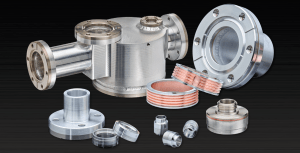
by John Toon, Georgia Institute of Technology Even very slight environmental noise, such as microscopic vibrations or magnetic field fluctuations a hundred times smaller than Earth’s magnetic field, can be catastrophic for quantum computing experiments with trapped ions. To address that challenge, researchers at the Georgia Tech Research Institute (GTRI)...

Remembering Bruce P. Strauss, a Steward of the Superconductivity Community

The superconductivity community has lost one of its most devoted stewards with the passing of Bruce P. Strauss, whose career spanned more than five decades and whose influence reached far beyond his own technical work. Bruce was not only a contributor to applied superconductivity; he was a builder of the...
Ratermann

Ratermann and Chart Expand Distributor Access Through Exclusive North American Agreement

Ratermann Manufacturing, Inc. and Chart Industries, Inc. have entered into a long-term strategic distribution partnership that changes how industrial micro-bulk and portable liquid cylinder tanks are supplied across North America. Under the agreement, Ratermann Manufacturing will serve as the exclusive North American distributor for Chart’s industrial micro-bulk and portable liquid...
IWC-HTS 2026: Cooling Systems for High-Temperature Superconducting Applications

IWC-HTS 2026 Brings the Cryogenics Community to the University of Twente

26–29 October 2026 | University of Twente, Enschede, The Netherlands The 5th International Workshop on Cooling Systems for High-Temperature Superconducting Applications (IWC-HTS 2026) will take place from 26 to 29 October 2026 at the Waaier Building, University of Twente, bringing together experts from academia, research institutions, and industry to discuss...
Messer’s KwikChiller cryogenic system in operation, rapidly cooling baked and prepared food products while preserving quality and maximizing throughput. Credit: Messer

Messer Showcases New Cryogenic Innovations at IBIE in an Exclusive Innovation Suite

Messer’s Freezing and Chilling Solutions Take the Cake, and Cool It Too Author: Messer Americas Messer, a leader in cryogenic temperature control solutions, showcased the KwikChiller in an exclusive Innovation Suite at the 2025 International Baking Industry Exposition (IBIE). The technology was presented as a high-throughput cooling and freezing solution...

Operational Weather Is a Hidden Driver in Helium Purification

by Prabhat Kumar Gupta, SCRF Cavity Characterization and Cryogenics Section, Raja Ramanna Centre for Advanced Technology (RRCAT), Indore (MP), India and Homi Bhabha National Institute (HBNI), Mumbai, India Introduction Helium purification is central to stable cryogenic operation—whether in superconducting magnet facilities, accelerator test stands, quantum computing labs, or helium liquefaction...

ADVERTISEMENT

Dewar

A dewar is a type of cryostat named after Sir James Dewar, the researcher who first developed the concept of a vacuum insulated container with silvered walls to reflect thermal radiation. Dewar was the first to liquefy hydrogen, and he created the device to store his discovery. The thermos bottle...

Stirling and Gifford-McMahon Cryocoolers

Stirling and Gifford-McMahon (GM) cryocoolers are two of the most commonly used cryocoolers in cryogenics. Both devices have a significant industrial base and operate at a wide range of temperatures and capacities. The thermodynamic cycles for both of these cryocoolers are quite similar. The Stirling cycle consists of a compressor,...

Liquefied Natural Gas (LNG)

A significant commercial application of cryogenics is the liquefaction, transport and storage of natural gas. Liquefied Natural Gas (LNG) is generally 95 percent methane with a few percent ethane and much lower concentrations of propane and butane. LNG liquefies at 111.6 K. Unlike many applications of cryogenics, the motivation for...

Magnetic Levitation

From http://www.superconductors.org. Magnetic-levitation is an application where superconductors perform extremely well. Transport vehicles such as trains can be made to “float” on strong superconducting magnets, virtually eliminating friction between the train and its tracks. Not only would conventional electromagnets waste much of the electrical energy as heat, they would have...

Superconductivity

From Superpower website. History of Superconductivity Superconductivity was discovered in 1911 by the Dutch physicist, Heike Kammerlingh Onnes when he was able to liquefy helium by cooling it to 4 Kelvin, or -452°F. This enabled him to cool other materials close to absolute zero and investigate their electrical properties. He...

Medical Applications of Cryogenics

Neutron Therapy Cryogenics is at the heart of nuclear accelerators. Accelerators such as Fermilab’s Tevatron make neutron therapy for cancer possible. From Fermilab Today 4/20/09: Fermilab currently offers neutron therapy. But staff at Fermilab designed and built the proton accelerator used by the nation’s first hospital-based treatment center to use...

Nuclear Physics

Al Zeller National Superconducting Cyclotron Lab (NSCL) at Michigan State University zeller@nscl.msu.edu Cryogenics has a long history in nuclear physics. The technology has its origins in the use of cold traps for maintaining a vacuum, which is required to prevent beam loss and for generating high voltages used in acceleration....

Specs and info on turbo expanders

I am a fourth year chemical engineering student doing a design project for the liquefaction of natural gas to DME and we are using a turbo expansion unit. I was wondering whether you would send me some specs and any additional information on turbo expanders that I could use as...

Colleges that offer cryogenic studies

Would you happen to know of any colleges in the US that offer cryogenics as a major? If not, should I major in something like biology or physics before, then branch off to the field of cryogenics? Any information that you could give me would be greatly appreciated, considering this...

Data on hardness of Indium?

Where can I find experimental data on the hardness of Indium, as a function of temperature, as well as any existing data on the thermal contact conductance of junctions containing Indium foil, also as a function of temperature?