ADVERTISEMENT

In Memoriam: Dr. Ray Radebaugh

It is with deep sadness that we share the passing of Ray Radebaugh. Ray was a pioneer, mentor, and friend whose influence on cryogenics spanned more than five decades and touched nearly every corner of our field. Ray’s passion for engineering began early. Growing up in Mishawaka, Indiana, he learned...

New Cryogenic Vacuum Chamber Cuts Noise for Quantum Ion Trapping

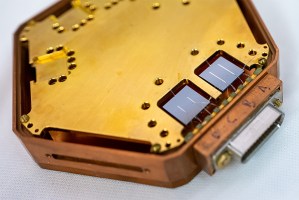
by John Toon, Georgia Institute of Technology Even very slight environmental noise, such as microscopic vibrations or magnetic field fluctuations a hundred times smaller than Earth’s magnetic field, can be catastrophic for quantum computing experiments with trapped ions. To address that challenge, researchers at the Georgia Tech Research Institute (GTRI)...

Remembering Bruce P. Strauss, a Steward of the Superconductivity Community

The superconductivity community has lost one of its most devoted stewards with the passing of Bruce P. Strauss, whose career spanned more than five decades and whose influence reached far beyond his own technical work. Bruce was not only a contributor to applied superconductivity; he was a builder of the...
Ratermann

Ratermann and Chart Expand Distributor Access Through Exclusive North American Agreement

Ratermann Manufacturing, Inc. and Chart Industries, Inc. have entered into a long-term strategic distribution partnership that changes how industrial micro-bulk and portable liquid cylinder tanks are supplied across North America. Under the agreement, Ratermann Manufacturing will serve as the exclusive North American distributor for Chart’s industrial micro-bulk and portable liquid...
IWC-HTS 2026: Cooling Systems for High-Temperature Superconducting Applications

IWC-HTS 2026 Brings the Cryogenics Community to the University of Twente

26–29 October 2026 | University of Twente, Enschede, The Netherlands The 5th International Workshop on Cooling Systems for High-Temperature Superconducting Applications (IWC-HTS 2026) will take place from 26 to 29 October 2026 at the Waaier Building, University of Twente, bringing together experts from academia, research institutions, and industry to discuss...
Messer’s KwikChiller cryogenic system in operation, rapidly cooling baked and prepared food products while preserving quality and maximizing throughput. Credit: Messer

Messer Showcases New Cryogenic Innovations at IBIE in an Exclusive Innovation Suite

Messer’s Freezing and Chilling Solutions Take the Cake, and Cool It Too Author: Messer Americas Messer, a leader in cryogenic temperature control solutions, showcased the KwikChiller in an exclusive Innovation Suite at the 2025 International Baking Industry Exposition (IBIE). The technology was presented as a high-throughput cooling and freezing solution...

ADVERTISEMENT

Refrigerators and Liquefiers

Two of the most common terms used in cryogenics are “refrigerator” and “liquefier.” These terms describe similar and, as will be seen, in some cases identical components. A refrigerator provides cooling (that is, absorbs heat) at cryogenic temperatures. Refrigerators typically put a working fluid (such as helium) through one of...

Air Separation

Air separation is one of the largest, as well as earliest, industrial applications of cryogenics. In this process, cryogenic temperatures are used to separate air into its constituent gases: nitrogen (78.08%), oxygen (20.95%), argon (0.93%) and carbon dioxide (0.3%). Trace gases such as krypton, neon, xenon and helium total far...

Coefficient of Performance and Figure of Merit

The coefficient of performance (COP) is used to describe the effectiveness of refrigerators, including those operating at cryogenic temperatures. The COP is defined as the amount of heat removed at the cryogenic operating temperature of the refrigerator divided by the amount of work that must be applied to remove the...

Air Separation and Liquefaction

by Nils Tellier, PE, President, EPSIM Corporation (CSA CSM) nils@epsim.us All illustrations courtesy EPSIM Corporation Background History of Air Separation and Liquefaction This section builds on a rich history of methods to develop deep refrigeration and cryogenic liquefaction during the 19th Century. You are encouraged to read Cryo Central’s History...

Bose-Einstein Condensate

A Bose-Einstein condensate, first proposed in 1925 by Albert Einstein based on work done by Satyendra Nath Bose (the same Bose from whom the term boson is derived), is a super-cold state of matter in which almost all of the individual atoms have “condensed” down to the lowest possible quantum...

Cold Technology for Pest Control

While it does not reach temperatures cold enough to be called cryogenic, carbon dioxide snow is at the heart of a new way of dealing with unwanted pests. It utilizes a quick freezing process that takes advantage of the properties of carbon dioxide snow and has a number of benefits...

Cryogenic Finishing

The following 3 articles discuss the uses and procedures of various type of cryogenic finishing. 1) By Robin A. Rhodes, Cryogenic Institute of New England, Inc. rrhodes@nitrofreeze.com Cryogenic Deflashing is employed to remove undesired residual mold flash that remains on molded parts after they are removed or ejected from the...