ADVERTISEMENT

High-Resolution Cryo-EM Starts Focusing on Accessibility

Structure-based designs are integral to advancing drug discovery, and in this regard, cryogenic electron microscopy (cryo-EM) has emerged as a pivotal tool for achieving high-resolution structures of proteins and protein complexes. Particularly noteworthy is its utility in elucidating the structures of protein classes that have historically resisted crystallization. Cryo-EM’s pivotal...

Cryogenic Etch Re-Emerges

Cryogenic etch, sometimes called cryo etch, is one of two ways to enable deep silicon or high-aspect ratio (HAR) etches in devices, where the features are long, narrow and deep. The other and most popular method is the two-step Bosch process, where you etch out a part of the structure...

Tokamak Energy’s Fusion Magnet System Passes Cryogenic Tests

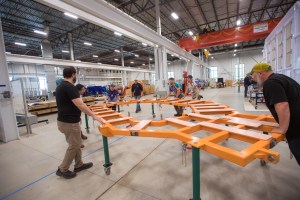
UK-based Tokamak Energy’s superconducting magnet system, which is being built to replicate fusion energy power plant forces, has passed significant milestone cryogenic tests. Creating fusion energy requires strong magnetic fields to confine and control the extremely hot hydrogen fuel, which becomes a plasma several times hotter than the center of...

RegO Adds Pressure Regulators for Cryogenic Vessels

RegO Products has unveiled its latest breakthrough: the CBE504 Series of Half-Inch Pressure Builder-Economizer Regulators. Designed to enhance cryogenic vessel operations, these regulators prioritize pressure control and product preservation. The CBE504 Series boasts numerous improvements over the previous CB504 model, including a more compact form factor and a broader range...

Ziath Preserves the Future, One Sample at a Time

In the realm of scientific discovery, the value of biological specimens cannot be overstated. They serve as essential windows into understanding life’s intricate mysteries. From the smallest molecules to the most complex organisms, researchers strive to unlock the secrets held within these samples. To safeguard these invaluable assets, a pioneering...

Cryogenics: A Short History and the Implications It Has on the QC Industry

In the rapidly evolving landscape of quantum technology, cryogenics is an indispensable and fascinating domain that pushes the boundaries of low-temperature physics. Harnessing the power of extreme cold, this groundbreaking field plays a pivotal role in unlocking the true potential of quantum phenomena. This field of research has its origins in...

ADVERTISEMENT

Dewar

A dewar is a type of cryostat named after Sir James Dewar, the researcher who first developed the concept of a vacuum insulated container with silvered walls to reflect thermal radiation. Dewar was the first to liquefy hydrogen, and he created the device to store his discovery. The thermos bottle...

Stirling and Gifford-McMahon Cryocoolers

Stirling and Gifford-McMahon (GM) cryocoolers are two of the most commonly used cryocoolers in cryogenics. Both devices have a significant industrial base and operate at a wide range of temperatures and capacities. The thermodynamic cycles for both of these cryocoolers are quite similar. The Stirling cycle consists of a compressor,...

Liquefied Natural Gas (LNG)

A significant commercial application of cryogenics is the liquefaction, transport and storage of natural gas. Liquefied Natural Gas (LNG) is generally 95 percent methane with a few percent ethane and much lower concentrations of propane and butane. LNG liquefies at 111.6 K. Unlike many applications of cryogenics, the motivation for...

Air Separation and Liquefaction

by Nils Tellier, PE, President, EPSIM Corporation (CSA CSM) nils@epsim.us All illustrations courtesy EPSIM Corporation Background History of Air Separation and Liquefaction This section builds on a rich history of methods to develop deep refrigeration and cryogenic liquefaction during the 19th Century. You are encouraged to read Cryo Central’s History...

Bose-Einstein Condensate

A Bose-Einstein condensate, first proposed in 1925 by Albert Einstein based on work done by Satyendra Nath Bose (the same Bose from whom the term boson is derived), is a super-cold state of matter in which almost all of the individual atoms have “condensed” down to the lowest possible quantum...

Cold Technology for Pest Control

While it does not reach temperatures cold enough to be called cryogenic, carbon dioxide snow is at the heart of a new way of dealing with unwanted pests. It utilizes a quick freezing process that takes advantage of the properties of carbon dioxide snow and has a number of benefits...

Cryogenic Finishing

The following 3 articles discuss the uses and procedures of various type of cryogenic finishing. 1) By Robin A. Rhodes, Cryogenic Institute of New England, Inc. rrhodes@nitrofreeze.com Cryogenic Deflashing is employed to remove undesired residual mold flash that remains on molded parts after they are removed or ejected from the...