ADVERTISEMENT

Cryogenics: A Short History and the Implications It Has on the QC Industry

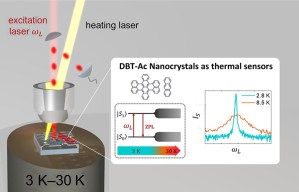
In the rapidly evolving landscape of quantum technology, cryogenics is an indispensable and fascinating domain that pushes the boundaries of low-temperature physics. Harnessing the power of extreme cold, this groundbreaking field plays a pivotal role in unlocking the true potential of quantum phenomena. This field of research has its origins in...

Cryotherapy for Kidney Cancer: A Chilling Innovation in Cancer Treatment

When it comes to battling cancer, innovation and evolution in medical technology play a vital role in improving treatment outcomes and patients’ quality of life. One such innovation that has been making strides in recent years is cryotherapy for kidney cancer. Cryotherapy, also known as freezing therapy, cryosurgery, or cryoablation,...

World’s First Crewed LH2 Flight Takes Off

At a somewhat small and unassuming airport in Maribor, Slovenia, German hydrogen propulsion startup H2FLY has quietly been building up to a major milestone in zero-emission aviation over the summer. And all the hard work has come to fruition, with the successful completion of the world’s first crewed liquid hydrogen-powered...

A Quantum Leap in Next-Gen Optical Atomic Clocks

QuantX Labs, an Australian deep technology company, has achieved a groundbreaking advancement with its cryogenic sapphire oscillator, the Cryoclock. Operating at microwave frequencies, it offers unparalleled signal purity and stability, attracting interest from defense and commercial markets while also spearheading the development of advanced quantum technology for space applications.  QuantX...

Strain Manipulates TaSe3 for Quantum Effects

Topological effects are predicted to have many potential uses in future electronic devices. Therefore, finding ways to control these effects is desirable. As predicted by first-principles calculations, the one-dimensional (1D) transition-metal trichalcogenide TaSe3 is a strongly topological semimetal. It has a unique atomic arrangement of two inequivalent chains; the shorter...

Cryogenics at FAIR Unleashes the Power of Discovery

The Facility for Antiproton and Ion Research (FAIR) in Darmstadt, Germany, is embarking on a pioneering mission that will transform accelerator research and expand our understanding of the universe. With its ambitious vision to explore an extensive research canvas, FAIR is set to become a global hub for scientific exploration,...

ADVERTISEMENT

Mixed Refrigerant Cycles

Most cryogenic refrigeration systems, both large scale systems and cryocoolers, use helium as a working fluid. There are a number of advantages to helium, not the least of which is that helium remains a fluid down to the lowest achievable temperatures. In order to freeze helium, pressures of over 20...

Fountain Pumps and He II Phase Separators

Helium II (He II), the second liquid phase of the 4He isotope described in this column in Cold Facts Spring 2010 (http://2csa.us/he2), can be modeled as consisting of two interpenetrating fluids. One, the superfluid component, has zero viscosity and entropy and the other, the normal fluid component, has nonzero viscosity...

Turboexpanders

A vital technology in the refrigerators and liquefiers described in Cold Facts Volume 31 Number 3 is that of turboexpanders. These devices are rotating machines in which the process fluid (e.g., helium) does work against the turboexpander while moving from high pressure to a lower pressure and thus is cooled....

Air Separation and Liquefaction

by Nils Tellier, PE, President, EPSIM Corporation (CSA CSM) nils@epsim.us All illustrations courtesy EPSIM Corporation Background History of Air Separation and Liquefaction This section builds on a rich history of methods to develop deep refrigeration and cryogenic liquefaction during the 19th Century. You are encouraged to read Cryo Central’s History...

Bose-Einstein Condensate

A Bose-Einstein condensate, first proposed in 1925 by Albert Einstein based on work done by Satyendra Nath Bose (the same Bose from whom the term boson is derived), is a super-cold state of matter in which almost all of the individual atoms have “condensed” down to the lowest possible quantum...

Cold Technology for Pest Control

While it does not reach temperatures cold enough to be called cryogenic, carbon dioxide snow is at the heart of a new way of dealing with unwanted pests. It utilizes a quick freezing process that takes advantage of the properties of carbon dioxide snow and has a number of benefits...

Cryogenic Finishing

The following 3 articles discuss the uses and procedures of various type of cryogenic finishing. 1) By Robin A. Rhodes, Cryogenic Institute of New England, Inc. rrhodes@nitrofreeze.com Cryogenic Deflashing is employed to remove undesired residual mold flash that remains on molded parts after they are removed or ejected from the...

Seeking alloy that keeps elastic property down to 10K

I am looking for a metal (alloy) that supports high temperatures (at least 1600K) and keeps its elastic property at low temperatures down to 10K. Rhenium is a good one because it does not become brittle. But it is quite expensive. Pure tungsten and molybdenum enter in the brittle regime...

Searching for a freezer that does not need electricity

I’m student of University of Barcelona. We do technical cryogenic research and we are searching for a cryogenic portable freezer that does not need electricity. We can’t find any company that offers something like this. The product we are looking for is the typical portable freezer for food or drinks...