ADVERTISEMENT

World’s First Crewed LH2 Flight Takes Off

At a somewhat small and unassuming airport in Maribor, Slovenia, German hydrogen propulsion startup H2FLY has quietly been building up to a major milestone in zero-emission aviation over the summer. And all the hard work has come to fruition, with the successful completion of the world’s first crewed liquid hydrogen-powered...
A Quantum Leap in Next-Gen Optical Atomic Clocks

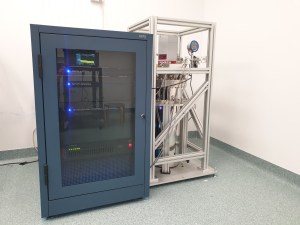
QuantX Labs, an Australian deep technology company, has achieved a groundbreaking advancement with its cryogenic sapphire oscillator, the Cryoclock. Operating at microwave frequencies, it offers unparalleled signal purity and stability, attracting interest from defense and commercial markets while also spearheading the development of advanced quantum technology for space applications.  QuantX...

Strain Manipulates TaSe3 for Quantum Effects

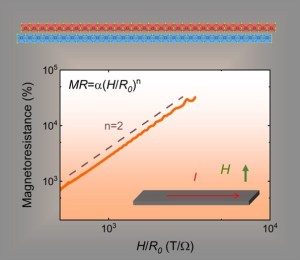
Topological effects are predicted to have many potential uses in future electronic devices. Therefore, finding ways to control these effects is desirable. As predicted by first-principles calculations, the one-dimensional (1D) transition-metal trichalcogenide TaSe3 is a strongly topological semimetal. It has a unique atomic arrangement of two inequivalent chains; the shorter...

Cryogenics at FAIR Unleashes the Power of Discovery

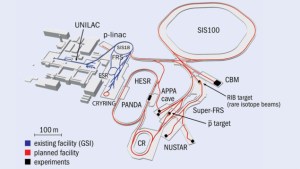
The Facility for Antiproton and Ion Research (FAIR) in Darmstadt, Germany, is embarking on a pioneering mission that will transform accelerator research and expand our understanding of the universe. With its ambitious vision to explore an extensive research canvas, FAIR is set to become a global hub for scientific exploration,...

IRLabs Pioneers Solutions for High Altitude Scientific Exploration

In the pursuit of scientific knowledge, the German Aerospace Center (DLR) embarked on a mission to explore the enigmatic properties of atomic oxygen in Earth’s upper atmosphere. Understanding the impact of this element on satellite corrosion, deceleration in low-Earth orbits and its role as an indicator of climate change held...

NIF Journeys to Ignition

December 5, 2022, marked a historic breakthrough in the field of fusion research as scientists achieved ignition, a momentous achievement that has been a scientific grand challenge spanning over 50 years. The National Ignition Facility (NIF) within the Lawrence Livermore National Laboratory (LLNL) achieved an igniting fusion reaction where the...

ADVERTISEMENT

Liquid Hydrogen

Hydrogen becomes a liquid at 20K and 1 bar. Liquid hydrogen (LH2) is an important substance in industry, transportation and research. Industrial uses of hydrogen include applications in the electronics, glass, chemical and metal processing fields. In these applications, the hydrogen is generally used as a room temperature gas but...

Superconducting Radiofrequency Cavities

Superconducting radio frequency (SRF) cavities represent an important application of cryogenics and superconductivity. SRF cavities are a technology for accelerating charged particle beams via the transfer of radiofrequency (RF) energy to the beams via resonant structures. As such, they are frequently found in large particle accelerators used for scientific research....

Thermal Radiation Shields

Actively cooled thermal radiation shields are a common feature of cryostats whose lowest temperature is less than 77K. These shields, which typically operate at temperatures between that of LN2 and 40K, block thermal radiation from higher temperatures from reaching lower temperature cryogenic components or fluids. Since the heat radiated from...

Cryogenic Electronics

Randall Kirschman, consulting physicist, Mountain View, California ExtElect@gmail.com Cryogenic electronics—the operation of electronic devices, circuits, and systems at cryogenic temperatures—has been a valuable technology for decades. Cryogenic electronics (also referred to as low-temperature electronics, or cold electronics) can be based on semiconductive devices, on superconductive devices, or on a combination...

Particle Physics: High Energy Physics

Cryogenics and High-Energy Physics 1. From symmetry magazine: http://www.symmetrymagazine.org/cms/?pid=1000627: Cryogenics is the study of how materials behave at temperatures near absolute zero. In high-energy particle accelerators, such frigid temperatures reduce the electrical resistance of wires in superconducting magnets, increasing the magnet strength and allowing faster particle acceleration. The same holds...

HTS Degaussing Systems

From the Spring 2009 issue of Cold Facts (Volume 25, Number 2): Thanks to a joint project by the US Navy and a number of industry partners, high temperature superconducting (HTS) technology is now at the heart of an advanced degaussing system aboard the USS Higgins at the naval station...

Magnetic Resonance Imaging

From http://www.superconductors.org: An area where superconductors can perform a life-saving function is in the field of biomagnetism. Doctors need a non-invasive means of determining what’s going on inside the human body. By impinging a strong superconductor-derived magnetic field into the body, hydrogen atoms that exist in the body’s water and...

An Issue of Pressure and Flow Rate in a Supply Tank

Please help solve this problem: A supply tank requires a vaporizer to generate sufficient pressure to pump stored fluid up into a vehicle or tank. The available head is limited as the tank level falls and it is important to minimize the system pressure drop to maintain the desired flow...

Using MLI on VJ Line Joints or Cryo Storage Tanks

When installing Multi Layer Insulation (MLI) blankets on VJ line joints or cryo storage tanks should they be wrapped and tied down tight or loose? These are usually pre-cut to size. Also should they have an access hole at the point of where the molecular sieve is installed to help...