Randall Kirschman, consulting physicist, Mountain View, California
ExtElect@gmail.com
Cryogenic electronics—the operation of electronic devices, circuits, and systems at cryogenic temperatures—has been a valuable technology for decades. Cryogenic electronics (also referred to as low-temperature electronics, or cold electronics) can be based on semiconductive devices, on superconductive devices, or on a combination of the two; however, the focus in this overview is cryogenic electronics based on semiconductors.
One might say that cryogenic electronics began as early as 1951 (predating the Josephson Junction) when researchers examined the operation of a vacuum-tube amplifier down to ~14 K as a means of boosting weak signals before sending them to room temperature, in order to reduce the effects of interference [1].
Investigation and application of semiconductor devices (diodes and transistors) at low temperatures was underway during the 1960s-1970s. In 1983 the first conference on low-temperature electronics was held at the Jet Propulsion Laboratory [2]. That same year saw the use of transistor preamps operating at cryogenic temperature in a scientific satellite [3,4]. Use of cryogenic semiconductor electronics has since expanded into many areas, based on integrated circuits as well as transistors.
Semiconductor-based cryogenic electronics can be as simple as a circuit using a single transistor (or diode) or as complex as a system incorporating hundreds of large integrated circuits. It includes both analog and digital systems, spans the frequency spectrum from DC to 100s of GHz, and ranges in power from microwatts to hundreds of watts. Transistors types include both bipolar and field-effect, using Si, Ge, GaAs, SiGe and III-V semiconductor materials. Cryogenic electronic circuits are used not only in the laboratory, but hundreds have been used “in the field” in practical applications, and several types are available commercially.
There are two broad reasons for operating electronics at cryogenic temperatures: (1) to improve the performance of the electronics (lower noise, higher speed, increased efficiency, etc.), and (2) because electronics is needed to support a sensor, actuator or other apparatus residing in a cryogenic environment. Some applications may combine both reasons (1) and (2).
Related benefits of cryogenic operation may include improved thermal and electrical conductivity, lower operating power, reduction of parasitic losses, diminished chemical and metallurgical degradation, and improved overall reliability.
Past and present examples of applied cryogenic electronics:
• Processing boards of computers, cooled to increase speed. In the 1980s ETA Corp. build a half-dozen supercomputers with their central processing units, comprising about 240 very-large-scale integrated circuits, immersed in liquid nitrogen [5,6].
• Microwave and millimeter-wave receivers cooled to deep cryogenic temperatures for radio astronomy, for example by the NRAO (National Radio Astronomy Observatory), and for deep-space communication by NASA—cooling improves signal-to-noise [7,8].
• Preamplifiers for cell-phone base stations, cooled for improved signal-to-noise, often used in conjunction with superconductive filters [9].
• Preamplifiers and readout circuits in scientific spacecraft and military surveillance satellites, operating at temperatures as low as liquid-helium, co-located with cryogenic infrared, visible, and X-ray detectors to better process their signals [10-12].
• Memory ICs mated to biological cells stored at cryogenic temperatures, for better tracking and application of the cells [13].
• Preamplifiers for cooled nuclear magnetic resonance receivers, co-located for higher sensitivity and faster data acquisition.
• Preamplifiers for cold particle detectors used in fundamental physics experiments, co-located for better signal-to-noise [14].
• Cryogenic gravity-wave receivers, using co-located preamps for better signal-to-noise.
Possible future applications:
• A range of electronic systems in spacecraft and surface craft in cold environments, such as on the Moon, Mars and other cold Solar-System bodies [15-18].
• Power circuits associated with spacecraft propulsion systems [19].
• Power-conversion circuits coupled to cryogenic or superconducting power generation, management and distribution [20,21].
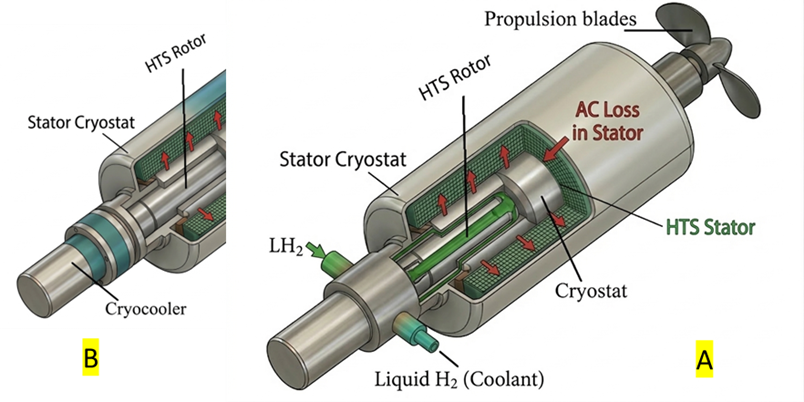
• Power-conversion circuits for land vehicles or ships that employ cryogenic fuels (for example, liquid hydrogen) or cryogenic motors [22,23].
• Signal-processing systems for instrumentation in cryogenic wind tunnels [24,25].
Electronic devices and circuits may or may not operate when cooled to cryogenic temperatures, depending on their design and materials. Conventional, commercial devices are sometimes used, other devices are designed specifically for cryogenic operation. Properly designed devices and circuits can operate over the entire range from room temperature down to liquid helium temperatures.
This overview has been brief, since there are many informative references on cryogenic electronics. Some are listed below. For additional information visit
www.ExtremeTemperatureElectronics.com and look into the links, books, and other items included there.
(November 5, 2009)
References
[1] A. N. Gerritsen and F. van den Burg, “The possibility of using an amplifier at low temperatures,” Physica, vol. 17, no.10, pp. 930-932, 1951.
[2] E. Tward and R. Kirschman, eds. Proceedings of the Cold Electronics Workshop, Jet Propulsion Laboratory Publication 84-83, 15 Nov. 1984, 102 pp.
[3] http://irsa.ipac.caltech.edu/IRASdocs/iras.html
[4] F. J. Low et al., “Cryogenic telescope on the Infrared Astronomical Satellite (IRAS),” Proc. SPIE, vol. 430, 1983, pp. 288-296.
[5] D. M. Carlson, D. C. Sullivan, R. E. Bach, and D. R. Resnick, “The ETA10 liquid-nitrogen-cooled supercomputer system,” IEEE Trans. on Electron Devices, vol. 36, no. 8, pp. 1404-1413, August 1989.
[6] T. Vacca, D. Resnick, D. Frankel, R. Bach, J. Kreilich, and D. Carlson, “A cryogenically cooled CMOS VLSI supercomputer,” VLSI Systems Design, vol. 8, no. 7, pp. 80-88, June 1987.
[7] http://www.nrao.edu/engineering/amplifiers.shtml
[8] http://deepspace.jpl.nasa.gov/dsn/
[9] B. A. Willemsen, “Practical cryogenic receiver front ends for commercial wireless applications,” IEEE MTT-S International Microwave Symposium Digest, 2009 (MTT ’09), Boston, Massachusetts, 7-12 June 2009, pp. 1457-1460.
[10] http://www.ipac.caltech.edu/Outreach/Edu/orbit.html
[11] http://www.jwst.nasa.gov/
[12] P. Kittel, “Cryo Central: Cryogenics in Space”
[13] F. R. Ihmig, S. G. Shirley, C. H. P. Durst, and H. Zimmermann, “Cryogenic electronic memory infrastructure for physically related ‘continuity of care records’ of frozen cells,” Cryogenics, vol. 46, no. 4, pp. 312-320, April 2006.
[14] G. Battistoni, D. V. Camin, N. Fedyakin, G. Pessina, and P. Sala, “Monolithic GaAs current-sensitive cryogenic preamplifier for calorimetry applications,” Proceedings of the Fifth International Conference on Advanced Technology and Particle Physics, Nuclear Physics B – Proceedings Supplements, vol. 61, no. 3, Feb. 1998, pp. 511-519.
[15] NASA/JPL Workshop on Extreme Environments Technologies for Space Exploration, Pasadena, California, May 2003, http://extenv.jpl.nasa.gov
[16] http://www.grc.nasa.gov/WWW/RT1996/5000/5480di.htm
[17] M. A. Newell, R. Stern, D. Nykes, G. Bolotin, T. Gregoire, T. McCarthy, C. Buchanan, and S. Cozy, “Extreme temperature (–170°C to +125°C) electronics for nanorover operation,” 2001 IEEE Aerospace Conf. Proc., 10-17 March 2001, Big Sky, Montana, vol. 5, pp. 2443-2456.
[18] R. L. Patterson, A. Hammoud, and M. Elbuluk, “Electronic components for use in extreme temperature aerospace applications,” 12th International Components for Military and Space Electronics Conference. San Diego, California, 11-14 February 2008.
Click to access 20090004677_2009001235.pdf
[19] R. S. L. Das et al., “Evaluation of cryogenic power conditioning subsystems for electric propulsion spacecraft,” Proc. – 31st Intersociety Energy Conversion Engineering Conference 1996 (IECEC 96), vol. 1, pp. 605-610.
[20] J. Østergaarda et al., “A new concept for superconducting DC transmission from a wind farm,” Physica C: Superconductivity, vols. 372-376, part 3, pp. 1560-1563, August 2002.
[21] H. Ye, C. Lee, R. W. Simon, P. Haldar, M. J. Hennessy, and E. K. Mueller, “Liquid nitrogen cooled integrated power electronics module with high current carrying capability and lower on resistance,” Applied Physics Letters, vol. 89, 192107, 6 Nov. 2006.
[22] T. Curcic and S. A. Wolf, “Superconducting hybrid power electronics for military systems,” IEEE Trans. on Applied Superconductivity, vol. 15, no. 2, pp. 2364-2369, June 2005.
[23] ”Cryogenic power conversion for fuel cell systems especially for vehicle,” United States Patent 6798083, Sept. 2004.
[24] R. Kilgore, “Cryo Central: Wind Tunnels”
[25] R. Scurlock, “Scurlock on cold electronics, wind tunnels,” Cold Facts, Winter 2008, vol. 24, no 1, pp. 11, 13.