Spaceline Technologies, a fluid system engineering and manufacturing company, has completed a cryogenic nitrogen transport and supply trailer for NASA Armstrong Flight Research Center. This trailer is a mobile and standalone solution to provide pressure regulated nitrogen gas and liquid with flowrate and temperature control. Control of the trailer can be done locally through a Human Machine Interface or remotely via a computer or network connection. This system was engineered, manufactured, and tested by Spaceline Technologies in Everett, Washington.
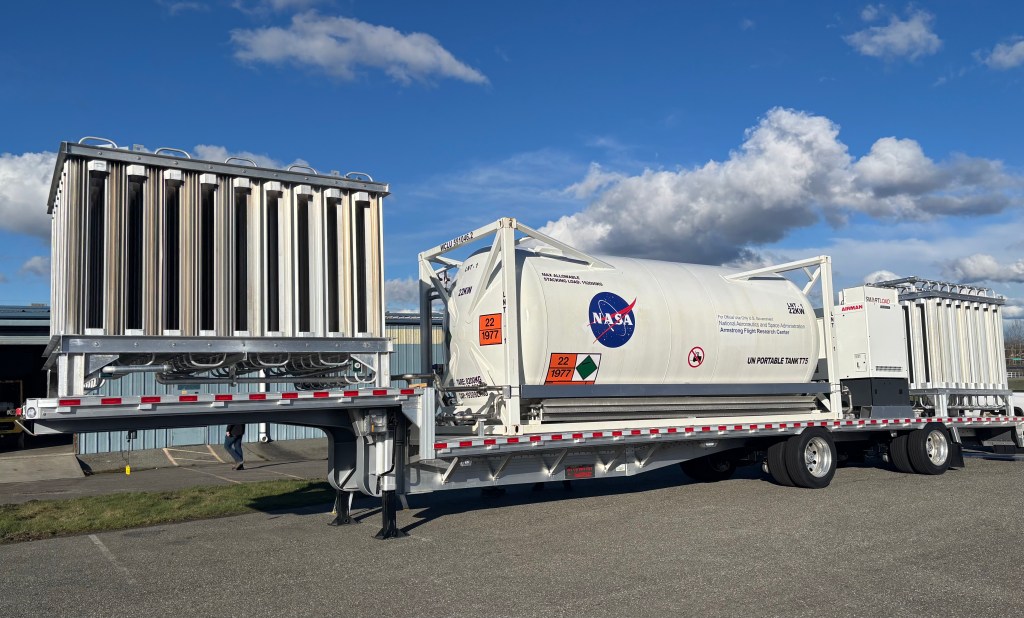
Spaceline’s employees are experts from the space launch and test industry with unique experience designing, fabricating, and operating cryogenic, high pressure gas and liquid systems and can design solutions to a customer’s complex problems. This mobile cryogenic system was custom engineered to NASA’s specifications including the ability for the user to specify a cold or warm nitrogen purge depending on the end use case with a range from -60 °F to 100 °F. NASA also needed the capability to control the flowrate from 0-1000 standard cubic feet per minute. A UN T75 vacuum jacketed tank provides over 5000 gallons of onboard liquid nitrogen storage at over 150 psig. Spaceline also outfitted the system with a tiered set of ambient vaporizers coupled with an electric circulation heater for the final temperature control. Throttleable valves control the flow to each vaporizer and the heater to provide the required temperature. These flow control valves also use feedback from the onboard gas flowmeter to meet the flowrate requirement. The control system for the trailer is PLC based with an easy to use touchscreen graphical user interface that matches the process flow diagram of the system. Proportional Integral Derivative (PID) control logic is implemented on temperature and flowrate process variables to enable automatic operation once the initial setpoints are entered.
Spaceline developed the system design through multiple iterations balancing the vaporizer and heater sizing within the size and weight constraints of an off-the shelf road-going trailer pulled by a standard tractor. It would have been easier to meet NASA’s requirements with a static system bolted to the ground, with a higher power input, larger footprint, and no restraint on system mass. Right sizing the heater and vaporizers through a bounding analysis of environmental conditions and the output requirements was key to making the system design operable (a larger circulation heater requires a larger generator which takes away available footprint from the vaporizers, etc.).
Equally important to the engineering was the activation test plan. Spaceline completed a test campaign that proved each requirement of system operation including automatic tank pressurization, gaseous nitrogen flow and temperature control through the entire range and liquid nitrogen flow control into a test tank. Having the ability to perform these tests at our site to tune the control system, cold shock the piping and work out startup issues was key to the project’s success. Spaceline has a deep test bench and can design and fabricate to a range of test requirements.
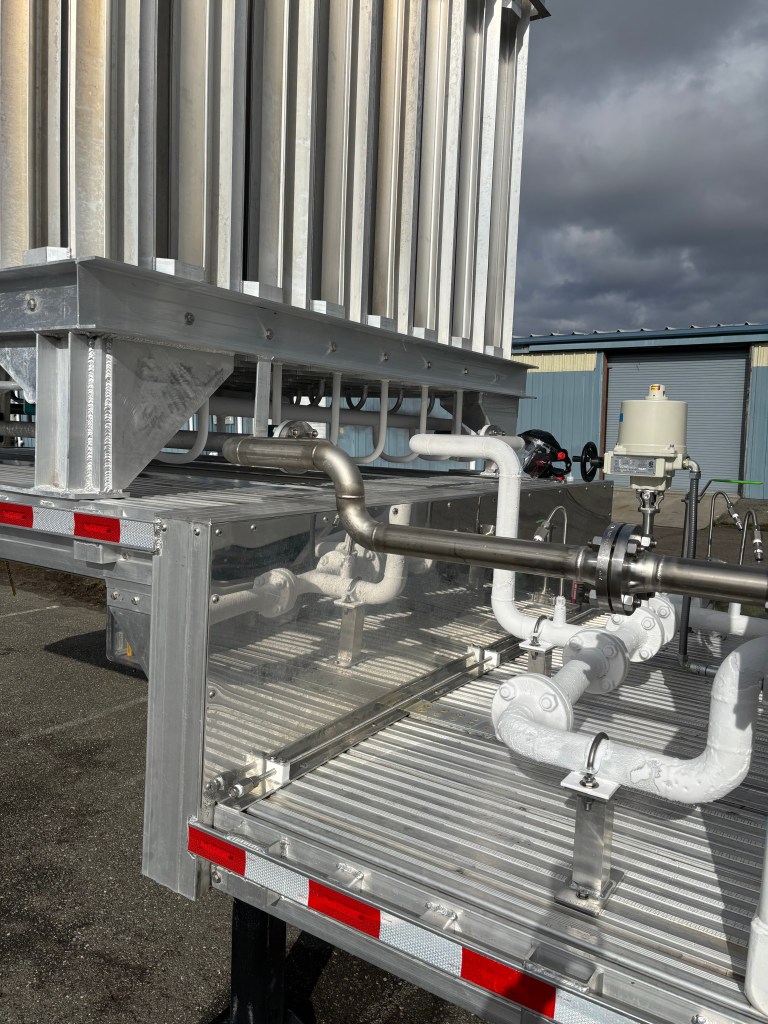
This mobile cryogenic system design is modular with options to increase/decrease flow and temperature control capacity. Spaceline is exploring building similar systems for other customers that require a highly capable cryogenic supply system with modern controls. Options include additional vaporizers, a pump package, a compressor package, and additional valves skids.
Spaceline’s other product ranges include the design and fabrication of vacuum jacketed piping. They are currently fabricating a system for the NASA Glenn Research Center to connect a helium refrigerator into a vacuum test chamber with an operating temperature of -450 °F. Spaceline is providing to NASA the completed vacuum jacketed piping system along with an engineering analysis package including relief valve sizing, flexibility analysis to ASME B31.3 using Caesar software, pipe support design and proof, leak and vacuum bakeout data.

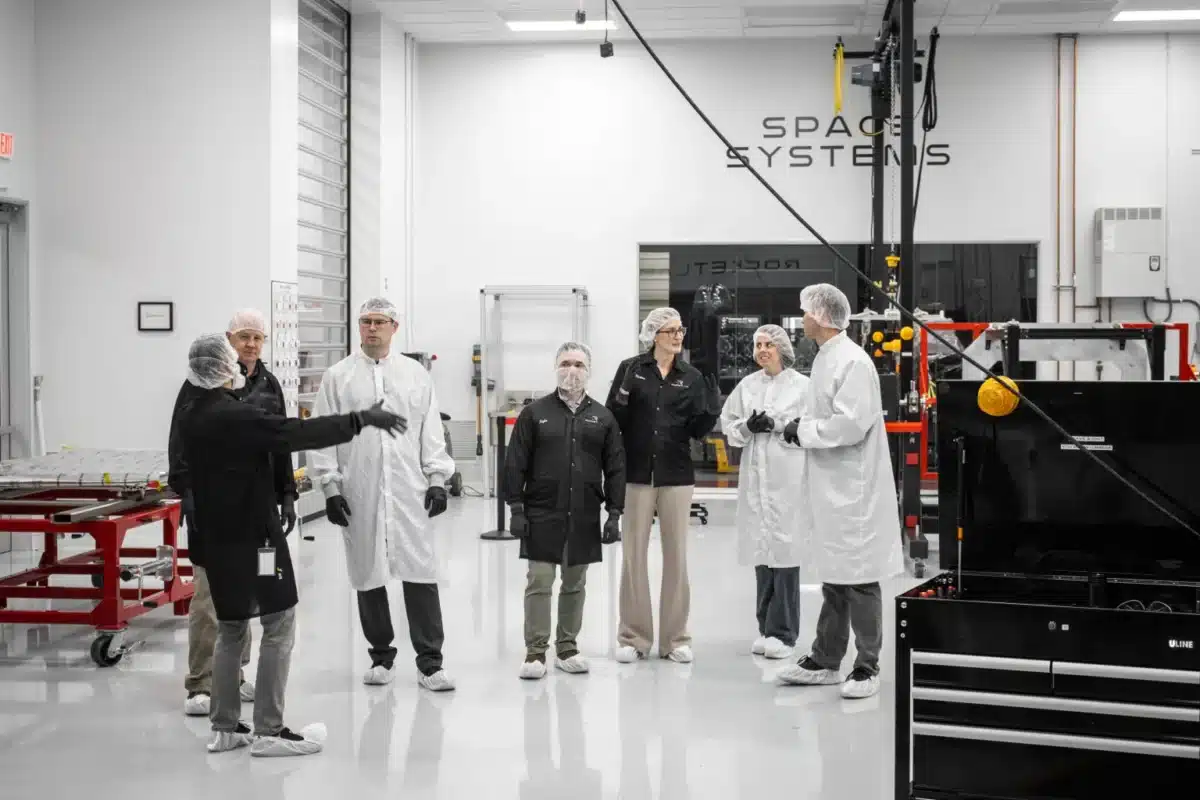
The Spaceline team’s experience base includes the design and build of complete cryogenic systems used on the launch pads of multiple commercial space companies, cryogenic and gas systems for industrial processes, and high pressure gas and liquid test stands. They are capable of taking on projects with unique requirements that need a high degree of engineering to prove out the prototype design before moving into manufacturing. Spaceline keeps engineering, fabrication, and testing under one roof and on the same team to reduce the levels of ownership, keep open lines of communication and deliver the best product to the customer. https://spacelinetech.com