
ADVERTISEMENT

Operational Weather Is a Hidden Driver in Helium Purification

by Prabhat Kumar Gupta, SCRF Cavity Characterization and Cryogenics Section, Raja Ramanna Centre for Advanced Technology (RRCAT), Indore (MP), India and Homi Bhabha National Institute (HBNI), Mumbai, India Introduction Helium purification is central to stable cryogenic operation—whether in superconducting magnet facilities, accelerator test stands, quantum computing labs, or helium liquefaction...
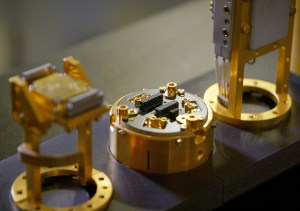
kiutra’s CryoFloor platform enables helium-3-free magnetic cooling for quantum technologies, providing sustainable ultralow temperature performance without reliance on scarce resources. Credit: kiutra

kiutra Secures €13 Million to Eliminate Bottlenecks from Quantum Supply Chains with Helium-3-Free Cooling

kiutra’s CryoFloor platform enables helium-3-free magnetic cooling for quantum technologies, providing sustainable ultralow temperature performance without reliance on scarce resources. Credit: kiutra by kiutra GmbH Communications kiutra, a provider of magnetic cooling for quantum technologies, has raised €13 million in a new equity round to accelerate its global scale-up and...
Crane Cryogenics vacuum jacketed rigid piping system. Credit: Crane Cryogenics

Crane Cryogenics Advances Cryogenic Solutions for the Hydrogen Era

Crane Cryogenics vacuum jacketed rigid piping system. Credit: Crane Cryogenics by Crane Communications Crane Cryogenics, a division of Crane ChemPharma and Energy, has built its reputation by delivering reliable high-performance solutions for some of the most demanding cryogenic environments in the world. The company designs and manufactures advanced vacuum jacketed...
Figure 1: Electron Ion Collider. Credit: Brookhaven

Brookhaven Expands Cryogenic Capabilities for the Electron-Ion Collider Project

by Chintan Sheth, Mechanical Engineer, PMP, Brookhaven National Laboratory The Relativistic Heavy Ion Collider (RHIC) has been running successfully since the year 2000 at the U.S. Department of Energy’s (DOE) Brookhaven National Laboratory (BNL). 2025 will be RHIC’s final run, and the facility will be decommissioned after the run ends...
ALLVAR Alloy 30 expands when cooled, the opposite of invar and aluminum, and maintains negative thermal properties at cryogenic temperatures. Credit: Allvar

ALLVAR Alloys Solve Cryogenic Mismatch

ALLVAR Alloy 30 expands when cooled, the opposite of invar and aluminum, and maintains negative thermal properties at cryogenic temperatures. Credit: Allvar by James A. Monroe, Ph.D., ALLVAR Almost all materials expand when heated and contract when cooled, known as positive thermal expansion. Some materials expand and contract a lot...

ADVERTISEMENT

Space Cryogenics

Space cryogenics is, somewhat obviously, the application of cryogenics to space exploration and science. The use of cryogenics in space optimizes the launching of vehicles, provides power and life support to spacecraft and is critical for many scientific observations.Space cryogenics has a number of challenges and has driven both pure...

Exergy

The science of thermodynamics plays a major role in cryogenics. It underlies the various refrigeration cycles, from Carnot to Brayton (Cold Facts Vol. 32 No. 2) and Joule-Thomson, is a fundamental part of the definition of terms such as coefficient of performance (Cold Facts Vol. 31 No. 1) and even...

Cryogenic Treatment

Cryogenic treatment is the process of cooling materials to cryogenic temperatures temporarily to improve their material properties at room temperature. This is distinct from cooling materials down to cryogenic temperatures to take advantage of phenomena such as superconductivity that only occur at cryogenic temperatures. Cryogenic treatment, sometimes also referred to...

Air Separation and Liquefaction

by Nils Tellier, PE, President, EPSIM Corporation (CSA CSM) nils@epsim.us All illustrations courtesy EPSIM Corporation Background History of Air Separation and Liquefaction This section builds on a rich history of methods to develop deep refrigeration and cryogenic liquefaction during the 19th Century. You are encouraged to read Cryo Central’s History...

Bose-Einstein Condensate

A Bose-Einstein condensate, first proposed in 1925 by Albert Einstein based on work done by Satyendra Nath Bose (the same Bose from whom the term boson is derived), is a super-cold state of matter in which almost all of the individual atoms have “condensed” down to the lowest possible quantum...

Cold Technology for Pest Control

While it does not reach temperatures cold enough to be called cryogenic, carbon dioxide snow is at the heart of a new way of dealing with unwanted pests. It utilizes a quick freezing process that takes advantage of the properties of carbon dioxide snow and has a number of benefits...

Cryogenic Finishing

The following 3 articles discuss the uses and procedures of various type of cryogenic finishing. 1) By Robin A. Rhodes, Cryogenic Institute of New England, Inc. rrhodes@nitrofreeze.com Cryogenic Deflashing is employed to remove undesired residual mold flash that remains on molded parts after they are removed or ejected from the...




