ADVERTISEMENT

New SLAC-Stanford Battery Center Targets Energy Transition

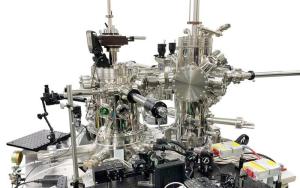
The Department of Energy’s SLAC National Accelerator Laboratory and Stanford University announced the launch of a new joint battery center at SLAC. It will bring together the resources and expertise of the national lab, the university and Silicon Valley to accelerate the deployment of batteries and other energy storage solutions...

New Study Could Help Pinpoint Hidden Helium Gas Fields

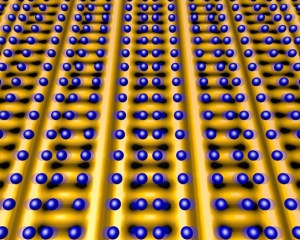
Research led by the University of Oxford could help overturn the current supply crisis of helium, a vital societal resource. The study proposes a new model to account for the existence of previously unexplained helium-rich reservoirs. The findings, published in Nature, could help locate untapped reservoirs of accessible helium. Dr. Anran...

H2FLY Announces Liquid Hydrogen Filling Success

German-based H2FLY has announced success from a liquid hydrogen filling test of its HY4 hydrogen-electric aircraft. The on-ground test at Air Liquide’s Campus Technologies Grenoble in France saw liquid hydrogen fill the aircraft’s new liquid hydrogen storage system, designed and supplied by Air Liquide. Coming as a precursor to future tests in...

Delft Circuits Chosen by NASA JPL Scientist to Support BICEP Project in Antarctica

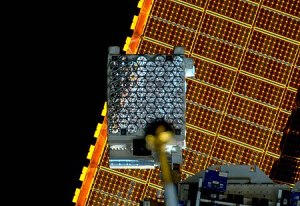
Delft Circuits announced its inclusion in the Background Imaging of Cosmic Extragalactic Polarization (BICEP) project in Antarctica, supporting NASA’s Jet Propulsion Laboratory at CalTech and other project partners. BICEP has been ongoing for several years and is now seeking solutions for a hardware upgrade to its telescope’s sensitivity as the...

Vulcan: Tanking tests performed on ULA’s new rocket

Completing the next phase of testing in preparation for the inaugural Vulcan rocket flight, the United Launch Alliance (ULA) team accomplished tanking demonstrations at Cape Canaveral Space Force Station, Florida. The pathfinder tests filled the Vulcan first stage and Centaur V upper stage with cryogenic propellant on separate days to validate...

Next-Generation Oilless Cryogenic ORC Turbine Generator

Mitsubishi Heavy Industries, Ltd. (MHI) and Mitsubishi Heavy Industries Marine Machinery and Equipment Co., Ltd. (MHI-MME), a wholly owned operating company of MHI based in Nagasaki, have successfully conducted demonstration testing of 100 kW class cryogenic ORC (Organic Rankine Cycle) power generation using the world’s first “next-generation oilless cryogenic turbine...

ADVERTISEMENT

Mixed Refrigerant Cycles

Most cryogenic refrigeration systems, both large scale systems and cryocoolers, use helium as a working fluid. There are a number of advantages to helium, not the least of which is that helium remains a fluid down to the lowest achievable temperatures. In order to freeze helium, pressures of over 20...

Fountain Pumps and He II Phase Separators

Helium II (He II), the second liquid phase of the 4He isotope described in this column in Cold Facts Spring 2010 (http://2csa.us/he2), can be modeled as consisting of two interpenetrating fluids. One, the superfluid component, has zero viscosity and entropy and the other, the normal fluid component, has nonzero viscosity...

Turboexpanders

A vital technology in the refrigerators and liquefiers described in Cold Facts Volume 31 Number 3 is that of turboexpanders. These devices are rotating machines in which the process fluid (e.g., helium) does work against the turboexpander while moving from high pressure to a lower pressure and thus is cooled....

Cryogenic Electronics

Randall Kirschman, consulting physicist, Mountain View, California ExtElect@gmail.com Cryogenic electronics—the operation of electronic devices, circuits, and systems at cryogenic temperatures—has been a valuable technology for decades. Cryogenic electronics (also referred to as low-temperature electronics, or cold electronics) can be based on semiconductive devices, on superconductive devices, or on a combination...

Particle Physics: High Energy Physics

Cryogenics and High-Energy Physics 1. From symmetry magazine: http://www.symmetrymagazine.org/cms/?pid=1000627: Cryogenics is the study of how materials behave at temperatures near absolute zero. In high-energy particle accelerators, such frigid temperatures reduce the electrical resistance of wires in superconducting magnets, increasing the magnet strength and allowing faster particle acceleration. The same holds...

HTS Degaussing Systems

From the Spring 2009 issue of Cold Facts (Volume 25, Number 2): Thanks to a joint project by the US Navy and a number of industry partners, high temperature superconducting (HTS) technology is now at the heart of an advanced degaussing system aboard the USS Higgins at the naval station...

Magnetic Resonance Imaging

From http://www.superconductors.org: An area where superconductors can perform a life-saving function is in the field of biomagnetism. Doctors need a non-invasive means of determining what’s going on inside the human body. By impinging a strong superconductor-derived magnetic field into the body, hydrogen atoms that exist in the body’s water and...

An Issue of Pressure and Flow Rate in a Supply Tank

Please help solve this problem: A supply tank requires a vaporizer to generate sufficient pressure to pump stored fluid up into a vehicle or tank. The available head is limited as the tank level falls and it is important to minimize the system pressure drop to maintain the desired flow...

Using MLI on VJ Line Joints or Cryo Storage Tanks

When installing Multi Layer Insulation (MLI) blankets on VJ line joints or cryo storage tanks should they be wrapped and tied down tight or loose? These are usually pre-cut to size. Also should they have an access hole at the point of where the molecular sieve is installed to help...