ADVERTISEMENT

New SLAC-Stanford Battery Center Targets Energy Transition

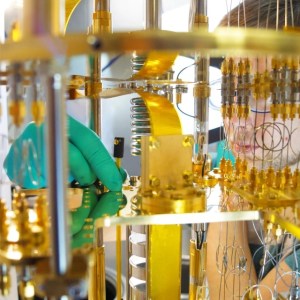
The Department of Energy’s SLAC National Accelerator Laboratory and Stanford University announced the launch of a new joint battery center at SLAC. It will bring together the resources and expertise of the national lab, the university and Silicon Valley to accelerate the deployment of batteries and other energy storage solutions...
New Study Could Help Pinpoint Hidden Helium Gas Fields

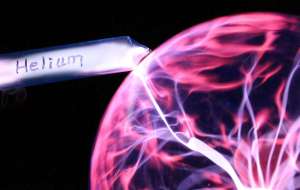
Research led by the University of Oxford could help overturn the current supply crisis of helium, a vital societal resource. The study proposes a new model to account for the existence of previously unexplained helium-rich reservoirs. The findings, published in Nature, could help locate untapped reservoirs of accessible helium. Dr. Anran...

H2FLY Announces Liquid Hydrogen Filling Success

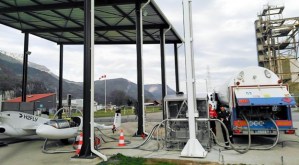
German-based H2FLY has announced success from a liquid hydrogen filling test of its HY4 hydrogen-electric aircraft. The on-ground test at Air Liquide’s Campus Technologies Grenoble in France saw liquid hydrogen fill the aircraft’s new liquid hydrogen storage system, designed and supplied by Air Liquide. Coming as a precursor to future tests in...

Delft Circuits Chosen by NASA JPL Scientist to Support BICEP Project in Antarctica

Delft Circuits announced its inclusion in the Background Imaging of Cosmic Extragalactic Polarization (BICEP) project in Antarctica, supporting NASA’s Jet Propulsion Laboratory at CalTech and other project partners. BICEP has been ongoing for several years and is now seeking solutions for a hardware upgrade to its telescope’s sensitivity as the...

Vulcan: Tanking tests performed on ULA’s new rocket

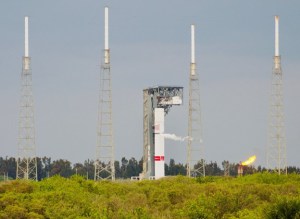
Completing the next phase of testing in preparation for the inaugural Vulcan rocket flight, the United Launch Alliance (ULA) team accomplished tanking demonstrations at Cape Canaveral Space Force Station, Florida. The pathfinder tests filled the Vulcan first stage and Centaur V upper stage with cryogenic propellant on separate days to validate...

BCCK Boosts Propane Recovery with Next-Generation Technology at Cryogenic Gas Processing Facility

BCCK, a leader in engineering, procurement, fabrication and field construction services, has applied patent-pending technology, G2R-Flex®, to provide enhanced propane recovery for a premier midstream group in Ohio’s Marcellus-Utica Basin. Utilizing a skidded BCCK patent-pending design, G2R-Flex® improved current 200 MMSCFD GSP facilities’ propane recoveries to greater than 99 percent in...

ADVERTISEMENT

Adiabatic Demagnetization Refrigeration

Reaching temperatures below 1K requires different techniques than the various helium gas cycles found in large scale refrigeration plants and small cryocoolers. One of these techniques is Adiabatic Demagnetization Refrigeration (ADR). This technique takes advantage of the fact that the entropy of paramagnetic materials in a magnetic field is lower than...

Cryogen-Free

A cryogen is any fluid that operates at cryogenic temperatures (below roughly 150K – 120K). Using this definition, helium gas at 40K is a cryogen. Another more restrictive definition is to use cryogen to refer specifically to liquids at cryogenic temperatures. This is generally how it is used in the...

Cryostats and Cryocoolers

A cryostat is any device designed to maintain things (including fluids) at cryogenic temperatures. In general usage, cryostats tend to be passive devices rather than providing active cooling. In this usage, cryostats keep things cold by thermally isolating them from room temperature. This generally is accomplished by a combination of...

Magnetic Levitation

From http://www.superconductors.org. Magnetic-levitation is an application where superconductors perform extremely well. Transport vehicles such as trains can be made to “float” on strong superconducting magnets, virtually eliminating friction between the train and its tracks. Not only would conventional electromagnets waste much of the electrical energy as heat, they would have...

Superconductivity

From Superpower website. History of Superconductivity Superconductivity was discovered in 1911 by the Dutch physicist, Heike Kammerlingh Onnes when he was able to liquefy helium by cooling it to 4 Kelvin, or -452°F. This enabled him to cool other materials close to absolute zero and investigate their electrical properties. He...

Medical Applications of Cryogenics

Neutron Therapy Cryogenics is at the heart of nuclear accelerators. Accelerators such as Fermilab’s Tevatron make neutron therapy for cancer possible. From Fermilab Today 4/20/09: Fermilab currently offers neutron therapy. But staff at Fermilab designed and built the proton accelerator used by the nation’s first hospital-based treatment center to use...

Nuclear Physics

Al Zeller National Superconducting Cyclotron Lab (NSCL) at Michigan State University zeller@nscl.msu.edu Cryogenics has a long history in nuclear physics. The technology has its origins in the use of cold traps for maintaining a vacuum, which is required to prevent beam loss and for generating high voltages used in acceleration....

An Issue of Pressure and Flow Rate in a Supply Tank

Please help solve this problem: A supply tank requires a vaporizer to generate sufficient pressure to pump stored fluid up into a vehicle or tank. The available head is limited as the tank level falls and it is important to minimize the system pressure drop to maintain the desired flow...

Using MLI on VJ Line Joints or Cryo Storage Tanks

When installing Multi Layer Insulation (MLI) blankets on VJ line joints or cryo storage tanks should they be wrapped and tied down tight or loose? These are usually pre-cut to size. Also should they have an access hole at the point of where the molecular sieve is installed to help...